Why Should Exotic Animals Be Kept as Pets? 5 Reasons
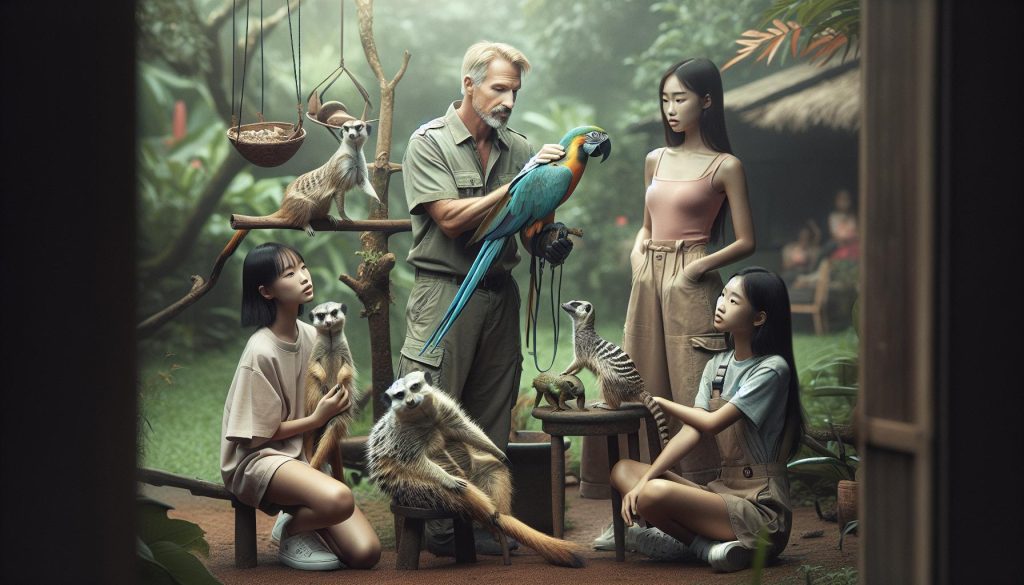
Discover 5 compelling reasons why exotic animals make unique pets. Uncover their enchanting behaviors and learn how they enrich our lives! Click to explore!

Exotic Pet Care encompasses the holistic husbandry standards, environmental climate controls, cognitive enrichment methodologies, and nutritional foundations required to maintain non-domesticated wildlife in captivity.
Comprehensive guidance and procedural walkthrough on is the monkey app safe? security & privacy analysis for exotic pet guardians.
Comprehensive guidance and procedural walkthrough on how to get unbanned from monkey: step-by-step fix for exotic pet guardians.
Comprehensive guidance and procedural walkthrough on how to get rid of monkey mouth with dentures: solutions for exotic pet guardians.
Providing exceptional care for exotic companion animals requires moving beyond basic survival needs to support complete physical and psychological flourishing. Wild animals possess complex behavioral repertoires honed over millennia of natural selection. In captive environments lacking natural foraging challenges, territorial exploration, and predator vigilance, exotic mammals are vulnerable to chronic stress, obesity, and stereotypic behaviors like bar-chewing and self-mutilation.
Temperature and humidity management are fundamental to health. Prairie dogs thrive in moderate temperatures (68°F to 75°F) with low humidity, and can enter a dangerous semi-torpor or heat stroke state if subjected to extremes. Flying squirrels require stable room temperatures and nest insulation to support their high metabolic rate. Enclosure placement must avoid drafty air conditioning vents, direct south-facing sunlight, and loud television speakers.
| Husbandry Pillar | Optimal Environmental Standard | Deprivation Consequence | Enrichment Solution |
|---|---|---|---|
| Thermal Climate | 68°F – 76°F (20°C – 24°C), low-to-moderate humidity | Heat exhaustion (>85°F) or torpor (<60°F) | Digital thermometer/hygrometer, ceramic heat emitters |
| Foraging Stimulation | Scattered seeds, puzzle boxes, foraging toys | Rapid meal gorging, boredom, captive obesity | Scatter feeding across substrate, puzzle foraging wheels |
| Social Dynamics | Colony pairs or intense daily human bonding | Severe isolation depression, stereotypic pacing | Keep animals in bonded pairs when species-appropriate |
| Locomotive Exercise | Species-safe exercise wheels, multi-tier platforms | Pododermatitis (bumblefoot), bone density loss | Spoke-free solid surface wheels, natural branch perches |
Social welfare must be prioritized according to natural social structure. Prairie dogs and flying squirrels are intensely social colony animals that suffer severe emotional distress when kept in solitary confinement without extensive daily interaction. Whenever practical, housing bonded pairs or compatible groups creates natural social grooming dynamics that significantly enhance captive longevity.
While a single animal can thrive if the human handler commits 3 to 5 hours of direct physical interaction and bonding pouch time every single day, keeping a bonded pair is strongly recommended to fulfill their vital social instincts when handlers are away.
Kiln-dried aspen shavings, unbleached virgin paper bedding (such as Carefresh), and anti-pill polar fleece liners are the safest bedding choices. Avoid cedar shavings and pine shavings containing toxic aromatic oils.
Environmental enrichment includes sensory, physical, and cognitive stimuli that encourage natural behaviors: puzzle foraging feeders, deep burrowing sandboxes, climbing ropes, shreddable untreated cardboard, and rotated foraging toys.
Discover 5 compelling reasons why exotic animals make unique pets. Uncover their enchanting behaviors and learn how they enrich our lives! Click to explore!