Did you know that gophers and prairie dogs, though often confused, have distinct lifestyles and behaviors? Both play critical roles in their ecosystems, but understanding their differences can deepen our appreciation for wildlife. Gophers are solitary diggers, creating extensive underground networks, while prairie dogs are social creatures that live in colonies and communicate through intricate vocalizations. In this exploration, we’ll unravel the unique characteristics, habitats, and social structures of these fascinating rodents, helping you recognize them in the wild and enhancing your knowledge of North America’s diverse fauna. Dive in to discover how these two species adapt to their environments and the lessons they teach us about the animal kingdom!
Differences in Physical Characteristics Between Gophers and Prairie Dogs

Gophers and prairie dogs, though often confused for one another, exhibit distinct physical characteristics that set them apart. Gophers are typically smaller, averaging about 5 to 14 inches in length, with a compact body and short legs. Their fur is primarily brown or grayish, allowing them to blend seamlessly into their terrestrial environment. One of the gopher’s most notable features is its cheek pouches, which they use to store food while burrowing.
In contrast, prairie dogs are larger, measuring around 12 to 15 inches long, and have a more elongated shape. They boast a bushy tail that can be nearly half the length of their body, and their fur tends to be more beige or lighter in color, which helps them camouflage in the open grasslands. Prairie dogs also have a more prominent set of front teeth, adapted for gnawing on tough grasses and roots.
Both species have strong forelimbs suited for digging; however, their adaptations reflect their different lifestyles. Gophers are solitary diggers, creating extensive tunnel systems primarily for burrowing and hiding from predators. In contrast, prairie dogs live in social colonies known as “towns,” which require more open burrow entrances and visibility. Each species’ physical attributes not only illustrate their unique evolutionary paths but also serve crucial roles in their respective habitats.
In summary, while gophers and prairie dogs might share a similar habitat and have related ecological roles, their size, fur color, body shape, and social structures differentiate them significantly in the animal kingdom.
Behavioral Traits: How Gophers and Prairie Dogs Interact with Their Environment
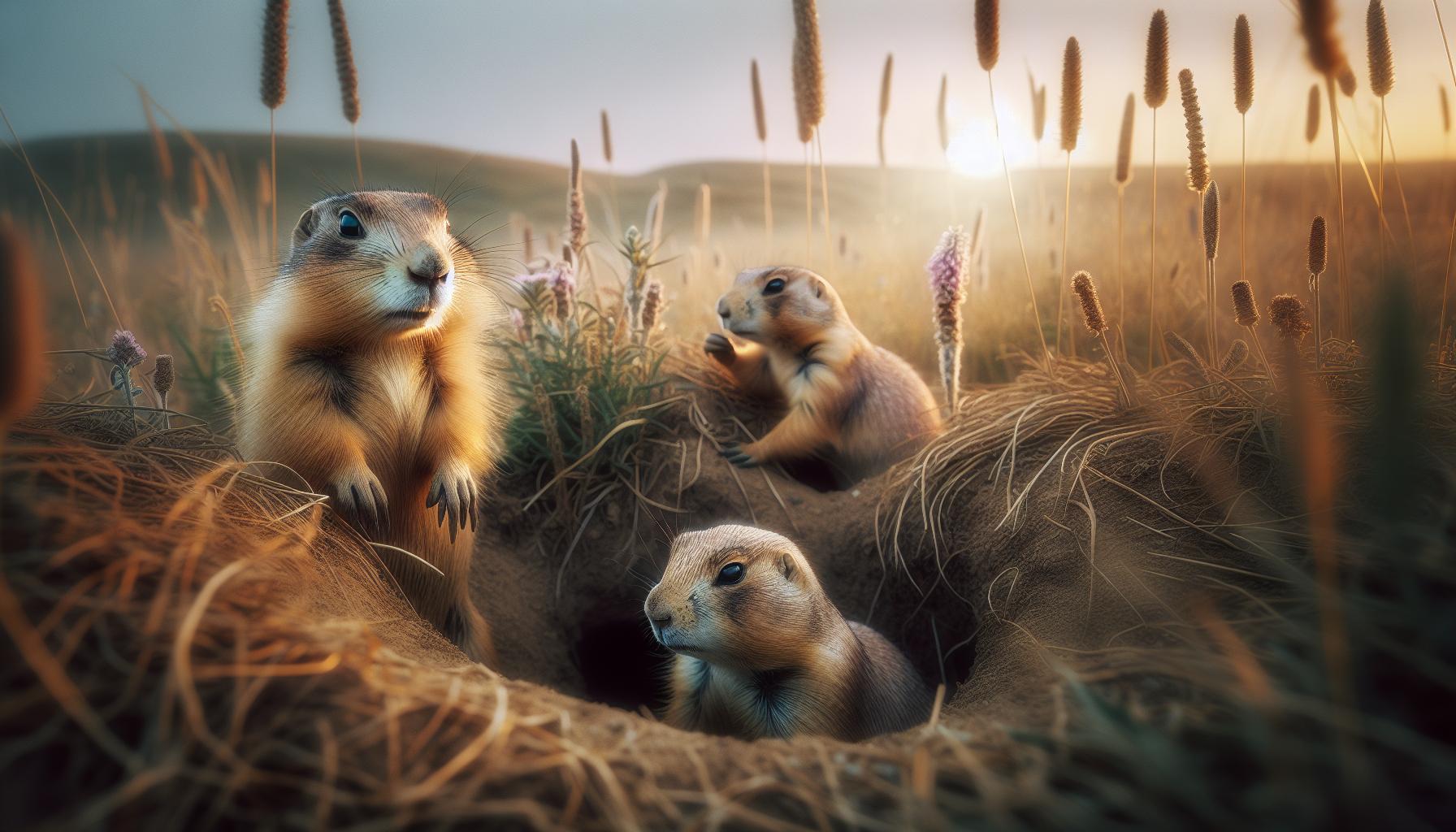
Gophers and prairie dogs exhibit fascinating differences in their behavioral traits, shaped significantly by their unique environments and social structures. Gophers are primarily solitary creatures, diligently tunneling underground to create extensive networks of burrows. These elaborate systems serve not just for protection against predators, but also as a means to store food. A gopher will often take advantage of its cheek pouches to gather and transport food back to its burrow, showcasing their instinctual need to prepare for leaner times. Their interactions with the environment are largely focused on foraging and burrowing, resulting in minimal surface activity, which might limit their exposure to threats but also means they miss out on social learning that could occur among communal species.
In sharp contrast, prairie dogs thrive in social colonies known as “towns,” demonstrating complex interactions not only with their environment but also with one another. These communities, sometimes housing hundreds of individuals, engage in a variety of social behaviors, including alarm calls that warn of predators, cooperative breeding, and even intricate play behaviors. Prairie dogs have a remarkable ability to communicate through a series of vocalizations, which convey specific threats and recruitment information, making them particularly interesting from a behavioral science perspective. Their burrows are often arranged in a communal layout, permitting them to alert each other more efficiently and enhancing their survival chances.
Interestingly, while gophers tunnel mostly in solitude, their burrowing behavior significantly impacts the ecosystem. By aerating the soil and influencing plant growth, they play a subtle role in their habitat’s health. Prairie dogs, on the other hand, actively modify their environment, creating open spaces that benefit many grassland species. The grassy areas surrounding prairie dog towns are often more lush and diverse, thanks to their grazing habits, and this has a ripple effect on the local ecosystem, supporting a wide variety of wildlife.
Both gophers and prairie dogs exemplify how behavioral traits can drive their interaction with the environment, leading to distinct ecological roles and fascinating adaptations that appeal to wildlife enthusiasts everywhere. Understanding these nuances can foster a greater appreciation for these species and their vital roles in our natural world.
Habitat and Range: Where to Find Gophers and Prairie Dogs
Gophers and prairie dogs inhabit very different environments, shaped by their distinct ecological roles and behaviors. Gophers, known for their tunneling expertise, are typically found throughout North America, especially in areas with loose, well-drained soils. You can spot them in grasslands, meadows, and even suburban gardens where they create extensive underground burrow systems. These burrows help them avoid predators and create a quiet space suitable for foraging and nesting.
In contrast, prairie dogs prefer the open grasslands of the Great Plains in North America. These social creatures live in large colonies known as towns, which can span miles and house thousands of individuals. Prairie dog towns are often located in areas with short grass that provides them visibility to spot predators. Their life above ground allows them to engage with their environment much more openly than gophers, who rarely venture to the surface unless absolutely necessary.
Both species require specific habitats to thrive. Gophers favor environments that provide ample plant cover to dig and forage, while prairie dogs need expansive, open spaces to maintain their social structures and communication systems. Each plays a crucial role in their respective ecosystems; for instance, gophers aerate the soil, promoting healthier plant growth, whereas prairie dogs contribute to a biodiversity that supports various grassland species.
In terms of distribution, gophers are widespread, found in diverse regions from the Pacific Coast to the Midwest. Prairie dogs, however, are more localized within the central United States, with their populations centered in areas like Wyoming and Colorado. Understanding these habitats not only highlights the differences between gophers and prairie dogs but also emphasizes the need for habitat conservation to ensure these fascinating creatures continue to thrive in their unique environments.
Social Structures: Understanding Gopher and Prairie Dog Communities
Gophers and prairie dogs demonstrate fascinatingly different social structures that reflect their unique lifestyles and ecological roles. Gophers are primarily solitary creatures. They live in extensive, complex burrow systems that they dig primarily for foraging and as shelters from predators. Their tunnels serve as personal space, often spanning several acres, and they typically mark their territory by scent. Encountering another gopher underground is rare, and interactions tend to be short and focused on competition rather than socializing. The emphasis for gophers is on privacy, allowing them to remain hidden from larger predators and create a safe retreat for nurturing their young.
In stark contrast, prairie dogs are the epitome of social wildlife. Living in large colonies called towns, these little animals can form communities that range from a few dozen to several thousand individuals. Within these towns, prairie dogs create a complex social hierarchy, engaging in behaviors such as grooming, playing, and alerting each other to danger with specific vocalizations. Their interactions are lively and public, as they rely heavily on visibility to monitor threats and maintain their social bonds. Each prairie dog has a designated role-some serve as sentinels to alert others of predators, while others forage for food. This social organization strengthens their survival in the open grasslands, providing a defense mechanism against various threats.
A vivid example of this social structure can be observed in the communications of prairie dogs, which have been shown to be sophisticated enough to convey detailed information about predators. They utilize a range of barks and calls, with variations that can indicate the type and distance of danger. This level of communication fosters a tight-knit community that can react swiftly to threats, highlighting the importance of their social framework.
Understanding the differences in community dynamics between gophers and prairie dogs not only illustrates the diversity of life on our planet but also shows how species adapt to their environments. For wildlife enthusiasts, these behaviors offer remarkable insights into the intricacies of nature, encouraging respect and conservation efforts for these unique animals.
Dietary Preferences: What Gophers and Prairie Dogs Eat
Nourishing their bodies and fueling their lifestyles, both gophers and prairie dogs have distinct dietary preferences that reflect their ecological roles. While they might share some similarities as herbivorous rodents, the specifics of what they consume highlight their adaptations to different environments.
Starting with gophers, these critters primarily feast on underground plant life. Their diet mainly consists of roots, tubers, and other vegetation found beneath the soil surface. Gophers have strong incisors that enable them to gnaw through tough plant material, making them effective foragers in their subterranean habitats. In the wild, they might munch on:
- Grasses
- Herbaceous plants
- Roots and tubers
Their penchant for digging and tunneling not only helps them access these food sources but also aerates the soil, benefiting their ecosystem in the process.
In contrast, prairie dogs possess a broader and more varied palate, typical of their open grassland habitats. They are known to graze on a wide array of grasses, seeds, and even some flowering plants. Prairie dogs also play a crucial role in their ecosystem by maintaining the health of the prairie landscape. Their diet typically includes:
- Grasses (like blue grama and buffalo grass)
- Seeds and flowers
- Leaves and stems of various plants
Because they live in colonies, prairie dogs often forage in groups, which may enhance their foraging efficiency and provide social interaction while they eat.
Understanding these dietary preferences not only paints a vivid picture of the gophers’ and prairie dogs’ lifestyles but also underscores their roles in ecosystem dynamics. While gophers are solitary foragers, rooting through the earth, prairie dogs act as social grazers, shaping the vegetation around them. This diversity in feeding behaviors enriches the habitats they share, illustrating how distinct species contribute uniquely to the natural world we cherish.
Reproduction and Lifespan: Breeding Habits of Gophers and Prairie Dogs
Gophers and prairie dogs have fascinating breeding behaviors that reflect their unique adaptations to the environment. For starters, gophers, which are primarily solitary creatures, tend to have a more discreet and less social breeding process compared to their prairie dog counterparts. Typically, gophers breed once a year, with the mating season occurring in the spring. After a gestation period of approximately 24 to 30 days, a female gopher gives birth to a litter of usually three to five young. These offspring are born hairless and blind, relying heavily on their mother for nourishment and protection until they mature enough to begin foraging on their own. The young gophers will stay with their mother for about two months before venturing out to establish their own territories.
In contrast, prairie dogs are highly social animals that live in large colonies known as “towns”. Their breeding season varies by species but usually peaks in the late winter to early spring. Similar to gophers, female prairie dogs undergo a gestation period of about 30 days, but they may produce larger litters, often ranging from four to eight pups. One of the most interesting aspects of prairie dog breeding is their communal care system, where multiple mothers within a colony may nurse and protect each other’s young. This strong community bond not only aids in pup survival but also reinforces the social structure of their towns.
Both species have adapted their reproductive strategies to fit their environments: gophers, being solitary foragers, prioritize a lower reproductive output with a focus on the survival of fewer young, while prairie dogs thrive in group dynamics and leverage their social structures to enhance the survival of larger litters. Understanding these breeding habits provides insight into how each species contributes to its ecosystem while navigating the challenges of survival.
While discussing their lifespans, gophers typically live three to five years in the wild, though some species can reach up to eight years under optimal conditions. Prairie dogs, on the other hand, tend to live around three to five years, but some individuals can survive up to eight years as well, especially when protected from predators. Overall, these breeding behaviors and life expectancies highlight the differences in parental investment strategies and ecological roles between these two fascinating rodent species.
Conservation Status: Are Gophers and Prairie Dogs Endangered?
Gophers and prairie dogs, though both part of the rodent family, face quite different conservation statuses, stemming from their distinct habitats and social structures. Surprisingly, prairie dogs are listed as a species of concern in several states due to habitat destruction and disease outbreaks. Their reliance on expansive grasslands makes them particularly vulnerable to urban development and agricultural practices that encroach on their colonies. Conversely, while gophers are also affected by habitat loss, they tend to have a broader range and are less impacted by direct human activities, giving them a somewhat stable population in many areas.
Prairie Dogs: Conservation Challenges
Prairie dogs play a vital ecological role in their environments, acting as a keystone species that supports various predators and other grassland inhabitants. However, their populations have diminished significantly due to habitat fragmentation and extermination campaigns aimed at controlling agricultural pests. Conservation efforts are focused on preserving their habitats and promoting public awareness about their ecological importance. Preserving large expanses of grassland is essential for sustaining prairie dog populations. Community awareness and involvement in conservation initiatives can greatly assist in stabilizing their numbers.
Gophers: A Stable Future?
On the other hand, gophers generally have a more stable conservation status, with many species remaining abundant across their ranges. Nonetheless, they face threats from habitat destruction caused by urbanization and agriculture, much like their prairie dog counterparts. Effective conservation strategies for gophers often involve habitat protection efforts, such as maintaining natural grasslands and reducing pesticide use.
Some species of gophers are considered to be of less concern, while others may need monitoring due to local habitat challenges. Raising awareness about their ecological contributions can also bolster conservation efforts, encouraging a sense of stewardship towards the land that helps sustain them.
Both gophers and prairie dogs underscore the intricate balance of ecosystems and highlight the importance of conservation. By understanding the challenges these animals face, we can better appreciate their roles in nature and the need for responsible habitat management. Engaging with local wildlife conservation programs can foster a deeper appreciation and encourage action towards protecting these fascinating creatures.
Common Misconceptions: Myths About Gophers and Prairie Dogs
Many people confuse gophers and prairie dogs, leading to some common misconceptions about their behaviors and characteristics. One prevalent myth is that these rodents are the same species. In reality, while both belong to the rodent family, they are quite different. Gophers are typically solitary creatures, known for their burrowing habits, while prairie dogs are social animals that live in large colonies called towns. This significant behavioral difference can lead to misunderstandings about their ecological roles and interactions with the environment.
Another frequent misconception is about their dietary preferences. Many assume gophers and prairie dogs eat the same foods, but their diets differ notably. Gophers primarily consume roots, tubers, and some green plants, favoring underground vegetation. In contrast, prairie dogs have a more diverse diet that includes grasses, seeds, and even some insects. This variation reflects their different habitats, with prairie dogs often foraging on the surface in open grasslands, whereas gophers remain largely underground.
People also often believe that prairie dogs are more aggressive than gophers. However, this perception stems from their social behavior; prairie dogs engage in vocalizing and play-fighting to establish social bonds within their communities. Gophers, on the other hand, are more reclusive and rarely seen interacting socially, which can make them appear less aggressive. Understanding these distinctions is crucial for fostering respect for these creatures and recognizing their unique roles in their ecosystems.
Overall, debunking these myths helps us appreciate the importance of both gophers and prairie dogs. Each species contributes to their environment in unique ways, whether through soil aeration and plant growth manipulation by gophers or as a keystone species in grassland ecosystems for prairie dogs. Awareness of their differences not only enhances our understanding of wildlife but also inspires responsible attitudes toward conservation.
Gophers vs. Prairie Dogs: Which Makes a Better Pet?
While the allure of adopting a pocket-sized rodent may seem irresistible, choosing between a gopher and a prairie dog as a pet involves understanding their distinct needs and characteristics. Gophers, often viewed as solitary, burrowing creatures, are generally not suited for domestication. Their reclusive nature makes them less interactive and more challenging to care for as pets. They require specialized habitats mimicking their natural underground environments and thrive in solitude, often displaying little interest in human interaction. Thus, potential owners may find gophers lack the engaging qualities one typically desires in a pet.
In contrast, prairie dogs offer a vastly different experience. Known for their sociable temperament, these rodents live in extensive colonies in the wild and are naturally more interactive. As pets, they can be quite affectionate and require socialization to thrive. Prairie dogs are playful and curious, often engaging in activities that showcase their intelligence, such as tunneling and climbing. They need a larger living space and companionship, either from humans or other prairie dogs, to be happy and healthy. This social structure makes them a more rewarding choice for pet owners looking for an engaging and lively companion.
Care for prairie dogs also entails a commitment to their dietary needs, which include fresh vegetables, hay, and specially formulated pellets, reflecting their herbivorous diet in the wild. Owners must provide a suitable habitat that includes plenty of room to burrow and explore. In summary, if you’re considering a rodent as a pet, prairie dogs are generally recommended over gophers due to their social nature and interactive personality. However, this choice should be coupled with a commitment to understanding and meeting their complex care requirements, ensuring that both you and your new pet can thrive together.
Cultural Depictions: Gophers and Prairie Dogs in Pop Culture
There’s a certain charm to gophers and prairie dogs that captures the imagination, leading to their appearances in various forms of entertainment and cultural narratives. Gophers, often seen as the quirky underdogs, have found their way into video games like “Golf,” where they pop up unexpectedly, much to players’ amusement and frustration. Their burrowing nature and the unpredictability of their appearances have made them an ideal metaphor for the unexpected in life, embodying that playful spirit that resonates with audiences.
On the other hand, prairie dogs are celebrated for their sociable behavior and community-oriented lifestyles. They make memorable appearances in media such as the animated film “Open Season,” where they are depicted as lively, chatty creatures, adding a humorous touch to their roles. Their colony structure is often highlighted, showcasing the importance of relationships and communication within their groups. This focus on community aligns well with storytelling elements that emphasize friendship, teamwork, and the joys of living together.
Both gophers and prairie dogs carry symbolic meanings that extend beyond their physical traits. They often represent themes of resilience and adaptability in various narratives. For example, they’ve been used in educational programs and wildlife documentaries to promote awareness about their habitats and behaviors, helping to reinforce the message about conservation and the importance of protecting these unique species. By situating these animals in stories and films, creators provide a cultural bridge that not only entertains but also educates audiences about the values of empathy and stewardship toward wildlife.
In pop culture, the appeal of gophers and prairie dogs transcends mere representation; it reflects deeper understandings of these animals’ ecological roles. Their depiction fosters appreciation for their quirks and contributions to biodiversity, inviting viewers and gamers alike to connect with the natural world. Whether portrayed as comedic characters or as symbols of community, both gophers and prairie dogs enrich our cultural landscape, reminding us of the lightheartedness and camaraderie present in nature.
Interesting Facts: Fun Trivia About Gophers and Prairie Dogs
Imagine walking through a sunny meadow and suddenly spotting a small creature popping its head up out of a burrow. This whimsical scene captures the essence of gophers and prairie dogs, two remarkable animals that often get confused but are quite distinct in their habits and habitats. Here are some fascinating trivia points that reflect their unique characteristics.
Gophers are solitary animals, typically living alone in their underground burrows, which can extend up to several feet deep. They play a crucial role in aerating the soil and maintaining the health of grasslands. In contrast, prairie dogs are highly social creatures and live in colonies known as “towns.” They communicate through a complex system of vocalizations, offering a remarkable example of social interaction in the animal kingdom. Prairie dog towns can encompass hundreds of burrows and are bustling with activity, making them akin to a lively city beneath the surface.
Another interesting fact is their dietary preferences. Gophers primarily feed on roots, tubers, and grasses, relying heavily on their strong teeth to gnaw through tough plant material. Prairie dogs, however, have a more varied diet that includes not only grasses but also seeds and even some insects. Their role in the ecosystem is vital, as their grazing helps to shape the vegetation of their territories, promoting biodiversity.
When it comes to conservation status, both species face challenges, but in different ways. Gopher populations are often affected by habitat destruction and climate change, while prairie dogs are sometimes targeted by ranchers who view them as pests. Their energetic burrowing activities can disrupt agricultural land, leading to conflicts that impact their numbers. Awareness of these factors is essential for encouraging conservation efforts to protect their habitats.
Lastly, both gophers and prairie dogs have found their way into popular culture, becoming symbols of the wild. Gophers are often portrayed as comical characters in various media, pop up unexpectedly with mischievous charm. Prairie dogs have similarly captured hearts, featured as the lovable, community-oriented characters in films and documentaries. This cultural representation helps foster a greater appreciation for their ecological roles and encourages efforts to protect their environments. Understanding these fascinating creatures not only enhances our knowledge but also deepens our respect for the complexities of wildlife.
Faq
Q: What is the main difference between a gopher and a prairie dog?
A: The main difference is their species classification; gophers are rodents from the family Geomyidae, whereas prairie dogs belong to the Sciuridae family. Gophers are solitary and dig extensive tunnel systems, while prairie dogs live in large colonies and feature complex social structures.
Q: How do gophers and prairie dogs differ in their social behavior?
A: Gophers are generally solitary animals, focusing on digging and foraging alone. In contrast, prairie dogs are highly social, living in large, organized colonies with rich communication systems. This difference significantly affects their habitat interactions and behavioral traits.
Q: What do gophers and prairie dogs eat?
A: Both gophers and prairie dogs are herbivorous, but their diets differ slightly. Gophers primarily consume roots and tubers underground, while prairie dogs eat grasses and seeds. Their dietary habits reflect their respective habitats and social lifestyles.
Q: Can gophers and prairie dogs coexist in the same environment?
A: Generally, gophers and prairie dogs do not coexist because their burrowing behaviors and habitat preferences differ. Gophers prefer moister areas for their burrows, while prairie dogs thrive in open grasslands. Consequently, they may compete indirectly for resources.
Q: What are the signs of gopher and prairie dog presence in an area?
A: Signs of gopher presence include mounds of loose dirt from burrowing and tunnels just beneath the surface. For prairie dogs, look for larger burrow entrances and communal dig sites, often with visible grass clipped short around their colonies, indicative of their foraging habits.
Q: Do gophers or prairie dogs have any predators?
A: Yes, both gophers and prairie dogs face predation, but the types vary. Gophers are preyed upon by snakes, hawks, and foxes, while prairie dogs have a wider range of predators, including eagles, coyotes, and badgers, due to their more open habitats.
Q: Are gophers or prairie dogs more commonly found in urban areas?
A: Typically, prairie dogs are more commonly found in urban areas, especially those that mimic their natural grassland habitats. Gophers, being more adapted to specific soil types, are less likely to thrive in urban settings but can still be found in suburban gardens and lawns.
Q: How can I identify whether I have gophers or prairie dogs in my yard?
A: To identify them, look for gopher mounds with a small hole on top and a circular shape. Prairie dogs leave larger holes with a more complex system of burrows and often have visible signs of their social gatherings. Observing their behavior-solitary vs. social-can also help distinguish them.
To Wrap It Up
Thanks for joining me in exploring the fascinating differences between gophers and prairie dogs! Remember, while both are burrowing rodents, their behaviors, habitats, and social structures set them apart. If you found this topic intriguing, you might also enjoy our deeper dives into other wildlife comparisons, such as “Mice vs. Rats” or “Squirrels: Tree Dwellers vs. Ground Dwellers.”
Before you go, don’t forget to subscribe to our newsletter for the latest wildlife insights and tips on responsible animal care. Have any questions or thoughts? Share them in the comments below-let’s keep the conversation going! Your next adventure in wildlife knowledge awaits; what will you discover next?
Get our latest guides, news, and insights highlighted in your Google Search & AI Overviews.