When it comes to gliding through the treetops, few animals capture our imagination quite like the Sunda colugo and the flying squirrel. Both masters of aerial navigation, these fascinating creatures are often compared, but each boasts unique adaptations and behaviors that set them apart. Have you ever wondered which one would come out on top in an aerial showdown? In the world of wildlife enthusiasts, understanding these two remarkable species not only fuels curiosity but also highlights the importance of biodiversity and conservation efforts. Join us as we explore their habitats, gliding abilities, and lifestyle choices to discover who truly reigns supreme in the skies!
Understanding the Sunda Colugo and Flying Squirrel
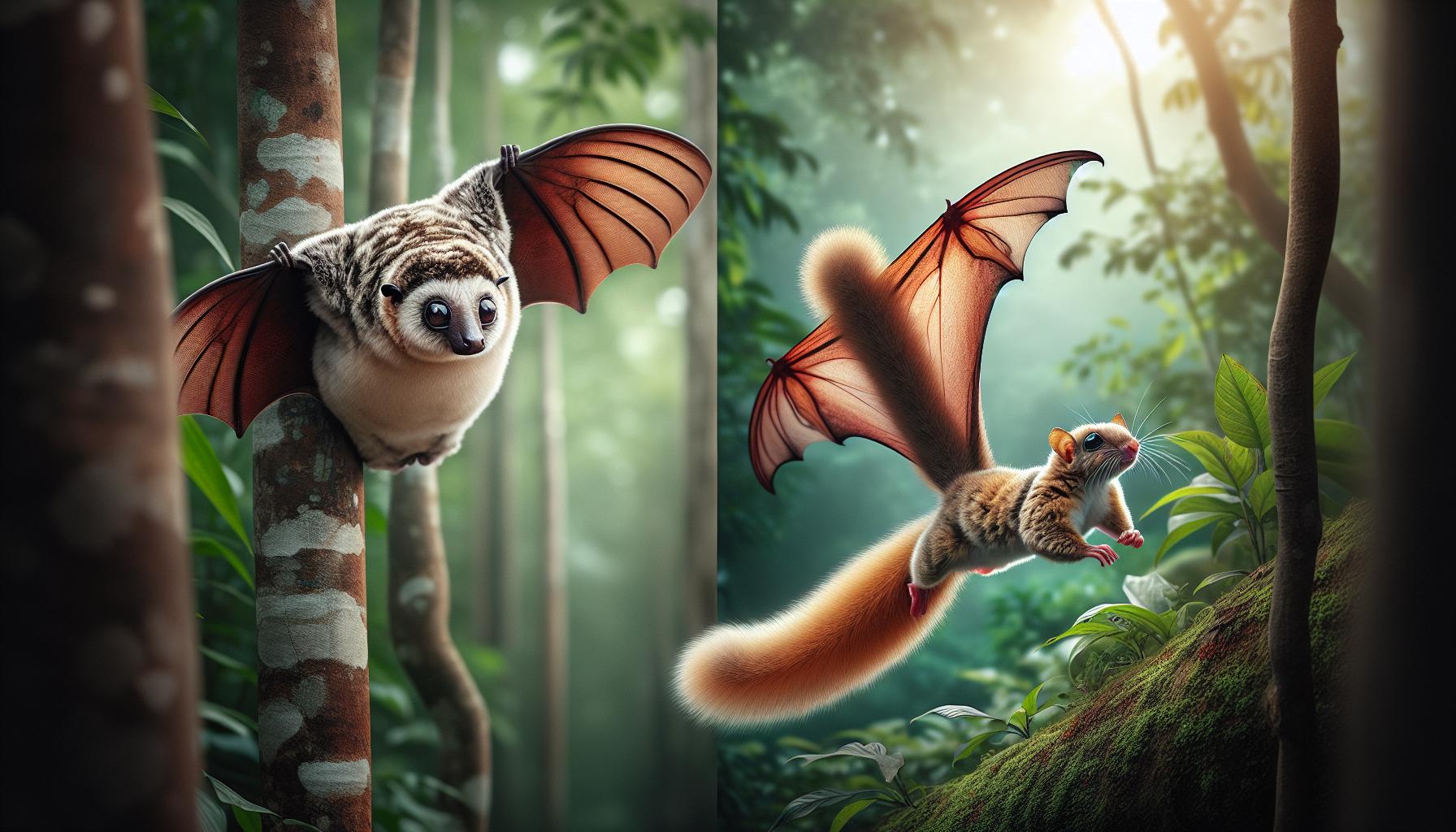
Have you ever wondered about the fascinating world of the Sunda colugo and the flying squirrel? While both creatures are known for their incredible gliding abilities, they come from different families and display unique characteristics that set them apart. The Sunda colugo, often referred to as the “flying lemur” despite not being a lemur, possesses a large membrane that extends between its limbs, allowing it to soar gracefully from tree to tree in Southeast Asian forests. In stark contrast, the flying squirrel boasts a patagium, a fold of skin that stretches from its wrists to its ankles, enabling it to glide effectively, though it is more commonly found in North America and parts of Asia.
Unique Features of the Sunda Colugo
The Sunda colugo has several remarkable adaptations that aid its survival. Its large, forward-facing eyes provide exceptional night vision, crucial for a nocturnal lifestyle. The colugo’s diet mainly consists of leaves, fruit, and flowers, which it expertly locates thanks to its keen eyesight. Unlike rodents or marsupials, colugos have a distinct body structure; they lack the typical claws of a flying squirrel, instead having sharp, flat nails that help them grip branches tightly as they navigate their arboreal habitat.
Unique Features of the Flying Squirrel
Flying squirrels are well-adapted to life in the trees as well. With their large, flared eyes and agile bodies, they possess superior climbing abilities. Their patagium is a key feature that allows gliding; it can stretch out to create more surface area, which increases lift and allows for greater distances-up to 150 feet! Additionally, flying squirrels are social creatures, often living in small family groups, which enhances their survival through cooperative foraging and predator vigilance.
Understanding these unique features helps illustrate why the Sunda colugo and the flying squirrel, while similar in their gliding talents, play different ecological roles and display distinctive behavioral traits. Each species highlights the remarkable diversity of adaptation in the animal kingdom, making them both captivating subjects of study for wildlife enthusiasts.
Unique Features of the Sunda Colugo
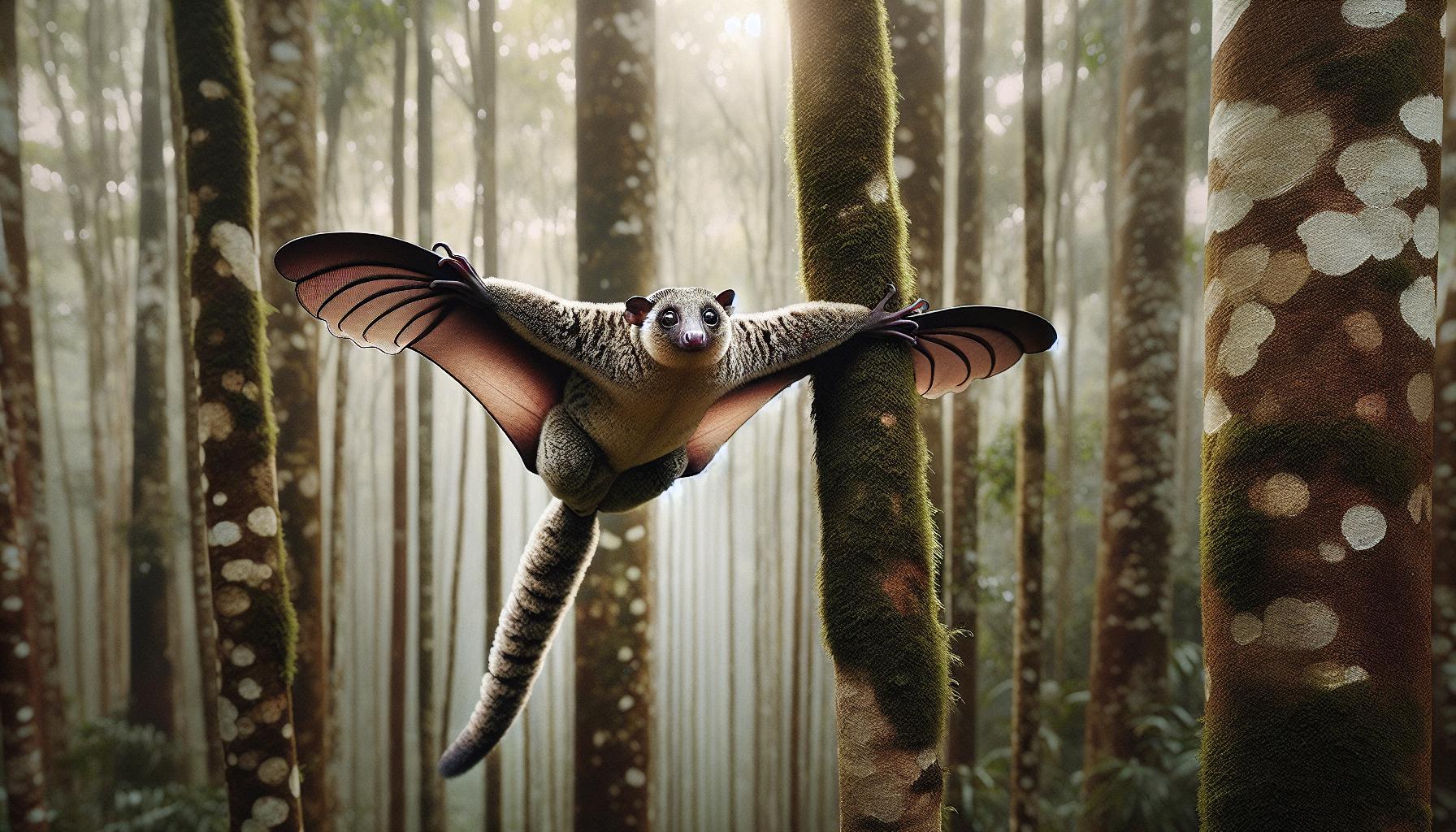
The Sunda colugo, known for its impressive gliding ability, is an extraordinary creature that dazzles wildlife enthusiasts with its unique adaptations. Unlike its gliding counterpart, the flying squirrel, the Sunda colugo boasts a large patagium, or membrane, that extends between its limbs and tail. This extensive wing-like structure allows it to navigate the dense forests of Southeast Asia with remarkable grace and distance, sometimes gliding over 150 meters (nearly 500 feet) in a single leap!
One of the most striking features of the Sunda colugo is its large, forward-facing eyes, which provide excellent night vision. This is crucial for its nocturnal lifestyle, allowing it to spot leaves, fruits, and flowers, which make up the majority of its diet. The colugo primarily feeds on soft leaves and fruit, showcasing its specialization in consuming a folivorous diet. Its sharp, flat nails help it grip branches securely, enabling deft movements through the treetops as it searches for food.
Moreover, this creature’s body structure is distinct from those of squirrels and other gliders. Colugos lack the sharp claws typical of many tree-dwelling mammals, instead featuring nails that are adapted for life in the canopy. This unique adaptation, combined with its lightweight body and flexible limbs, makes the Sunda colugo a master of gliding, effortlessly soaring between trees while maintaining remarkable agility and control.
The social behavior of the Sunda colugo is less well-documented compared to that of flying squirrels, which are known to be quite social. However, colugos are generally solitary animals and may come together during the mating season. Their adaptations and behaviors reflect a well-tuned strategy for survival in the challenging environments of tropical forests, proving that even the most elusive of creatures have fascinating lives rich with unique traits and ecological roles.
Unique Features of the Flying Squirrel
The flying squirrel is truly a remarkable creature, not only for its unique adaptations but also for its charming personality. Unlike the Sunda colugo, flying squirrels boast a membrane called the patagium, which extends from their wrists to their ankles, allowing them to glide gracefully from branch to branch. This impressive adaptation enables them to cover distances of up to 150 feet in a single glide. Their large, rounded eyes are another striking feature, providing excellent night vision crucial for their nocturnal activities.
Social Behavior and Social Structure
Flying squirrels are notably social animals, living in colonies that can range from a few individuals to larger groups. They often communicate through a series of vocalizations, such as chirps and barks, which help maintain social bonds and alert others to potential threats. This social structure is particularly beneficial as it allows them to coordinate during the night to find food and evade predators.
Habitat Preferences
These squirrels thrive in a variety of forested habitats, including deciduous, coniferous, and mixed forests. They prefer areas rich in trees that provide adequate cavities for nesting and sufficient foliage for foraging. The elusive nature of flying squirrels makes them relatively hard to spot during the day, as they typically rest in tree hollows, emerging only at night.
Diet and Feeding Habits
Their diet is mainly comprised of nuts, seeds, fruit, and some fungi, highlighting their role as important seed dispersers in their ecosystems. Flying squirrels can eat a surprising range of foods, showcasing their adaptability. They rely on keen senses of smell and taste to find ripe food, and they will often cache surplus food in tree bark or crevices, a behavior that aids in food security during harsher months.
Flying squirrels are not just fascinating for their gliding prowess; their social habits, dietary flexibility, and appealing appearance make them a beloved part of wildlife. Whether you’re a seasoned wildlife enthusiast or a curious newcomer, these creatures offer an endlessly charming glimpse into the complexities of nature’s designs.
Habitat Preferences: Where Do They Live?
The Sunda colugo, also known as the flying lemur, may not be a lemur at all, but rather a fascinating mammal that showcases incredible adaptations for life in the trees. These remarkable creatures tend to favor the lush forests of Southeast Asia, where they have managed to carve out a unique niche in their arboreal habitat. Colugos thrive in tropical rainforests, often found in both primary and secondary forests, demonstrating a preference for areas with tall trees that provide ample coverage and food sources.
In contrast, flying squirrels are much more widespread. They inhabit a variety of forest ecosystems, including deciduous, coniferous, and mixed forests across North America, Europe, and Asia. This adaptability allows them to choose habitats that offer both leafy canopies for gliding and suitable nesting cavities in tree trunks. Whether it’s a densely wooded area or a suburban park, flying squirrels can be found wherever there are trees to climb and glide from.
Both species exhibit a preference for habitats rich in biodiversity. Colugos typically remain high in the canopy to avoid predators and utilize their gliding abilities to move between trees. Their diet mainly consists of leaves, fruit, and flowers, which are abundant in their preferred forested environments. Meanwhile, flying squirrels often forage on the forest floor and among branches for nuts, seeds, and fruits, highlighting their diverse dietary needs based on habitat availability.
Ultimately, while the Sunda colugo and flying squirrel may share some similarities, their habitat preferences underscore how evolution has shaped their lifestyles. The colugo’s reliance on tropical rainforests contrasts with the flying squirrel’s versatility in various forest types, illustrating the diverse adaptations of these two distinct yet similarly enchanting animals. Understanding their environments not only adds to our appreciation of their ecological roles but also highlights the importance of habitat preservation in ensuring their survival.
Diet and Feeding Habits: What Do They Eat?
The Sunda colugo boasts an impressive diet that primarily consists of leaves, fruits, and flowers, which it can easily access thanks to its exceptional gliding capabilities. This remarkable mammal has evolved to take advantage of its forest habitat by foraging high in the canopy, where juicy leaves and blossoms abound. They are particularly fond of young leaves, which are more nutritious and easier to digest. Their slow metabolism means they do not need to eat very frequently, allowing them to spend more time lounging on branches and gliding through the treetops.
In contrast, flying squirrels have a more diverse diet that includes not only fruits and leaves but also nuts, seeds, and even insects. They are known to forage both on the ground and among the branches, taking advantage of seasonal variations in food availability. While their favored foods tend to be tree fruits and nuts, they are opportunistic feeders; if they come across a tasty treat, such as a fallen fruit, they’re quick to snack on it. Their agile movements and ability to glide make them effective foragers in various forest settings, be it rural woodlands or urban parks.
These dietary habits also highlight a key difference in their feeding strategies. The Sunda colugo’s specialized diet is closely tied to its tropical rainforest habitat, where food is abundant but must be reached with care due to their slow-moving nature. On the other hand, flying squirrels adapt to whatever food sources are available, displaying a remarkable flexibility that allows them to thrive across a range of environments. This adaptability boosts their chances of survival, especially in areas where food sources may fluctuate with the seasons or disturbance.
In ecological terms, both species play crucial roles in their respective ecosystems. The Sunda colugo likely aids in seed dispersal while feeding on flowering plants, and their unique dietary needs can influence the vegetation structure in their habitat. Similarly, flying squirrels contribute to forest dynamics by dispersing seeds and nuts, ensuring the health and regeneration of forest ecosystems. Understanding these dietary preferences underscores not only their adaptation to their environments but also the broader ecological impacts of their foraging behaviors.
Behavior and Social Structure: Interaction Styles
With their enchanting gliding abilities and captivating lifestyles, the Sunda colugo and flying squirrel offer a fascinating glimpse into the world of arboreal mammals. These two creatures not only share a similar habitat but also showcase distinct interaction styles that reveal their social structures and behaviors.
The Sunda colugo tends to lead a more solitary existence. These gentle gliders are often seen lounging quietly on branches or gliding silently through the treetops at night. Their time spent alone helps them remain elusive to both predators and competitors. While they communicate through soft sounds, such as clicks and whistles, these vocalizations primarily serve to maintain contact with a mate or offspring rather than to foster social groups. This solitary lifestyle can be attributed to their specialized diet that requires them to elegantly maneuver through the upper canopy, ensuring they get access to their preferred food sources without drawing too much attention.
In contrast, flying squirrels are known for their sociable nature. They commonly form small family groups and are frequently observed engaging in playful social behaviors. Their interactions can be lively, filled with chirps and barks as they communicate with one another. Such vocalizations play an essential role in establishing territory and facilitating relationships, especially among mothers and their young. During the breeding season, males may compete for mates through displays of agility and skill, showcasing their ability to glide and navigate the forest.
Group Dynamics
- Sunda Colugo: Typically solitary; relies on stealth and quietness.
- Flying Squirrel: Social groups; employs vocal communication and playful interactions.
Understanding these behavioral traits not only highlights how the Sunda colugo and flying squirrel have adapted to their environments but also invites a deeper appreciation for the diverse strategies mammals employ to thrive in the wild. Whether it’s the serene glider or the playful forager, each animal embodies unique qualities that contribute to the rich tapestry of forest life.
Adaptations for Gliding: How Do They Fly?
The Sunda colugo and flying squirrel are both masters of the aerial dance in their forest homes, but they execute their gliding feats with remarkable differences. Each has uniquely adapted to optimize their ability to soar through the trees, using specialized physical features that enhance their maneuverability and control.
Sunda colugos, often dubbed “flying lemurs,” possess a distinctive body plan that is beautifully built for gliding. Their most notable adaptation is a vast membrane of skin that stretches from their neck to the tips of their fingers, toes, and even the edges of their tail. This extraordinary structure, known as the patagium, allows them to catch air like a parachute, providing exceptional lift as they leap from tree branches. Their lightweight skeleton and broad body enhance their surface area, enabling prolonged gliding distances-up to 70 meters (about 230 feet) in one controlled plunge. This efficiency makes the colugo a stealthy traveler, ideal for moving through densely vegetated forests without attracting predators.
On the other hand, flying squirrels have their own impressive adaptations for gliding. While they also feature a patagium, it extends between their front and back legs, creating a wing-like appearance that enables them to catch thermal updrafts. Flying squirrels are smaller than colugos, and their bone structure is adapted for rapid takeoff and agility. They can easily launch into the air from a standing position, using their powerful hind legs to gain momentum. This agility is crucial when navigating through their arboreal habitats, allowing them to dodge obstacles and change direction swiftly in pursuit of food or when avoiding threats.
Both species utilize their gliding abilities for foraging and escaping from predators, but they deploy their skills differently. While the Sunda colugo glides smoothly and quietly, often at heights above the forest floor to access leaves and fruits, flying squirrels are more acrobatic, showcasing their agility as they navigate around branches and trunks-essential for their social play and food gathering.
Ultimately, whether it’s the graceful colugo or the nimble flying squirrel, each embodies unique adaptations that highlight the beauty of evolution in overcoming environmental challenges. By understanding how these fascinating creatures take to the skies, we can appreciate the incredible diversity that exists in the world of gliding mammals.
Predators and Threats: Survival Challenges
In the canopy of Southeast Asian forests, the Sunda colugo and flying squirrel face a range of predators that challenge their survival. These unique gliders may excel in aerial maneuvers, but they are not without threats in their densely vegetated habitats. Understanding their vulnerabilities can help us appreciate the adaptations that have evolved in both species.
The Sunda colugo, often mistaken for a flying lemur, finds itself vulnerable to a variety of carnivores. The primary threats include raptors such as hawks and owls, which have keen vision and can spot a colugo gliding silently between trees. In addition, arboreal snakes pose a hidden danger, lurking among branches and ready to strike when a colugo ventures too close. Despite its gliding prowess, the colugo’s relatively slow movement makes it susceptible to these predators, especially when it descends closer to the ground, where it is less concealed.
On the other hand, the flying squirrel faces similar predatory pressures but has developed its own strategies for evasion. These squirrels often rely on their agility and quick reflexes to escape from birds of prey and terrestrial predators such as foxes or raccoons. Their ability to glide enables them to make sharp turns and navigate complex branches, a crucial skill for avoiding danger. Additionally, flying squirrels tend to be more social, often staying in groups, which can provide extra safety in numbers. This collaborative behavior can help them monitor for threats while foraging or resting.
Human activity also presents significant threats to both species. As deforestation and habitat destruction escalate, the complex canopies these animals depend on are diminished, leading to increased vulnerability. Fragmented habitats can isolate populations and reduce genetic diversity, making it harder for both species to recover from predation and adapt to environmental changes. Conservation efforts are essential to mitigate these threats, ensuring these remarkable creatures can continue to thrive amidst the challenges they face.
In summary, while both the Sunda colugo and flying squirrel possess unique adaptations to survive in the wild, they must navigate a treacherous landscape filled with natural predators and human-induced threats. Understanding their challenges not only highlights their evolutionary paths but also underscores the importance of habitat conservation efforts in protecting these fascinating gliders.
Conservation Status: Are They Endangered?
The conservation status of both the Sunda colugo and the flying squirrel highlights the urgent need for attention and action. While these incredible gliders exhibit unique adaptations that allow them to thrive in their arboreal habitats, they are increasingly facing threats that jeopardize their future.
The Sunda colugo, also known as the flying lemur (though it is not a lemur), is primarily found in tropical rainforests across Southeast Asia. Unfortunately, deforestation driven by logging, agriculture, and urban development has led to significant habitat loss for this species. As their living spaces shrink, colugos become more vulnerable to predation and struggle to find sufficient food and mates. According to the IUCN, the Sunda colugo is currently listed as Near Threatened, indicating that it is at risk of becoming endangered without effective conservation measures.
Flying squirrels, while more widespread, are also impacted by habitat destruction and fragmentation. These squirrels rely on dense forests for shelter and food, and as human activity clears these areas, their populations can suffer. Some species of flying squirrels, like the Northern Flying Squirrel in North America, are already listed as Endangered or Threatened due to habitat loss, climate change, and competition with invasive species. Conservation programs focusing on habitat restoration and preservation are vital for ensuring the survival of these charming animals.
To protect both species, conservation efforts can include creating wildlife corridors that allow for safe movement between fragmented habitats, implementing sustainable forestry practices, and raising public awareness about the importance of these unique creatures. Engaging local communities in conservation projects helps foster a sense of stewardship for the environment. By working together, we can help ensure that the skies remain filled with the gliding grace of the Sunda colugo and the flying squirrel for generations to come.
Comparative Speed and Agility: Who Is Quicker?
The competition between the Sunda colugo and the flying squirrel invites curiosity about their unique adaptations for speed and agility in the trees. Both species are masters of gliding, but how do they stack up against each other? While the flying squirrel is known for its impressive leaps and speed, the Sunda colugo excels in its aerodynamic design, which allows it to glide longer distances seamlessly.
Sunda colugos, often referred to as “flying lemurs,” possess a membrane called the patagium that stretches from their necks to the tips of their fingers and toes. This unique feature contributes to their remarkable ability to glide up to 150 meters (about 490 feet) from tree to tree. Not only does this allow them to escape predators effectively, but it also enables them to forage for food across their rainforest habitat without descending to the ground. Their relatively slow, controlled manner of gliding helps them navigate their arboreal realm with precision, making them efficient travelers despite not being the fastest of the gliders.
In contrast, flying squirrels have a more robust body structure that grants them quick bursts of speed when launching off from high branches. They can leap distances of up to 60 meters (approximately 197 feet) in a single bound, using their large, fur-covered membranes to steer during flight. This allows them to dodge predators swiftly, making them well-adapted for a life among the trees. Their agility is further enhanced by strong leg muscles that aid in quick take-offs and landings.
Ultimately, while the flying squirrel may have the edge in speed with its rapid leaps, the Sunda colugo surpasses it in gliding efficiency and distance. Both species have ingeniously adapted to their environments, showcasing the diverse strategies animals employ to thrive in similar ecosystems. When it comes to a friendly contest, it’s clear that the best glider is not always the fastest-sometimes, it’s all about the finesse of maneuvering through the trees!
Lifespans and Reproductive Habits: Family Life
The Sunda colugo and the flying squirrel not only showcase remarkable adaptations for life in the trees but also have fascinating family and reproductive behaviors that further enhance their survival in the wild. With lifespans that can reach up to 15 years in the wild, Sunda colugos typically produce only one offspring at a time, which they carry on their bellies until it is old enough to glide on its own. In contrast, flying squirrels tend to have slightly shorter lifespans-around 6 to 12 years-yet they can give birth to two to four young in a single litter, which adds a different dynamic to their family life.
When it comes to nurturing their young, both species display intriguing maternal behaviors. The Sunda colugo invests significant energy into its single offspring, offering protection and continual care, especially during the initial months when the colugo is learning to glide. These young colugos develop quickly, usually becoming independent at around six months of age but often remaining close to their mothers well into their first year. This close-knit relationship allows them to learn essential skills for climbing and gliding.
Flying squirrels, on the other hand, are known for their communal living arrangements. After giving birth in tree cavities, mothers provide for their young while forming loose family groups with other squirrels. These family units offer additional protection to the young with siblings often playing a role in caring for each other, promoting a social structure that enhances survival.
In both species, the care provided by the mother is crucial. For the colugo, the high level of investment in one or two offspring ensures that they develop the necessary skills for an arboreal lifestyle, while flying squirrels benefit from their larger litters and communal care, which can lead to a higher survival rate in their complex forest environments. Understanding these unique reproductive strategies not only showcases the strengths of each species in the competition for survival but also highlights the diverse approaches to family life in the animal kingdom.
Cultural Significance and Representation in Media
The Sunda colugo and flying squirrel, while not as commonly known as other wildlife, have captured the fascination of nature enthusiasts and media creators alike. These remarkable creatures are often featured in documentaries and wildlife shows because of their unique gliding abilities and intriguing lifestyles. The colugo, sometimes called the “flying lemur” (though it’s not a lemur at all), is celebrated for its expansive patagium, the web of skin that stretches from its neck to the tips of its limbs, enabling it to glide impressively through Southeast Asian forests. The flying squirrel, with its fluffy tail and adorable face, has become a symbol of nocturnal woodland charm, often highlighted in children’s books and animated series.
In popular culture, the flying squirrel has made appearances in various media, from animated movies like “Over the Hedge,” where characters display humorous antics, to educational programs showcasing their social structures and adaptability in urban environments. These portrayals often emphasize their endearing qualities and resourcefulness, promoting conservation awareness among younger audiences. Meanwhile, the Sunda colugo remains a lesser-known gem, featuring in documentaries that highlight its evolutionary adaptations and the biodiversity of Indonesian rainforests. Such media representations serve to educate the public about these fascinating species while fostering a sense of wonder about the natural world.
Both species also represent important ecological roles in their habitats. Through their lifestyles, they contribute to seed dispersal and maintaining forest health, which is often a central theme in environmental documentaries. When people see these animals thriving in their natural environments, it encourages conservation efforts aimed at protecting their habitats. Documentaries often stress the impact of deforestation and habitat loss, prompting viewers to take action to support wildlife conservation efforts.
For wildlife enthusiasts and casual observers alike, these representations are invaluable. They provide insightful glimpses into the lives of creatures that often go unnoticed and inspire appreciation for biodiversity. Watching the graceful gliding of a colugo or the playful antics of a flying squirrel can ignite curiosity about the vast array of wildlife sharing our planet and the importance of preserving their habitats for future generations.
Faq
Q: What are the main differences between Sunda Colugo and Flying Squirrel?
A: The Sunda Colugo is known for its gliding ability, aided by a large membrane that extends from its neck to its fingertips and toes, while the Flying Squirrel has a smaller membrane and is more agile in quick movements. Additionally, Sunda Colugos primarily inhabit tropical forests, whereas Flying Squirrels are found in various habitats, including urban areas.
Q: Which species is better at gliding, Sunda Colugo or Flying Squirrel?
A: The Sunda Colugo excels at gliding due to its larger wing-like membrane, allowing it to navigate long distances between trees with ease. In contrast, the Flying Squirrel relies more on short bursts of speed and maneuverability, making it effective in dense forests but not as efficient for long glides.
Q: How do Sunda Colugos and Flying Squirrels compare in terms of diet?
A: Both the Sunda Colugo and Flying Squirrel are herbivorous, but their diets differ. Colugos mainly consume leaves, flowers, and fruit, while Flying Squirrels enjoy nuts, fruits, and occasionally small insects. Their dietary preferences reflect their respective habitats and adaptations.
Q: Which is more social – Sunda Colugo or Flying Squirrel?
A: The Flying Squirrel tends to be more social, often forming small groups, particularly during foraging. In contrast, the Sunda Colugo is generally solitary, preferring to glide and feed alone, which affects their interaction styles within their environments.
Q: What adaptations do Sunda Colugos have for survival?
A: Sunda Colugos possess unique adaptations such as their extensive patagium for gliding and a slow-moving lifestyle that aids in evading predators. They also have excellent camouflage, blending into the trees to avoid detection. Meanwhile, Flying Squirrels have sharp sight and quick reflexes for escaping threats.
Q: How do conservation statuses differ between Sunda Colugo and Flying Squirrel?
A: The Sunda Colugo faces significant threats due to habitat loss and is considered vulnerable. In contrast, many species of Flying Squirrels are not endangered, though some local populations may suffer from habitat destruction, emphasizing the need for habitat conservation for both species.
Q: Which species has a longer lifespan, Sunda Colugo or Flying Squirrel?
A: Sunda Colugos typically have a lifespan of around 10-12 years in the wild, while Flying Squirrels can live up to 6-10 years under similar conditions. Factors like diet, habitat, and predation significantly influence their longevity.
Q: Can Sunda Colugo and Flying Squirrel coexist in the same habitat?
A: Yes, Sunda Colugo and Flying Squirrel can coexist as they occupy different ecological niches. While both may be found in tropical forests, Colugos prefer higher canopies, whereas Flying Squirrels often inhabit lower tree levels, reducing competition and promoting biodiversity within their shared environment.
Closing Remarks
As we wrap up our exciting match-up between the Sunda Colugo and the Flying Squirrel, it’s clear that both these incredible gliders have unique adaptations that make them fascinating contenders in the canopy. While the Sunda Colugo impresses with its extraordinary gliding capabilities and specialized lifestyle, the Flying Squirrel charms with its playful antics and agility. Curious about how other wildlife species stack up? Explore our articles on “Top 10 Amazing Gliders of the Animal Kingdom” and “Understanding the Forest Ecosystem: Roles and Relationships” to dive deeper into the wonders of nature.
We’d love to hear your thoughts! Which glider do you think has the edge, and why? Leave your comments below or share this article with fellow wildlife enthusiasts. Don’t forget to subscribe to our newsletter for more thrilling wildlife encounters and insights! Your journey into the animal kingdom has just begun-stay curious and keep exploring!
Get our latest guides, news, and insights highlighted in your Google Search & AI Overviews.