
Did you know that prairie dogs are not only social creatures but also impressively swift? These fascinating mammals, often found in the grasslands of North America, can reach speeds of up to 30 miles per hour when sprinting across their burrow systems. Understanding how fast prairie dogs can run sheds light on their agility and helps us appreciate their role in the ecosystem. Whether you’re interested in wildlife conservation, a budding animal enthusiast, or simply curious about these delightful creatures, exploring the speed and agility of prairie dogs reveals their remarkable adaptations and behaviors. Join us as we dig deeper into their running habits and uncover more astonishing facts about these charming little critters!
Understanding Prairie Dog Speed and Agility
Prairie dogs are surprisingly agile creatures, able to reach speeds of up to 30 miles per hour in short bursts. This remarkable speed is critical for their survival, allowing them to escape from predators and navigate the complex tunnel systems of their burrows quickly. Their speed, combined with their strong hind legs, enables them to perform impressive leaps and quick turns, making them elusive targets for would-be hunters in the wild.
Several factors influence the running speed of prairie dogs. The primary determinant is their physical condition and age; younger prairie dogs tend to be faster than their older counterparts. Environmental conditions, such as the type of terrain they inhabit, also play a role. For instance, a prairie dog racing across flat, open grasslands will likely be faster and more agile than one trying to maneuver through rocky or uneven ground. Additionally, during the breeding season, male prairie dogs may exhibit heightened speed and agility as they compete for mates, demonstrating just how instinctual survival and reproductive behaviors intersect in the wild.
Another fascinating aspect of prairie dog behavior is their use of agility not just for escape, but also for communication. Prairie dogs are known for their complex vocalizations that signal danger. When a predator is sighted, they produce specific alarm calls that alert others in the colony. In conjunction with their rapid movements, these behaviors help keep their community safe, showcasing the intricate connection between their speed, agility, and social structures. This ability to quickly relay information and escape enhances their survival in a habitat filled with threats.
Factors Influencing Prairie Dog Running Speed
Prairie dogs are not just cute; they’re also incredibly fast! These little critters can reach speeds of up to 30 miles per hour in short bursts, making them well-equipped to evade predators. But what exactly influences their running speed? A few key factors come into play, ranging from their physical condition to the environment they inhabit.
One of the most important elements affecting a prairie dog’s speed is age and physical condition. Younger prairie dogs, full of energy and muscle, are generally quicker than their older counterparts. Similarly, an individual that is well-fed and healthy will likely outperform one that is malnourished or unwell. As in many animals, strength and agility often correlate with fitness, allowing those in prime condition to showcase their maximum speed.
Another critical factor is the environment itself. Prairie dogs thrive in open grasslands where they can dart freely. When they run across flat, open terrain, they harness their full potential. In contrast, navigating rocky or uneven ground can significantly slow them down, just as it would with any animal. Conditions like mud or wet grass also affect their ability to maintain speed, highlighting the importance of a suitable habitat for maximizing their agility and speed.
Additionally, the breeding season can alter their speed, with males displaying heightened agility as they compete for mates. Those racing to impress or defend territory may exhibit bursts of speed that they wouldn’t otherwise demonstrate, showing that instinctual behaviors can push their physical limits. This blend of fitness, environmental factors, and social dynamics creates a unique picture of how prairie dogs adapt and thrive in the wild, using their remarkable speed to navigate both challenges and opportunities in their environment.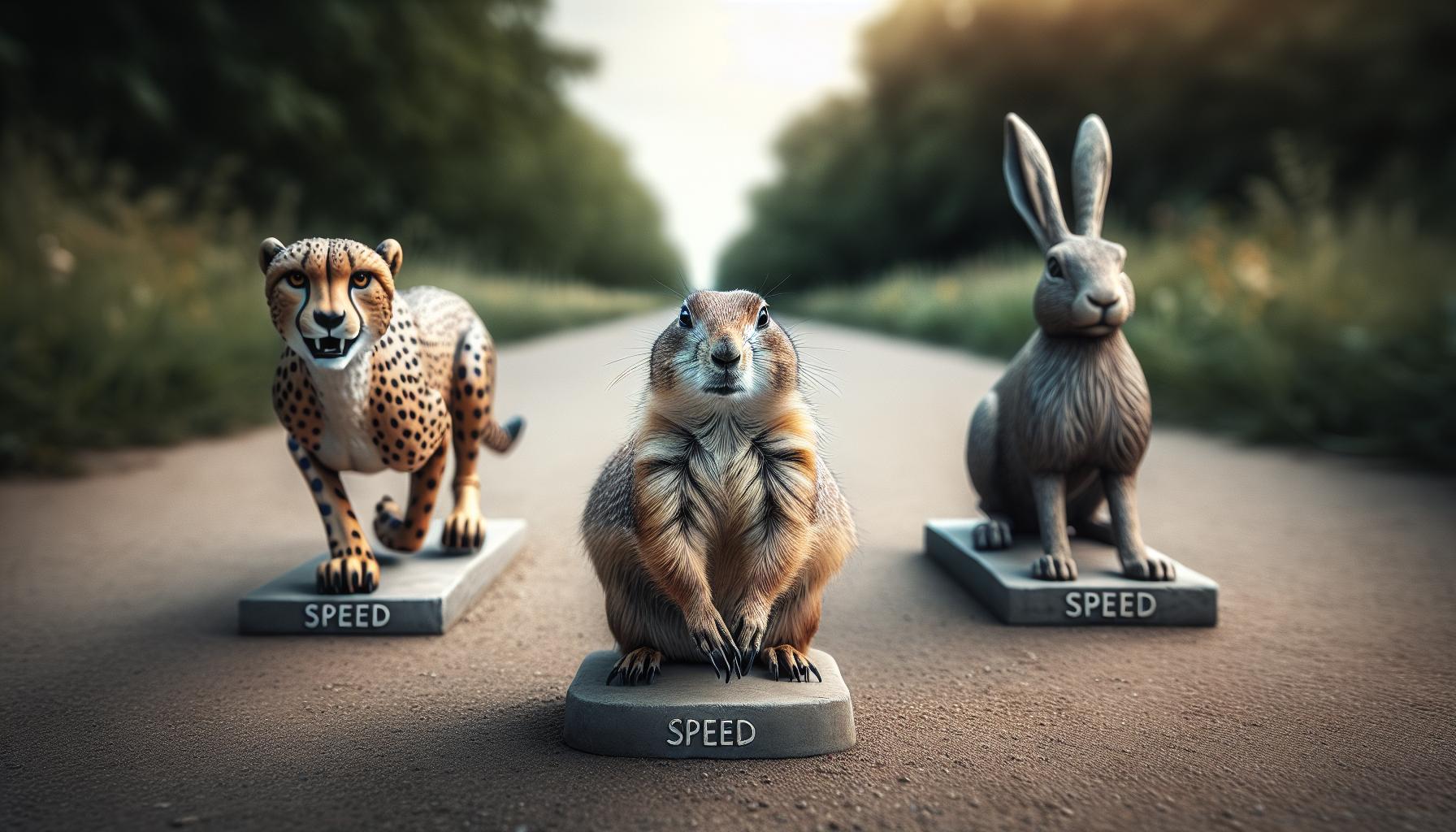
Comparing Prairie Dog Speed with Other Animals
With the ability to sprint up to 30 miles per hour in short bursts, prairie dogs showcase impressive speed for their size, but how does this compare with other animals? When we look at the animal kingdom, it’s fascinating to see where these charismatic rodents stand in terms of speed and agility relative to both larger and smaller creatures.
For instance, domestic cats, often seen as quick and nimble, can reach speeds of about 30 miles per hour as well. However, they tend to maintain their speed for longer distances during a chase, unlike prairie dogs who use short sprints to evade predators. On the flip side, the common rabbit can hop powerfully and reach speeds of 45 miles per hour, making it one of the faster terrestrial animals. This comparison highlights a crucial survival strategy: while rabbits rely on their speed and longer endurance, prairie dogs depend on quick bursts and nimble movements.
Interestingly, in the realm of larger mammals, the coyote-a primary threat to prairie dogs-can run at speeds of 40 to 60 miles per hour. Here, the speed disparity emphasizes the importance of agility and quick direction changes for prairie dogs, enabling them to escape the jaws of their predators skillfully. When facing such threats, a prairie dog’s ability to zigzag rapidly is often more beneficial than sheer speed alone.
As for some fellow burrowing creatures, the ground squirrel is another comparison point. These animals can run at around 15 to 20 miles per hour, showing that prairie dogs not only exceed them in speed but also in their agility across the open terrain they inhabit. The combination of their fast reflexes and quick speeds creates a formidable defense mechanism against predators.
Finally, it’s essential to recognize that while speed is important, it’s the blend of speed and an understanding of their environment that made prairie dogs expertly adapted to survive in the wild. Their remarkable ability to pop in and out of burrows at a moment’s notice, combined with their sprinting capability, allows them to thrive despite the various threats they face. In their world, every burst of speed counts when it comes to evading danger!
How Prairie Dogs Use Speed for Survival
With a remarkable ability to reach speeds of up to 30 miles per hour in short bursts, prairie dogs utilize their speed as a critical defense mechanism against predators. In the wild, these small, social rodents face constant threats, particularly from predators like coyotes, hawks, and badgers, which can run significantly faster. To survive, prairie dogs have evolved not just their speed but also agility and reflexes that allow them to navigate their environment effectively.
When a prairie dog senses danger, it instinctively performs rapid zigzag movements. This behavior is crucial; it disrupts the line of sight for pursuing predators, making it harder for them to predict the prairie dog’s next move. Their ability to dart into their extensive burrow systems adds another layer of protection. A prairie dog’s burrow serves as both a home and a safe haven, allowing them to quickly escape threats. And because these burrows can be interconnected in colonies, it enables them to swiftly retreat or change tunnels if they feel endangered.
Moreover, these quick sprints are complemented by their social behavior. Prairie dogs communicate using specific alarm calls that signal the type of predator approaching, allowing other members of the colony to react appropriately. For instance, they can distinguish between aerial and ground threats, providing their community with the valuable time needed to find safety. This enhanced survival strategy not only protects individual prairie dogs but also strengthens the entire social structure of their groups.
In essence, the interplay of speed, agility, and social communication plays a vital role in the survival of prairie dogs. By mastering these skills, they can effectively evade threats and maintain their populations in the face of environmental challenges. Thus, every burst of speed and each clever move serves as a testament to their evolutionary adaptations in a world filled with predators.
The Role of Agility in Prairie Dog Behavior
Prairie dogs are more than just adorable burrowing rodents; they are remarkable athletes! Their agility is paramount not only for escaping predators but also for navigating their complex underground burrow systems and interacting socially with other prairie dogs. When a predator approaches, these little creatures don’t just rely on their speed; they engage in agile maneuvers that significantly enhance their chances of survival.
One fascinating aspect of prairie dog agility is their ability to make quick, sharp turns and rapid directional changes. This instinctual skill is not just beneficial when evading threats; it’s also vital in their social interactions. For example, during play or while asserting dominance, prairie dogs often dart around one another, showcasing their physical prowess and agility. These movements allow them to establish roles within their social structure, reinforcing bonds and hierarchies through physical displays.
Additionally, prairie dogs are adept at leveraging their environments to aid their escape. Their burrows are intricately designed, featuring numerous entrances and tunnels, which enable quick retreats from danger. They can swiftly disappear into these underground networks, making it difficult for predators to follow. This agility in navigating their habitat allows them not only to evade hunters but also to manage threats within their colonies effectively.
In summary, agility is a cornerstone of prairie dog behavior, allowing these fascinating creatures to not only survive but thrive amidst numerous dangers. Their skills manifest in playful interactions and strategic escapes, making them a compelling study of adaptation in the wild. So next time you see a prairie dog, remember that behind their cute exterior lies a highly agile survivor, perfectly designed for life on the plains.
Typical Distances Prairie Dogs Run in the Wild
Prairie dogs are not just quick; they can also cover impressive distances when they need to. In the wild, these little mammals can sprint across their expansive grassland habitats, often navigating their colonies that can stretch for miles. Typically, prairie dogs run in short bursts, covering distances of up to 100 meters (about 325 feet) when fleeing danger or engaging in social play. However, during regular foraging or moving between burrow entrances, they might cover a more moderate distance of around 30-50 meters (approximately 100-165 feet).
What’s fascinating is that prairie dogs have a unique way of utilizing their running distances to their advantage. Their colonies, known as coteries, are often situated in open areas with good visibility. This setup allows them to spot predators from a distance and dart to safety quickly. Their burrows, filled with multiple entrances, play a crucial role in their ability to escape. When predators, such as hawks or coyotes, approach, prairie dogs make instinctual choices about which entrance to dash towards, often covering the distance between burrows with remarkable speed and agility.
Moreover, during their daily activities, prairie dogs engage in playful chases that can see them covering impressive distances. These interactions help build social bonds and establish hierarchies within their colonies. While the exact distances they cover may vary based on the terrain and their social structures, the essence of their movement reflects agility and a keen awareness of their environment-a testament to their adaptability as inhabitants of the American grasslands.
So next time you observe a prairie dog, take note of how these remarkable creatures make the most out of every sprint, turning even a quick dash into a fascinating display of survival strategy!
Challenges in Measuring Prairie Dog Speed
Determining how fast prairie dogs can run presents unique challenges for researchers and wildlife enthusiasts alike. While these agile creatures are known for their quick sprints, capturing the exact speed can be elusive due to several factors. For one, prairie dogs thrive in their natural habitat-expansive grasslands with varying terrain, which can influence their running style. Researchers often find it tricky to create a controlled environment to measure speed accurately, as the open spaces where they live allow for unpredictable movements triggered by the presence of predators or social interactions.
Another significant challenge is the behavior of prairie dogs themselves. They are social animals that engage in various playful activities, including chasing and burrowing. These behaviors can make it difficult to distinguish between running for survival and running for fun, leading to variations in speed measurement. Moreover, the need for a naturalistic observation context means that recorded speeds can be influenced by environmental factors such as wind, the presence of others, and available cover-all crucial to a prairie dog’s ability to dodge threats.
To tackle these challenges, researchers might use technology such as GPS trackers or high-speed cameras to observe prairie dog movements without disturbing them. These tools can provide a more accurate picture of their speed and agility in the wild, as they capture the nuances of how they interact with their environment. However, even with advanced technology, the dynamic nature of prairie dogs can lead to inconsistencies in data, emphasizing the need for comprehensive studies over time and across different locations.
Ultimately, while prairie dogs can reach impressive speeds, quantitatively measuring this agility often proves difficult yet fascinating. As you observe these remarkable creatures in their natural settings, remember that their speed is just one part of a complex survival strategy that includes intelligence, social behavior, and adaptability. The more we look into their world, the more we appreciate the intricacies of their life on the prairie.
Effects of Habitat on Prairie Dog Agility
The unique habitat of prairie dogs, characterized by vast grasslands and intricate burrow systems, plays a significant role in their agility and speed. These industrious creatures have evolved to navigate their environment skillfully, utilizing both open terrain and shelter provided by their burrows to evade predators. The soft, often uneven ground of their prairie home allows for quick sprints, while the complex network of tunnels offers essential escape routes during threats, blending speed with strategic maneuvering.
Factors such as soil texture and vegetation density can significantly impact how prairie dogs run. For instance, during the breeding season or when defending their territory, males may exhibit bursts of speed while zigzagging through tall grass or over sandy patches, which requires a different agility compared to sprinting on firm, flat ground. These variations in surface types can alter their acceleration and turning capabilities, leading to notable differences in speed based on habitat conditions.
In addition, seasonal changes affect prairie dog mobility. During wet seasons, when the ground becomes softer and muddier, their movements may become less predictable. Similarly, in dry conditions, the increased visibility allows for rapid dashes across open spaces but can also heighten their vulnerability to predators. A well-hydrated prairie dog may be quicker and more agile than one living in parched soil, showcasing how environmental factors intersect with physical abilities.
Observing prairie dogs in their natural habitat provides a front-row seat to their remarkable adaptability and quick reflexes. Spotting them during their playful antics or serious chases can evoke a real appreciation for their agility. To enhance your viewing experience, consider timing your visit when they are most active, usually in the early morning or late afternoon, and find a well-positioned spot at a safe distance. Doing so ensures not only a better understanding of their behaviors but also a respectful approach to these fascinating animals and their ecosystems.
Fun Facts About Prairie Dogs and Their Movements
Did you know that prairie dogs communicate with an intricate system of barks and chirps that warn their colonies of approaching threats? These social creatures not only demonstrate impressive speed and agility when it comes to running away from danger but also possess unique behaviors that enhance their survival. Mature prairie dogs can reach speeds of up to 30 miles per hour during chases, showcasing their ability to evade predators like hawks and coyotes. This speed, combined with their agile movements, makes them formidable little creatures on the plains.
Prairie dogs are remarkable for their social structures, living in large colonies called “coteries.” Within these communities, they playfully engage in “kissing,” a form of mutual grooming that strengthens social bonds. When it comes to evasion, their agility is further enhanced by the complex burrow systems they create. These tunnels not only offer shelter from predators but allow them to zigzag and dart with ease, effectively confusing threats. Their ability to change direction quickly can be likened to a skilled athlete on the field.
Another fun fact about their movements is that they often engage in a behavior known as “kicking up dust,” which occurs when they are excited or startled. This behavior not only serves to communicate with other prairie dogs but also disorients predators. The combination of speed, agility, and social cohesion allows prairie dogs to thrive in their habitats, demonstrating how these traits are essential to their survival.
If you ever have the chance to observe prairie dogs in action, look for their playful chases and spirited interactions. Early morning and late afternoon are the best times to witness their lively behavior as they scurry about, living up to their reputation as one of the prairie’s most entertaining inhabitants!
Observing Prairie Dogs: Tips and Best Practices
Watching prairie dogs in their natural habitat is a delightful experience, especially given their remarkable agility and speed. These little creatures are not just fascinating to observe; they also provide an opportunity to connect with nature. To make the most out of your prairie dog observation, consider a few practical tips.
First and foremost, timing is key. Early mornings and late afternoons are often the best times to see prairie dogs in action. During these cooler times of day, they are most active as they emerge from their burrows to forage and socialize. Bring binoculars to catch the finer details of their playful interactions-this way, you won’t miss the adorable “kissing” behavior they engage in, where they groom each other, further strengthening social bonds within their coteries.
When setting up for your prairie dog viewing, find a spot that offers good visibility, preferably on elevated ground. Look for mounds of dirt that indicate burrow systems; prairie dogs are often seen popping up and down from these entrances. However, be mindful of maintaining a respectful distance. Approaching too closely can disturb them and disrupt their natural behavior. Adopting a “quiet and still” approach will allow you to witness their agility and interactions without causing unnecessary alarm.
While observing, pay attention to their communication signals. Prairie dogs have an advanced system of vocalizations to alert one another of potential threats. The difference between a warning bark and a relaxed chirp can tell you a lot about their comfort levels in that environment. Consider keeping a journal of your observations, noting any unique behaviors or interactions. This not only enriches your experience but also contributes to a deeper understanding of these extraordinary animals.
Finally, remember that urbanization and habitat loss are significant threats to prairie dog populations. By educating yourself and others about their importance in the ecosystem-such as being a food source for various predators-you can advocate for conservation efforts that protect these remarkable creatures and their homes. Enjoy your time observing these agile little animals, and cherish the moments you get to spend in nature!
The Impact of Urbanization on Prairie Dog Movement
Watching prairie dogs dart across the landscape, you’d be forgiven for thinking their speed is solely a product of their natural instincts. Yet, urbanization is reshaping not just their habitats but also their movements and behavior in profound ways. As cities expand and human activity encroaches on their territory, prairie dogs face increasing challenges that influence how they run and thrive in a landscape that is becoming increasingly fragmented.
The rapid spread of urban development leads to habitat loss, which forces prairie dogs into smaller spaces. Their traditional burrow systems are disrupted by construction activities and roads, making it harder for them to escape predators and find food. As prairie dog colonies become isolated, their ability to forage effectively diminishes, which can lead to increased stress and a decrease in running speed, especially when fleeing from threats. Instead of running freely across expansive prairies, these agile animals might find themselves navigating narrow paths or sprinting shorter distances.
Moreover, urban environments can introduce new predators, such as domestic cats or dogs, which prairie dogs are not accustomed to encountering. In this fight-or-flight scenario, their natural speed isn’t just a key survival trait; it becomes essential. However, unfamiliar territory can hamper their agility. When their environment is altered significantly by human presence, prairie dogs may hesitantly approach certain areas, affecting their running patterns and overall mobility. Changing behaviors in response to urbanization-such as more cautious movements or altered times of activity-demonstrate their adaptability but also highlight the stresses they face.
Preserving prairie dog habitats amidst urban expansion is crucial for maintaining their populations and ensuring they can continue to exhibit their natural behaviors. Urban planners and conservationists can play a vital role by implementing wildlife corridors and designing spaces that protect these communities. Even small actions, such as educating the public on the importance of prairie dogs within the ecosystem, contribute to broader conservation efforts that can mitigate the negative impacts of urbanization on these charming creatures. Engaging with prairie dogs in their natural habitat not only offers a peek into their fascinating world of speed and agility but also reinforces the need for sustainable practices that protect their way of life.
Conservation Efforts and Prairie Dog Habitats
The plight of prairie dogs is a compelling reminder of the delicate balance between urban growth and wildlife conservation. These fascinating creatures are known for their impressive speed and agility, traits that are not just remarkable but essential for survival in the wild. However, as urban areas expand, the habitats of prairie dogs face unprecedented threats. Conservation efforts aimed at protecting these habitats are vital to ensure that prairie dogs continue to thrive.
One of the most effective ways to support prairie dog populations is through habitat preservation initiatives. This can include establishing protected areas where prairie dogs can live and reproduce without the disruption of urban development. Conservation groups often work to educate local communities about the importance of prairie dogs within the ecosystem, highlighting their role as prey for numerous predators and their contribution to soil health through their burrowing activities. Community involvement plays a crucial role in these efforts, as local residents can participate in monitoring prairie dog colonies and reporting any threats to their habitats.
Wildlife Corridors and Urban Planning
Implementing wildlife corridors is another essential strategy. These corridors provide safe passages for prairie dogs to move between fragmented habitats, allowing them to escape predators and seek new feeding grounds without the danger posed by human infrastructure. Urban planners can collaborate with wildlife experts to design city layouts that incorporate these important corridors, demonstrating that development and conservation can coexist harmoniously.
Additionally, responding to urban challenges calls for innovative approaches. For instance, fences can be installed in rural areas to deter domestic pets from entering prairie dog habitats while still allowing access to native wildlife. Moreover, public education campaigns can encourage pet owners to keep their animals contained, which not only protects prairie dogs but also supports broader biodiversity.
Protecting prairie dogs is not only about maintaining their speed and agility; it’s also about preserving a unique aspect of our natural heritage. As these animals dart across the prairie, they remind us of the beauty of wildlife in motion and the importance of safeguarding their environments. Engaging with wildlife conservation initiatives fosters a deeper connection to nature, ensuring that future generations can appreciate the remarkable lives of prairie dogs and the ecosystems they inhabit.
Faq
Q: How fast can prairie dogs run?
A: Prairie dogs can reach speeds of up to 30 miles per hour (48 km/h) in short bursts. This agility helps them evade predators and navigate their burrow systems quickly. Their speed is essential for survival in their natural habitat.
Q: What physical adaptations help prairie dogs run fast?
A: Prairie dogs have strong, muscular legs with long strides, providing them with the ability to run swiftly. Their lightweight bodies contribute to their speed, allowing for quick changes of direction when escaping threats.
Q: How does a prairie dog’s habitat affect its running speed?
A: Prairie dogs thrive in open grasslands where they can run freely. Their habitat, which includes burrows, allows for quick entry and exit, enhancing their ability to escape predators quickly. Dense vegetation can hinder their speed.
Q: Can prairie dogs sustain their running speed for long distances?
A: Prairie dogs are not built for long-distance running. They can sprint rapidly but typically only sustain high speeds for short distances, around 100 to 300 yards, before needing to rest.
Q: Are there any predators that can outrun prairie dogs?
A: Yes, several predators, including coyotes and eagles, can outrun prairie dogs. While prairie dogs are quick, they rely on their digging ability and agility to escape threats rather than outpacing them consistently.
Q: How do prairie dogs communicate while running?
A: Prairie dogs use vocalizations to alert others of danger, even while running. Their “barking” calls serve as alarms, and during the sprint, they maintain awareness of their surroundings to avoid predators.
Q: What is the impact of urbanization on prairie dog speed?
A: Urbanization reduces the natural habitats of prairie dogs, leading to increased encounters with cars and buildings, which may limit their ability to run freely. This can lead to stress and reduction in their natural behaviors.
Q: How do prairie dog social structures influence their agility?
A: Social structures in prairie dog colonies help with safety in numbers. As they run together, their coordinated movements can enhance the collective agility of the group, making it harder for predators to target individuals effectively.
For more fascinating insights into prairie dogs, check out sections on agility and habitat impacts in the main article!
Future Outlook
Now that you know how fast a prairie dog can run and the unique adaptations that support their impressive speed and agility, why not dive deeper into the fascinating world of these remarkable creatures? Check out our article on prairie dog habitats to learn where these animals thrive and how to protect their environments.
If you’re curious about how they compare to other small mammals, don’t miss our comparison with other burrowing animals. And while you’re here, consider signing up for our newsletter for the latest wildlife insights and tips on responsible wildlife watching.
Join the conversation-share your thoughts or experiences with prairie dogs in the comments below! Understanding these agile animals not only enhances our appreciation for wildlife but also encourages responsible interaction with their habitats. Keep exploring to uncover more intriguing wildlife facts, and let your curiosity lead the way!
Get our latest guides, news, and insights highlighted in your Google Search & AI Overviews.