Did you know that some monkeys can sprint at remarkable speeds, rivaling a human athlete? The world of primates is not just about their intelligence and social behavior; it’s also filled with astonishing physical feats. Understanding how fast different monkey species can run uncovers fascinating insights into their adaptations and lifestyles. Whether you’re a wildlife enthusiast or just curious about these incredible creatures, knowing their speed records helps paint a fuller picture of their capabilities in the wild. Join us as we explore the fastest monkeys on the planet, revealing not only who holds the speed records but also how these remarkable abilities play crucial roles in their survival. Your journey into the swift world of monkeys is just beginning!
How Fast Can Different Monkey Species Run?
The Patas Monkey holds the title for the fastest monkey on land, reaching remarkable speeds of up to 34 miles per hour (55 km/h). This incredible velocity provides it with a significant advantage in the wild, allowing it to escape predators and traverse its savanna habitat effectively. Its long legs and unique adaptations for sprinting contribute to its record-breaking performance, making the Patas not only an agile runner but a thrilling sight to behold in action.
While the Patas Monkey stands out, it’s important to consider that other monkey species vary widely in their speed capabilities. For example, the howler monkey can quickly navigate the trees but is not as fast on the ground as the Patas. Other species, like the macaque, may sprint for short distances but generally lack the sustained velocity of the Patas. This diversity in speed reflects each species’ ecological niches and survival strategies.
Here’s a quick overview of the running speeds of some notable monkey species:
| Monkey Species | Top Speed (mph) | Top Speed (km/h) |
|---|---|---|
| Patas Monkey | 34 mph | 55 km/h |
| Howler Monkey | N/A* | N/A* |
| Rhesus Macaque | 25 mph (approx.) | 40 km/h (approx.) |
*Howler monkeys are primarily arboreal and do not have recorded land speeds as impressive as those of ground-dwelling primates.
By understanding these speeds, we can appreciate the adaptations that allow different monkey species to thrive in their unique environments, from dense forests to open savannas.
Record-Breaking Speeds of Top Primates
The Patas Monkey holds the crown as the fastest monkey species, dashing across the savannas of Africa at astounding speeds of up to 34 miles per hour (55 km/h). This remarkable ability doesn’t just serve for show; it plays a crucial role in the animal’s survival. The Patas uses its speed to evade predators, navigate its expansive landscape efficiently, and compete for resources. With long, powerful legs adapted for sprinting, these monkeys exemplify how specialized adaptations can enhance an animal’s fitness in its environment.
While the Patas Monkey reigns supreme in terrestrial speed, there are other primates that showcase impressive agility in their own right, albeit in different habitats. For instance, the Rhesus Macaque can achieve speeds of about 25 miles per hour (40 km/h) over short distances. While this speed pales in comparison to the Patas, it still aids the macaque in escaping threats, especially in the varied terrains they inhabit, where climbing and leaping often replace straight-line speed.
When considering the full spectrum of monkey species, each exhibits unique speeds adapted to their lifestyles. For example, howler monkeys are predominantly arboreal, excelling in maneuvering through tree branches rather than sprinting on the ground. Their speed is generally not quantified in terrestrial measures but is vital for their survival in the treetops where they forage and avoid ground predators.
Understanding these record-breaking speeds provides insight into the evolutionary strategies that shape each species. While the Patas Monkey impresses with its velocity, other monkeys thrive through agility, resourcefulness, and adaptations that suit their specific niches. This fascinating variety invites deeper exploration into the behaviors and environments that dictate how fast different monkeys can run.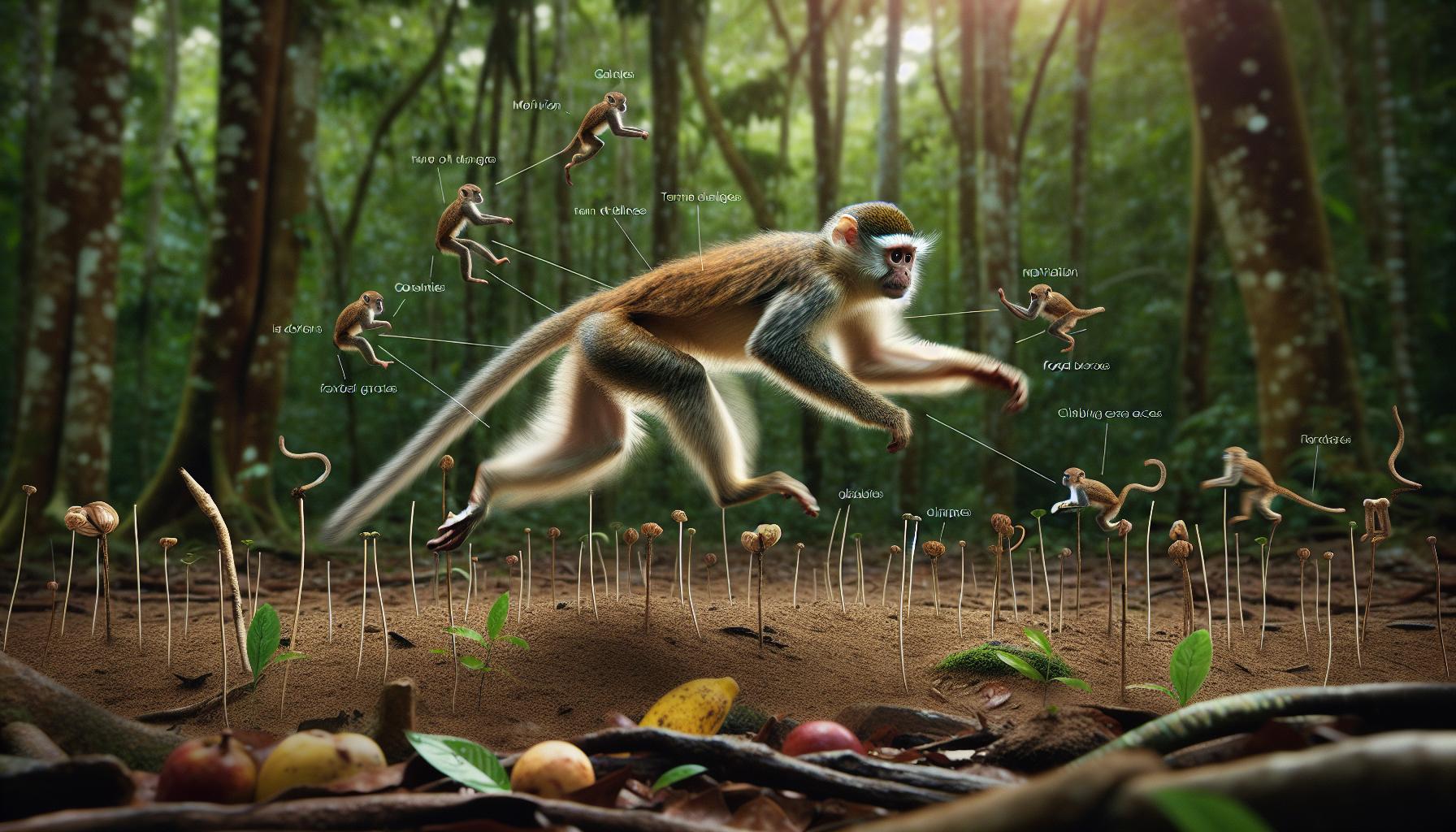
Factors Influencing Monkey Running Speed
In the fascinating world of primates, various factors come together to influence their running speeds, creating a rich tapestry of adaptations that suit their environments and lifestyles. For instance, the Patas Monkey, renowned as the fastest primate, can reach up to 34 miles per hour (55 km/h). This impressive speed is primarily attributed to their long, powerful legs and a lean body designed for sprinting. The ability to run fast not only aids in evading predators but also enables these monkeys to efficiently navigate the vast savannas they call home.
Another critical factor is the monkey’s habitat. Arboreal species like howler monkeys may not need to reach high speeds on the ground but excel in agility among the trees. Their physical build-strong limbs and prehensile tails-helps them swing and leap from branch to branch, a skill crucial for foraging and escaping ground-based threats. In contrast, terrestrial monkeys, such as the Rhesus Macaque, rely on both speed and agility, achieving burst speeds of about 25 miles per hour (40 km/h) to escape predators or navigate their variable terrains.
Diet also plays a role in influencing a monkey’s speed. A well-nourished monkey, with access to nutrient-rich food sources, is more likely to be agile and capable of high-speed movement compared to one suffering from malnutrition. Additionally, physical fitness and health can significantly impact running capability. Monkeys that maintain an active lifestyle, whether through social play or foraging, develop stronger muscles and better endurance, enhancing their overall speed.
Finally, behavioral traits and social structure can influence speed requirements. Monkeys living in larger groups may engage in more frequent social interactions that can foster agility and speed through playful chasing or fleeing from threats. This interplay of environment, diet, health, and social behaviors underscores the intricate balance that determines monkey running speeds, enhancing our understanding of these remarkable creatures and their adaptations.
In summary, the combination of their physical adaptations, environmental context, nutritional status, and social dynamics uniquely shapes each monkey’s ability to run efficiently in their specific ecosystems. This knowledge not only enriches our appreciation for these incredible animals but also highlights the diverse evolutionary strategies employed across different monkey species.
Comparing Monkey Speeds to Other Animals
The speed of monkeys is truly fascinating, especially when we start comparing them to other animals in the wild. Take the Patas Monkey, for instance, which holds the title for the fastest primate, reaching speeds of up to 34 miles per hour (55 km/h). When you compare this to the average human running speed, which caps out around 13 miles per hour (21 km/h) for elite sprinters, it’s clear that monkeys are built for speed. This agility is crucial for their survival, allowing them to escape predators or traverse their varied habitats, from open savannas to dense forests.
Speed Comparisons with Other Quick Animals
In the animal kingdom, the speeds achieved by some monkeys can rival those of many terrestrial mammals. For example, cheetahs are the reigning champions of speed, capable of sprinting at incredible bursts exceeding 60 miles per hour (97 km/h). While Patas Monkeys may not outrun a cheetah, they can certainly hold their own against medium-sized land animals, such as deer, which typically run around 30 miles per hour (48 km/h). This ability to match or exceed the speed of potential threats is essential for foraging as well as escaping predation.
Interestingly, when we shift focus to arboreal animals, the comparison takes on a whole new dimension. Monkeys like the Spider Monkey may not reach astounding speeds on the ground, but their capacity to leap and swing through trees-often as fast as 16 miles per hour (25 km/h) or more-grants them an advantage in their forested environments, where agility often trumps sheer speed. It’s a stark reminder of how speed must be contextualized: what may seem slow on open terrain can be remarkably swift when navigating treetops.
Unique Adaptations for Speed
Monkeys have developed various adaptations specifically designed to boost their speed and mobility. For instance, the long legs and lean bodies of the Patas Monkey are optimized for sprinting, while the musculature in their limbs allows for quick acceleration. Similarly, the flexible spine of the Spider Monkey and its prehensile tail facilitate rapid movement through the canopy, showcasing how speed isn’t just about how fast an animal can run, but also how well it can maneuver in its environment.
In a broader ecological context, understanding monkey speeds also sheds light on evolutionary strategies. The ability to run fast or climb quickly directly impacts their survival, influencing not just how they escape predators, but how they interact with their ecosystem, find food, and reproduce. As such, speed becomes an integral part of a monkey’s life, linked closely to its behavior and survival tactics in both urban and wild settings.
Speed Characteristics of Urban vs. Wild Monkeys
In the bustling heart of urban environments, monkeys have adapted their speed and movement skills to navigate both natural and man-made obstacles. Unlike their wild counterparts that rely on instinctual behaviors honed over centuries, urban monkeys often face unique challenges that shape their agility. For instance, the Rhesus Macaque has become adept at darting through busy streets and scaling buildings, demonstrating remarkable speed when evading humans or vehicles. Their ability to quicken their pace in urban settings can reach similar speeds to their wild behavior, showcasing how adaptability is crucial for survival.
In the wild, monkeys such as the Howler or Spider Monkey exhibit different characteristics; their speeds are often optimized for climbing and leaping across branches rather than sprinting. In forests, speed isn’t just about the fastest runner; it’s about rapid decision-making and agility. Howler Monkeys can leap distances of up to 20 feet while swinging through the trees at nearly 16 miles per hour (25 km/h). This reflects how their evolutionary design is tailored for an arboreal lifestyle where speed combines with the ability to navigate complex terrains filled with predators and competing species.
The contrast between urban and wild environments also influences the monkey’s behavior in terms of stress and social interaction. Urban monkeys may display increased speed during food raids or when scavenging through human refuse, driven by the need to outmaneuver both predators and competition. This has been observed in troops of monkeys that have learned to dart in and out of traffic, a testament to their learned behaviors shaped by human interaction. In contrast, wild monkeys often rely more on stealth and the ability to blend into their environment, using their speed primarily as a means of escape rather than competition for resources.
Ultimately, the speed characteristics of urban and wild monkeys reveal a fascinating adaptability. They adjust their strategies based on their surroundings, showcasing a remarkable blend of speed, agility, and intelligence. Understanding these differences not only enlightens us about primate behavior but also emphasizes the importance of preserving natural habitats where these incredible creatures can thrive without the pressures of urban life.
Top 5 Fastest Monkey Species and Their Secrets
The world of primates boasts some fascinating speedsters, but none quite compare to the incredible Patas Monkey, which holds the title of the fastest monkey in the world. These remarkable creatures can reach blazing speeds of up to 55 km/h (34 mph), skillfully maneuvering their way through the savannas and grasslands of East Africa. Understanding the fastest monkey species provides insight into their unique adaptations and habitats, revealing the secrets of their remarkable agility and speed.
Patas Monkey (Erythrocebus patas)
Speed: 55 km/h (34 mph)
The Patas Monkey is not only the fastest monkey but also the fastest primate on land. Found predominantly in Uganda and surrounding regions, these ground-dwelling monkeys have long limbs and a slender body structure that facilitate unparalleled sprinting capabilities. Their adaptations make them excellent at evading predators, such as leopards and hyenas, which rely on stealth during hunts.
Green Monkey (Chlorocebus sabaeus)
Speed: 48 km/h (30 mph)
Native to West Africa, the Green Monkey combines speed with agility, allowing it to thrive both on land and in the trees. Though it may not match the Patas Monkey’s remarkable speed, its ability to dart swiftly among branches helps it evade threat and maintain its social dynamics. Their energy and quickness are particularly evident during play and foraging for food.
Rhesus Macaque (Macaca mulatta)
Speed: 40 km/h (25 mph)
Common in urban environments as well as rural areas, the Rhesus Macaque has adapted well to human presence. Their speed and resourcefulness often allow them to navigate busy streets, making quick escapes from potential dangers. The social structure of these monkeys contributes to their swift movements; they often need to run quickly to maintain their place in complex hierarchies.
Chacma Baboon (Papio ursinus)
Speed: 37 km/h (23 mph)
Chacma Baboons are another agile species that illustrate the importance of speed in a social context. Found in southern Africa, they utilize their speed primarily when evading threats or while engaged in social interactions. Their strong bodies and powerful legs aid in quick bursts of speed, allowing them to escape predators or join their troop during foraging.
Spider Monkey (Ateles spp.)
Speed: Approximately 35 km/h (22 mph) while swinging
While not the fastest in a conventional sense, Spider Monkeys excel in speed while brachiating through trees. Their long limbs and prehensile tails give them a unique advantage in their arboreal habitats, enabling quick transitions between branches. This specialized form of locomotion is essential for evading ground predators and accessing food sources high in the canopy.
Understanding the traits and environments of these speedy primates not only enriches our appreciation of their abilities but also highlights the evolutionary adaptations that have allowed them to thrive in their respective habitats. Observing how these species use their speed-whether for survival, social dynamics, or evading predators-provides intriguing insights into the complex lives of monkeys.
Impact of Habitat on Monkey Speed
The habitat where various monkey species reside plays a crucial role in influencing their speed, agility, and overall movement patterns. For instance, the Patas Monkey, known to reach speeds of up to 55 km/h (34 mph), thrives in wide-open savannas and grasslands where long stretches allow for sprinting. Their environment has shaped their physical adaptations, with long limbs and a lean body that facilitate rapid movement across flat terrain. In contrast, monkeys living in denser forest environments, such as Spider Monkeys, focus on agility rather than outright speed. Their habitats demand a different kind of acrobatics-swinging between branches at approximately 35 km/h (22 mph) allows them to navigate the complexities of the canopy while avoiding ground predators.
The various ecosystems occupied by monkeys present distinct challenges and opportunities that shape their locomotive capabilities. For example, the Green Monkey, which can reach speeds of 48 km/h (30 mph), is adept at darting through both terrestrial and arboreal landscapes. This adaptability is crucial for escaping threats and accessing food sources in their native West African grasslands and coastal forests. The arboreal lifestyle also requires significant upper body strength and coordination to traverse the treetops efficiently.
Temperature and weather conditions also impact monkey speed. Monkeys found in arid regions, like the Patas Monkey, exhibit adaptations that allow them to withstand high temperatures while remaining agile. Their activity patterns are often aligned with cooler parts of the day, ensuring that while they may run fast, they do so when environmental conditions favor their physical exertions. Conversely, monkeys in temperate climates may have more consistent activity levels, which can affect their overall fitness and speed due to differing seasonal challenges.
In essence, a monkey’s speed is intimately linked to its habitat. Each species has evolved to optimize its movement in relation to its environment, whether adapting for speed on open plains or agility in the trees. Understanding these dynamics not only enhances our appreciation of their incredible abilities but also emphasizes the importance of habitat conservation for the survival of these amazing primates.
Unique Adaptations for Speed in Monkeys
In the world of monkeys, speed is not just about being the fastest; it’s an incredible blend of adaptations that allow different species to thrive in their unique environments. For example, the Patas Monkey, which holds the record for the fastest primate running at an astonishing 55 km/h (34 mph), has evolved specific traits that facilitate this remarkable speed. Its long, powerful limbs and lean body structure enable quick sprints across open savanna landscapes, where agility and speed are crucial for escaping predators and covering large distances in search of food.
Another fascinating example is the Green Monkey, which can reach speeds of up to 48 km/h (30 mph). Adapted for both terrestrial and arboreal living, these monkeys exhibit powerful hind leg muscles that propel them swiftly through the grasslands of West Africa. Their ability to run fast while also climbing quickly evens the playing field when pursuing or evading threats, showcasing a unique dual adaptation strategy. Moreover, their agility in trees aids in foraging for fruits and avoiding ground predators.
Many species, like the Spider Monkey, prioritize agility over sheer speed. Purposefully designed for life in the canopy, they rely on their strong arms and prehensile tails to swing gracefully from branch to branch. While they may not reach the same top speeds as the Patas or Green Monkeys, their ability to maneuver adeptly through thin branches allows them to escape predators efficiently and gather food in an environment where speed alone might not suffice. This demonstrates a crucial point: adaptations for speed often encompass a range of physical traits that suit the monkey’s lifestyle and environment.
In addition to physical characteristics, the behavioral adaptations of monkeys also play a significant role in their speed. For example, activity patterns can shift in response to environmental factors-monkeys in hotter climates, such as the Patas Monkey, tend to be more active during cooler times of the day, optimizing their speed. This interplay between environmental adaptation and physical capability illustrates the remarkable evolutionary processes that have shaped these fascinating creatures.
Understanding these adaptations not only sheds light on how different monkeys achieve their impressive speeds but also reminds us of the importance of habitat conservation. As their environments change, these unique adaptations need to be preserved to ensure the survival of these swift and agile primates.
Training and Conditioning Monkeys for Speed
In the fascinating realm of monkey training, conditioning for speed can be a careful blend of instinctual behaviors and structured activities. While monkeys, by nature, exhibit impressive agility and quick reflexes, facilitating their natural propensity towards speed can enhance these traits significantly. Training methods vary depending on the species, but the primary goals often include improved agility, muscle strength, and endurance, which enable monkeys to reach their impressive top speeds in the wild.
To tailor conditioning programs effectively, trainers often focus on a mix of physical and mental stimulation. For instance, using obstacle courses that mimic their natural environment can encourage monkeys to run, leap, and climb, enhancing their muscle tone and speed. These courses can be designed with varying heights and distances that promote natural behaviors like jumping and sprinting, reflecting how they would navigate through trees and across open ground. This not only boosts their physical capabilities but also encourages cognitive engagement as they learn new routes and problem-solving skills.
Moreover, incorporating elements of play is crucial. Monkeys, being naturally playful animals, respond well to games that involve chasing or fetching. These activities not only serve as workouts but also build strong social bonds with their trainers or peers. Regular, structured playtime can significantly influence a monkey’s agility and speed, just as it does in young human athletes. Training sessions, albeit rigorous, should always be brief and balanced with ample rest and relaxation to prevent fatigue and maintain enthusiasm.
Lastly, it’s important to remember that while training can enhance speed, the ultimate goal should be to respect the monkey’s well-being and natural tendencies. Conditioning should never force a monkey beyond its comfort zone or disrupt its social structures. Observational training techniques, which allow monkeys to learn from watching their peers, can be particularly effective. By creating an enriching environment that reflects their natural habitats and playing to their behaviors and instincts, trainers can nurture speed in a way that aligns with the monkeys’ inherent abilities and needs.
Cultural Representations of Fast Monkeys in Media
In the vibrant tapestry of popular culture, monkeys have long captivated audiences with their energetic antics, quick reflexes, and playful spirits. Represented in cartoons, films, and internet memes, these agile primates showcase an image of speed that often blurs the line between reality and exaggeration. From the classic character of “George” in “Curious George” to the high-paced escapades of Paul, a hyperactive monkey in various shows, their speed is frequently playfully amplified, reinforcing the idea that monkeys are quick on their feet-often leading viewers to consider the impressive speeds of real-world monkey species.
While the depiction of fast monkeys is largely for entertainment, it serves a dual purpose: celebrating their agility while educating audiences on the diverse characteristics of different species. For example, the capuchin monkey, revered for its intelligence and dexterity, often finds itself in roles that illustrate its rapid movements-leaping from tree to tree in a joyous flurry. This portrayal not only entertains but also introduces viewers to the real-life behavior of these animals in their natural habitats, where they can reach impressive speeds of up to 30 miles per hour when sprinting along branches or the forest floor.
Furthermore, the cultural narrative surrounding monkeys extends to various educational platforms, including documentaries and wildlife shows. Audiences watch in awe as these nimble creatures navigate complex environments, potentially sparking interest in conservation efforts. Their speed becomes a metaphor for the challenges they face in the wild, emphasizing the impact of habitat loss and the need for awareness in preserving their natural environments. Cultural representations can thus enhance our understanding of how crucial speed is to a monkey’s survival, influencing everything from predator evasion to foraging efficiency.
In the realm of social media, the meme culture surrounding fast monkeys has also taken a life of its own, often featuring humorous scenarios where monkeys appear to outpace their human counterparts or engage in quick-witted antics that require lightning-fast reflexes. These dynamic portrayals invite curiosity and engagement, inspiring viewers to learn more about the real capabilities of these extraordinary animals. By marrying fun with facts, media representations of monkeys emphasize their importance in the ecosystem while celebrating their remarkable speed, ultimately encouraging a deeper appreciation for wildlife and the diverse species that share our planet.
The Role of Speed in Monkey Behavior and Survival
In the wild, speed is not just a thrilling spectacle; it’s a vital survival skill for monkeys. With their diverse habitats, ranging from dense rainforests to arid savannas, these agile creatures rely heavily on their ability to move rapidly to escape predators, find food, and navigate complex environments. For instance, the japanese macaque, known as the snow monkey, exhibits remarkable speed in rough terrain, allowing it to quickly flee from threats like eagles or other larger predators that lurk nearby.
Speed and Predator Evasion
Whenever danger looms, a swift response can mean the difference between life and death. Monkeys such as the vervet monkey use their speed both individually and as a group to confuse and evade predators. Forming a protective formation, they can dart in various directions, disorienting any would-be attackers. This behavior is not just instinctual; it’s a learned tactic that enhances their overall survival, showcasing the evolutionary benefit of speed in their daily lives.
Foraging Efficiency
Beyond evading predators, speed plays a critical role in how monkeys forage for food. Many species, including the red-tailed monkey, are known for their quick movement from branch to branch as they scout for fruits and leaves. This agility allows them to exploit food resources more effectively, as they can cover large areas in a shorter time. Fast movements can also help them reach ripening fruits before other primates or animals do, giving them a competitive edge in their ecosystem.
Impact of Social Dynamics
Interestingly, the speed of monkeys also influences their social behaviors. In many species, such as howler monkeys, males often engage in competitive displays of speed and agility to attract mates and establish social hierarchies. This not only improves their standing within the group but also facilitates breeding opportunities, demonstrating how vital speed can be in the social tapestry of monkey communities.
Understanding the role of speed in monkey behavior enriches our appreciation for these fascinating primates and highlights the importance of conserving their natural habitats. As we learn more about their impressive abilities, it’s essential to remember their reliance on diverse environments to thrive, emphasizing the need for ongoing conservation efforts to safeguard these incredible species.
What We Can Learn from Monkey Speed Research
The study of monkey speed reveals fascinating insights into their behavior, evolution, and conservation. Understanding how fast different species can run not only highlights their physical capabilities but also illustrates the evolutionary pressures that have shaped their adaptations. For instance, species like the gelada can sprint up to 40 miles per hour in short bursts, a skill that is paramount for escaping predators in their rocky highland habitats. By diving into speed research, we uncover the intricate relationship between physiology and environment, showcasing how these animals have evolved to thrive in their specific niches.
Exploring monkey speeds also illuminates important factors affecting their growth and agility. Nutrition plays a critical role; for example, monkeys with a diet rich in fruits and leaves have been observed to have better stamina and speed compared to those with less optimal nutrition. Furthermore, social structures influence their running abilities. Males of many species often engage in competitive displays of speed and agility, which can affect access to resources and mating opportunities. Recognizing this social dynamic encourages us to appreciate the balance of speed within the broader context of survival and reproduction.
The implications of monkey speed research stretch beyond mere curiosity. Conservation efforts can benefit from understanding these dynamics-habitat preservation is crucial in maintaining the environments where these speedsters thrive. For example, urbanization can significantly impact monkey populations, stressing the need for effective conservation strategies that take into account the natural behavior and movement patterns of these primates. By learning from these agile creatures, we can better inform practices that protect their habitats, ensuring that future generations can appreciate the incredible diversity of monkey species and the speeds they can achieve in the wild.
In essence, studying how fast monkeys can run enhances our appreciation for their unique adaptations and the environmental pressures that shape their lives. It also serves as a call to action for conservation, reminding us how interconnected our planet’s ecosystems are and how the survival of these remarkable animals hinges on our commitment to protecting their homes.
Frequently asked questions
Q: How fast can a monkey run in comparison to other primates?
A: On average, monkeys can run at speeds of 20-30 miles per hour, but some species, like the mantled howler monkey, may go slower. In comparison, primates like chimpanzees can reach speeds of up to 28 miles per hour, showcasing a competitive edge among different primate species.
Q: What is the significance of speed for monkey survival?
A: Speed plays a crucial role in monkey survival as it aids in escaping predators and navigating through their environment quickly. Faster species often have adaptations like stronger leg muscles and enhanced reflexes, making them more adept at dodging threats in both urban and wild settings.
Q: Are some monkey species faster than others, and why?
A: Yes, certain monkey species, such as the Red Howler, are adapted for speed due to their lighter build and longer limbs. These physical traits enable them to navigate their habitats efficiently, impacting their speed. Speed varies widely depending on a monkey’s environment and lifestyle needs.
Q: How do urban environments affect monkey running speed?
A: Urban environments can inhibit monkey running speed due to obstacles like traffic and buildings. Urban monkeys may develop increased agility to maneuver through these structures, leading to unique adaptations compared to their wild counterparts, who thrive in vast, open forests.
Q: What adaptations promote speed in monkeys?
A: Adaptations promoting monkey speed include long, powerful legs, flexible joints, and a lightweight body structure. For instance, the Spider monkey has long limbs and a prehensile tail, facilitating swift movement through trees and allowing for rapid running on the ground.
Q: Why do some monkeys engage in speed training?
A: Some monkeys are subjected to speed training for rehabilitation or behavioral enrichment, promoting physical health and mental stimulation. Training can enhance their agility and reduce stress, making them more comfortable in both captivity and their natural habitat.
Q: How does speed relate to mating behavior in monkeys?
A: Speed can influence mating behavior as faster males may have better access to mates and can demonstrate strength and fitness during courtship displays. This advantage contributes to their success in attracting females and establishing social hierarchies.
Q: What unique cultural representations of fast monkeys exist in media?
A: Fast monkeys are often depicted in children’s cartoons and movies as nimble, playful characters, emphasizing their speed and agility. Such portrayals, like that of Abu from Aladdin, highlight their energetic nature, captivating audiences and promoting interest in primate behaviors.
Insights and Conclusions
Curious about the incredible speed records of the world’s monkeys? You’ve just uncovered a treasure trove of fascinating insights! Whether you’re a wildlife enthusiast or just someone who enjoys learning about our primate cousins, understanding how fast monkeys can run helps us appreciate their unique behaviors and habitats. If you enjoyed this deep dive, don’t miss out on our related articles, like “Top 10 Fastest Animals in the Jungle” and “Understanding Primate Social Structures.”
Now is the perfect time to explore more! Subscribe to our newsletter for the latest updates on wildlife facts and interesting species profiles. Have you ever wondered about how speed impacts a monkey’s survival? Join the conversation in the comments below, and share your thoughts or experiences with primates. Your insights could enrich our community and encourage others to engage with this incredible world of nature. Keep discovering more, and remember: every visit brings you closer to understanding the wonderful complexity of wildlife!
Get our latest guides, news, and insights highlighted in your Google Search & AI Overviews.