Did you know that flying squirrels can glide over distances of up to 150 feet? These fascinating creatures have adapted to life in the trees, using their unique body structure to soar gracefully from branch to branch. But how do they achieve this remarkable feat? Understanding the science behind a flying squirrel’s flight not only sheds light on their incredible capabilities but also sparks our curiosity about nature’s wonders. As we explore their specialized anatomy and behaviors, you’ll discover the intricate ways these nocturnal explorers navigate their arboreal homes. So, whether you’re a wildlife enthusiast or simply curious about the animal kingdom, join us on this journey to uncover the secrets of how flying squirrels conquer the skies!
How Flying Squirrels Achieve Flight: The Science Behind It

Flying squirrels are remarkable creatures that have mastered the art of gliding. Unlike birds or bats, which can flap their wings to achieve flight, these unique rodents take advantage of their anatomical adaptations to soar gracefully through the air. Their extraordinary ability to glide is largely facilitated by a membrane called the patagium, which stretches from their forelimbs to their hind limbs. This skin flap acts much like a parachute, increasing surface area and allowing for controlled flight across distances of over 150 feet!
When a flying squirrel leaps from a tree, it spreads its limbs wide, stretching the patagium taut. As they descend, they can adjust their body orientation and control their path through subtle movements of their limbs and tails. This skillful maneuvering not only helps in navigating through the treetops but also aids in slowing their descent, minimizing the impact when they land. Their lightweight bodies enhance this gliding ability, as lower mass allows for greater aerial mobility.
Furthermore, these squirrels have evolved keen eyesight and sensitive whiskers, which aid in spotting potential landing spots during their glides. They tend to prefer habitats with trees that are close enough to jump from, allowing them to utilize their gliding capabilities effectively. Research suggests that their gliding behavior is a crucial adaptation for escaping predators and foraging for food, showcasing how evolution has finely tuned their abilities to thrive in their environments.
The gliding lifestyle of flying squirrels exemplifies the wonders of adaptation in the animal kingdom. As they glide silently through the forests at dusk, they remind us of the intricate balance between form and function that allows them not just to survive, but to flourish in their ecological niche.
Unique Adaptations That Enable Gliding
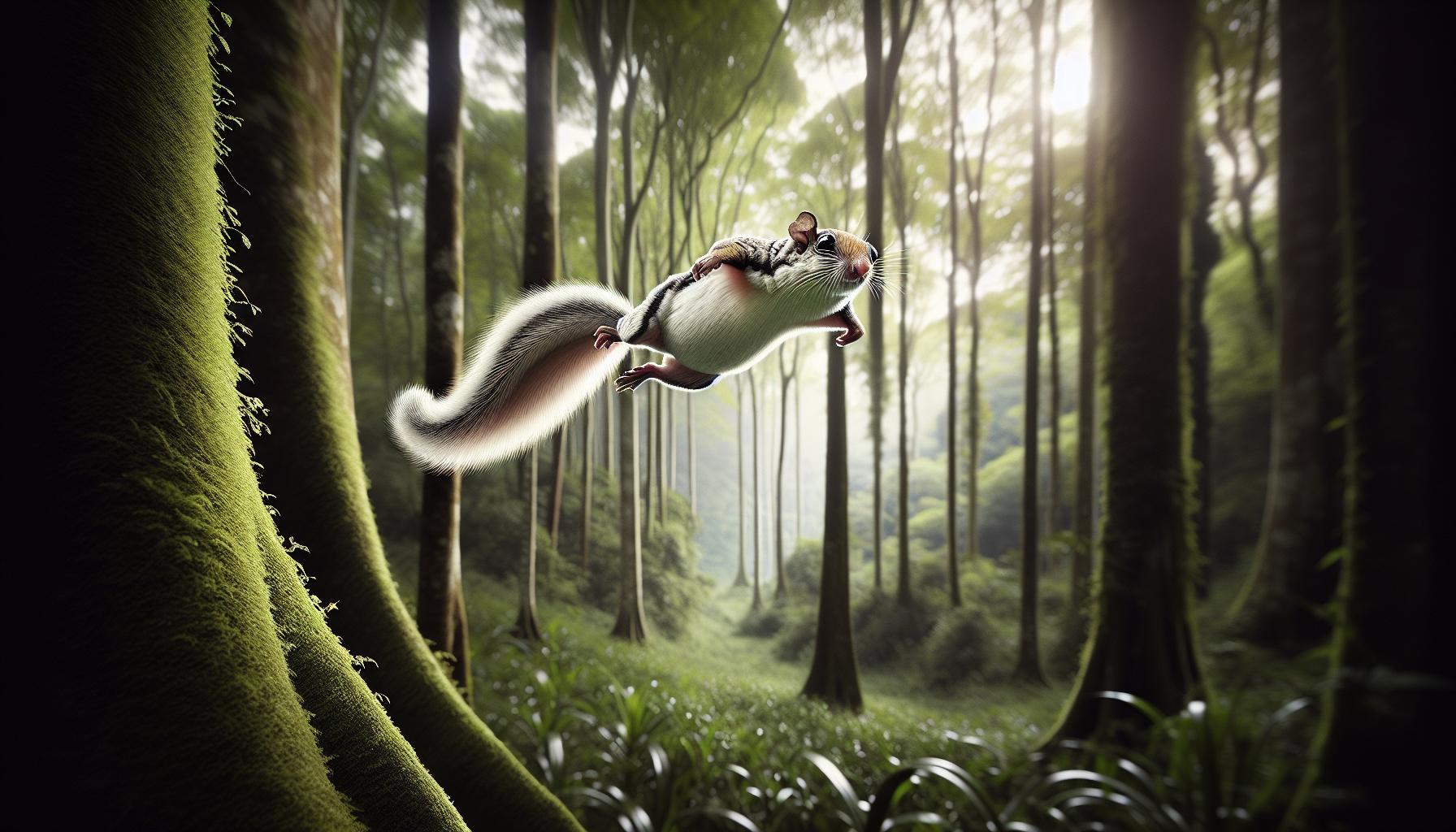
Flying squirrels are not just adorable; their unique adaptations for gliding make them marvels of nature. One of the most fascinating aspects of these creatures is their specialized skin membrane, known as the patagium. This membrane stretches from their forelimbs to their hind limbs, effectively creating a wing-like surface. When a flying squirrel leaps from a tree, the patagium unfurls, allowing them to glide gracefully through the air. This gliding ability is not merely about taking flight; it’s a finely tuned skill that helps them navigate the forest canopy, hunt for food, and escape predators.
To enhance their gliding efficiency, flying squirrels possess several adaptive features. Their bodies are lightweight and flexible, allowing for a greater range of motion in the air. With broad, flat tails, they can steer and stabilize themselves during their descent. These tails act as rudders, helping to control direction and speed. Additionally, flying squirrels have evolved exceptional vision and heightened awareness. Their large eyes enable them to see well in low light, a crucial adaptation for their crepuscular lifestyle, where they are most active during twilight. This keen eyesight helps them identify potential landing spots and assess the safety of their environment while gliding.
Another remarkable adaptation is their ability to changing their stance mid-air. As they glide, they can adjust their body orientation and limb positioning, allowing for precise landings. This flexibility is advantageous for navigating forest environments filled with branches and other obstacles. Also, their sharp claws enable them to grip tree trunks and branches easily, ensuring a secure landing after an impressive glide.
Overall, the unique adaptations of flying squirrels not only make them exceptional gliders but also dynamic survivors in their ecosystems. Understanding these features can inspire conservation efforts and spark greater appreciation for these enchanting creatures of the night.
The Anatomy of a Flying Squirrel
Flying squirrels are truly remarkable creatures, not just for their ability to glide but also for their unique anatomical features that support this enchanting skill. Central to their gliding prowess is the patagium, a specialized membrane that extends from their wrists to their ankles, creating a parachute-like surface. This membrane is composed of a thin layer of skin supported by a network of fibers, which allows it to stretch and catch air as the squirrel leaps from heights. When they spread their limbs, the patagium opens wide, offering them both lift and control during their flight.
Key Anatomical Features
Several unique structures enhance a flying squirrel’s aerial capabilities:
- Lightweight Frame: Their lightweight skeletal structure is crucial for gliding. This agility allows for quick maneuvering through trees and over obstacles.
- Broad Tails: The tail acts like an aileron on an aircraft, enabling the squirrel to steer and stabilize during flight. This helps them adjust their trajectory and ensure a safe landing.
- Powerful Limbs: While they glide, their powerful hind legs provide the necessary thrust when launching from a branch, making them adept at taking off from varying heights.
- Sharp Claws: These aid in gripping surfaces for secure landings and climbing. Their claws are particularly adapted for clutching bark and navigating vertical surfaces effortlessly.
The eyes of flying squirrels are another fascinating aspect of their anatomy. With large, well-developed eyes, they have exceptional night vision, allowing them to navigate the forest canopy in low-light conditions. This adaptation is vital since they are primarily crepuscular, being most active during dusk and dawn. Their keen eyesight not only helps in spotting predators but also in locating food sources, such as fruits and nuts, while they glide through their arboreal homes.
In summary, the anatomy of flying squirrels is beautifully crafted for gliding through their forest habitats. Each feature, from their gliding membranes to their sharp claws, plays an integral role in their survival and adaptability, showcasing nature’s ingenuity in design. Understanding these details not only enriches our appreciation for these fascinating creatures but also highlights the importance of conserving their natural habitats.
Comparing Flight Mechanics: Gliding vs. Flapping

Flying squirrels might not have wings like birds, but they have mastered the art of gliding, allowing them to navigate their arboreal worlds with grace and agility. Unlike the flapping flight of birds, which involves a complex cycle of wing movement to generate lift and propulsion, flying squirrels rely on their unique patagium and the principles of gliding to traverse from tree to tree. This distinction in flight mechanics is fascinating and essential for understanding their behaviors and ecological niches.
When a flying squirrel launches from a height, it spreads out its limbs to fully expose its patagium, the membrane connecting its limbs. This adaptation acts almost like a parachute, increasing surface area and reducing fall speed. The primary physics at play here is the balance of lift and drag. As the squirrel glides, it can maximize lift by manipulating the angle of its body-tilting it upward can reduce descent speed, while angling downward can allow for more forward thrust. In contrast, birds achieve lift through a flapping action that generates thrust and can change direction quickly. This energetic wingbeat requires considerable muscle power and energy, but it provides more speed and maneuverability in the air.
In the realm of gliding, speed may not be the goal; instead, control and endurance are crucial. By utilizing the natural currents of air, flying squirrels can travel significant distances-sometimes over 150 feet in a single glide-without expending much energy compared to the flapping mechanics of birds. This energy efficiency allows them to conserve resources while foraging, which is particularly beneficial since they primarily feed on fruits, nuts, and tree sap. Their ability to glide smoothly through the forest also plays a critical role in escaping predators, allowing them to make sharp turns and weave through branches with ease.
In summary, the differences between gliding and flapping operate within distinct sets of mechanics, each suited to the lifestyle and needs of the animal. While flying squirrels exemplify the elegance of gliding-using modified anatomical features and physics-they showcase an impressive adaptation to forest life that is both efficient and effective. Their gliding ability not only aids in mobility but also enhances their survival in the wild, making them a remarkable subject of study in the animal kingdom.
Habitat and Behavior: Where Do They Thrive?
Flying squirrels primarily thrive in deciduous and mixed forests, where they can take advantage of the plentiful trees to glide and forage. These habitats provide essential elements like tall trees for launching into their graceful flight and abundant food sources such as fruits, nuts, and tree sap. They are often found in areas with a dense canopy, which helps them navigate through their arboreal environment while avoiding predators.
In terms of behavior, flying squirrels are most active during the twilight hours, including the early evening and early morning. This nocturnal lifestyle allows them to avoid many daytime predators and take advantage of cooler temperatures while foraging. Often social animals, flying squirrels may live in small colonies. They communicate with each other through a series of sounds, ranging from chirps to barks, especially during mating season when interactions become more frequent.
One fascinating behavior that showcases their adaptability is the way flying squirrels utilize their gliding abilities to avoid danger. When threatened, they can make quick, sharp turns and glides, often disappearing into dense foliage, which makes it challenging for predators to keep up. This ability not only aids in escape but also enhances their foraging efficiency, allowing them to cover large distances without expending excessive energy.
Furthermore, flying squirrels have been observed using their senses cleverly. Their large eyes help them see in low light, which is crucial for spotting food or potential threats. Depending on the region, they may adapt their diets slightly, incorporating local fruits or nuts specific to their habitat, showcasing their flexibility in surviving across various environments. With their enchanting gliding motion and strategic behaviors, flying squirrels remain a stunning example of nature’s ingenuity in adapting to arboreal life.
The Role of Membranes in Gliding Efficiency
The remarkable ability of flying squirrels to glide through the trees owes much to their specialized membranes. These membranes, known as patagia, stretch from their wrists to their ankles, forming a wing-like structure that aids in gliding from high branches to the forest floor. When a flying squirrel leaps off a branch, it spreads these membranes taut, increasing surface area and allowing them to catch air like a parachute. This aerial maneuverability enables them to traverse significant distances, often covering up to 150 feet or more in a single glide.
The design and structure of the patagia play a crucial role in how efficiently flying squirrels can maneuver in their arboreal habitat. The soft, flexible membranes are made of a skin-like material that is both lightweight and durable, ensuring they can withstand the rigors of regular use. Each membrane is also laced with muscle fibers that allow the squirrel to adjust its body posture mid-air. When soaring, a flying squirrel can tilt and change angles to steer, demonstrating a surprising level of control during their glides.
Another fascinating aspect is how these membranes assist in reducing air resistance. As flying squirrels glide, their bodies adopt a streamlined posture, which minimizes drag and enhances gliding speed. This aerodynamic advantage allows them to escape predators swiftly and traverse their forested environments more efficiently in search of food. Coupled with their ability to execute sharp turns and descents, the patagia transform a simple jump into an elegant flight, showcasing nature’s incredible ingenuity.
Ultimately, the membranes not only exemplify the evolutionary adaptations necessary for survival but also highlight the interplay between function and design in the animal kingdom. Observing a flying squirrel in action, as it gracefully navigates the treetops, brings to life the delicate balance of form and function that defines these incredible creatures.
Understanding Their Diet and Feeding Habits
Flying squirrels are not only remarkable for their ability to glide gracefully through the trees, but they also have an interesting diet that complements their unique lifestyle. These nocturnal creatures are primarily herbivorous, with a diet rich in nuts, fruits, and fungi, which provides them with essential nutrients and energy for their active nights.
Their feeding habits are often tied to seasonal availability. In the fall, for instance, flying squirrels will feast on acorns and other nuts, which they can cache to eat later. This behavior not only helps them stock up for winter but also plays a crucial role in tree regeneration, as buried nuts can sprout into new trees. In addition to nuts, flying squirrels enjoy a variety of fruits, including berries and tree sap. Their diverse diet is supplemented by fungi, which they may find growing on trees; these mushrooms provide important vitamins and minerals.
- Diverse Diet: Nuts, fruits, fungi, and tree sap.
- Nutritional Needs: High-fat diets help sustain energy levels.
- Seasonal Variability: Caching food in the fall enhances survival during lean months.
Flying squirrels also benefit from their keen sense of smell, which aids in locating ripe fruits or hidden caches of nuts. Their large eyes, adapted for nighttime vision, also play a significant role in detecting food at dusk or during moonlit nights. Thanks to these adaptations, they can forage effectively, ensuring they meet their dietary requirements.
In the wild, understanding these feeding habits is essential for conservation efforts. Protecting their habitats ensures a stable food supply, which is crucial for their survival. For people considering adopting a flying squirrel as a pet, it’s vital to replicate their natural diet as closely as possible, providing a mix of high-quality pellets, fruits, nuts, and occasional insects for protein. This not only keeps them healthy but also aligns with their foraging instincts, making for a happier, more engaged pet.
Predators and Threats: What Challenges Do They Face?
While flying squirrels have evolved remarkable gliding abilities, they face numerous challenges in the wild that threaten their survival. Predators such as owls, hawks, and even household pets can pose significant risks, particularly because these agile creatures are most active during the night. Their nocturnal nature allows them to evade many daytime predators, but it does not shield them from all dangers. For instance, larger birds of prey are skilled hunters, able to spot these small creatures even in low light.
Additionally, habitat loss is a substantial threat to flying squirrels. Urbanization and deforestation lead to the destruction of the trees they depend on for both shelter and food. As their natural habitats shrink, these remarkable gliders are forced into smaller areas, which can intensify competition for resources among individuals. When flying squirrels are pushed into fragmented environments, their risk of predation increases, as they are forced to cross open spaces with fewer trees for cover.
Human activity also poses threats in less obvious ways. Light pollution affects their nocturnal behaviors, disrupting their feeding and mating patterns. In areas where artificial light is prevalent, flying squirrels may find it harder to navigate their environment and avoid predators. In addition, it’s essential to remember that not all urban settings are hospitable; cars and other forms of transportation can contribute to the mortality rate of these animals when they attempt to move between tree patches.
Conservation efforts play a vital role in addressing these challenges. Protecting existing woodland areas and restoring habitats is crucial. Community engagement in wildlife corridors can allow these animals to traverse between areas more safely. In urban settings, creating green spaces that include native trees and plants can help provide a refuge for flying squirrels. Understanding and mitigating these threats is key to ensuring that future generations can enjoy the sight of these fascinating creatures gliding gracefully through the treetops.
Conservation Efforts: Protecting These Amazing Creatures
Flying squirrels enchant us with their graceful gliding through the treetops, but these remarkable creatures face serious threats that could lead to their decline. Conservation efforts are crucial not only for their survival but also for maintaining biodiversity in forests where they play an essential role. By understanding their challenges, we can take meaningful steps to protect these amazing gliders.
One vital aspect of conservation is habitat protection. Ensuring that flying squirrels have access to large, interconnected forests is key. Urban development and deforestation destroy the trees these animals depend on for shelter and food. To combat this, local communities can initiate or participate in reforestation projects that focus on planting native trees. Additionally, creating wildlife corridors-paths that connect fragmented habitats-helps these critters safely navigate between tree patches, reducing their exposure to predators and other dangers.
Education is another powerful tool in conservation efforts. By raising awareness about flying squirrels and their needs, we can inspire people to take action. Schools and community groups can organize workshops or nature walks that highlight the importance of preserving wooded areas and the wildlife within them. Even small changes, like reducing outdoor lighting to minimize light pollution, can positively impact the nocturnal behavior of flying squirrels, helping them thrive in their natural habitats.
For those interested in contributing, grassroots movements often welcome volunteers for habitat clean-up and monitoring programs, providing hands-on opportunities to make a difference. Furthermore, supporting wildlife protection organizations that focus on saving habitats will strengthen our collective efforts to ensure future generations can marvel at flying squirrels gliding overhead. Each of us can play a role in these critical conservation endeavors, ensuring that the skies remain filled with these incredible gliders for years to come.
Flying Squirrel Mythology: Fascinating Cultural References
Flying squirrels have long captured human imagination, often appearing in mythology and folklore around the world. These creatures, with their enchanting ability to glide gracefully among the trees, symbolize a unique blend of agility and whimsy. In various cultures, they have been associated with adaptability and mystery, offering insights into human perspectives on nature’s wonders.
In Native American folklore, flying squirrels are sometimes seen as messengers between the earthly realm and the spirit world. Their nocturnal habits and elusive nature lend them an air of intrigue, leading to beliefs that these animals can traverse different dimensions. For instance, in some tribes, they are considered symbols of the night and are revered for their connection to the moon’s power, often depicted in stories celebrating their agility and supernatural abilities.
In East Asian cultures, particularly in Japan and China, flying squirrels are often associated with good fortune and resilience. They appear in tales emphasizing their resourcefulness and cleverness, traits highly valued within those societies. For example, in traditional Japanese storytelling, the flying squirrel’s ability to navigate complex forest environments is seen as a metaphor for overcoming life’s challenges with grace and intelligence. This has led to their presence in art and literature, symbolizing perseverance and adaptability.
While not as widely referenced in popular culture, flying squirrels have made appearances in animated films and children’s literature, where they are often portrayed as adventurous and playful characters. These representations reflect their charming nature and help foster a sense of wonder among younger audiences. Ultimately, the mythology surrounding flying squirrels underscores their role as symbols of agility, mystery, and adaptability, resonating with human traits and our admiration for nature’s remarkable diversity.
Through engaging stories and rich cultural references, flying squirrels continue to inspire curiosity and respect for wildlife, inviting us to appreciate the beauty and significance of the animals sharing our world.
How to Care for Flying Squirrels as Pets
Caring for a flying squirrel as a pet is a rewarding experience, filled with the joy of nurturing these fascinating creatures. Known for their graceful gliding ability and friendly demeanor, flying squirrels require a special environment and diet to thrive in captivity. They are social animals, so the first thing you’ll need to consider is whether to adopt a single squirrel or a pair. Having a buddy can keep them happy and engaged, as they are naturally social creatures.
Creating an appropriate habitat is essential for your flying squirrel’s health. A large, multi-level cage is ideal, allowing plenty of room for climbing and gliding. Look for a cage that is at least four feet tall and three feet wide, with horizontal bars for climbing. Inside, provide a variety of safe materials like branches and platforms, and include nesting boxes filled with soft bedding for warmth and comfort. Remember, flying squirrels are nocturnal, so their environment should mimic a natural, dark and quiet setting during the day.
Diet also plays a crucial role in keeping your flying squirrel healthy. In the wild, they feast on fruits, nuts, and tree sap, so replicating this diet in captivity is vital. A mixture of high-quality rodent pellets, fresh fruits, and some nuts will ensure they get a balanced diet. Avoid processed foods, as they can lead to health issues. It’s also beneficial to provide occasional treats like insects or cooked eggs to mimic their natural foraging behavior.
Interaction is key to forming a bond with your flying squirrel. Engage them with toys that stimulate their curiosity, such as tunnels or foraging puzzles. Spend quality time each day, allowing them to climb on you and explore their surroundings. Patience is essential; building trust may take time, but the reward is a playful companion who flutters through the air with grace.
In conclusion, with the right environment, diet, and interaction, your flying squirrel can live a happy and fulfilling life as part of your family. Their unique abilities and captivating personalities can bring a sense of wonder into your home, making them cherished companions.
Engaging Facts You Didn’t Know About Flying Squirrels
Did you know that flying squirrels have the unique ability to glide more than 150 feet in a single leap? Their incredible gliding skills come from a combination of specialized anatomy and a unique membrane that stretches between their limbs, allowing for controlled aerial movements that resemble flying. This adaptation is not just for show; it plays a vital role in their survival, helping them evade predators and travel between trees in search of food.
Flying squirrels possess a large patagium, a membrane that extends from their wrists to their ankles, which allows them to catch air and slow their descent. This webbed structure is not only functional but also patented by evolution; when they leap from a height, they use their limbs to steer and navigate to their desired landing spot, much like a hang glider. While they don’t actually flap their limbs to gain altitude, they can maneuver through the air by adjusting the tension in their membrane and using their tails for balance, showcasing a remarkable blend of agility and precision.
In terms of social behavior, flying squirrels are quite the socialites. They often live in small family groups and communicate using a series of high-pitched vocalizations that can include chirps and whistles. This social structure helps them establish territory and warn each other of potential threats. When you see them gliding through the trees at dusk, it’s not just a sight to behold; it’s a demonstration of their highly developed communication skills and teamwork in navigating their wooded habitats.
Additionally, these fascinating creatures have a diet that reflects their adaptive nature. In the wild, they consume a variety of foods including fruits, nuts, and tree sap, and they are known to share food caches with their companions. This not only strengthens their bonds but also ensures that they can survive in the colder months when food is scarce. Their ability to adapt both their diet and their behavior is key to thriving in diverse environments, from urban parks to dense forests.
Whether you’re considering keeping one as a pet or simply want to appreciate these furry flyers in the wild, understanding the amazing facts about flying squirrels can deepen your admiration for these remarkable animals and their place in our ecosystem.
Frequently asked questions
Q: How do flying squirrels navigate while gliding?
A: Flying squirrels navigate using their keen eyesight and their ability to feel air currents. They can adjust their parachute-like membranes to steer and control their descent, allowing them to target landings precisely, often upon branches or other safe spots.
Q: What adaptations help flying squirrels glide effectively?
A: Flying squirrels possess unique adaptations like patagium, which are membranous flaps of skin extending from their wrists to ankles. This structure increases surface area, allowing efficient gliding and minimizing energy expenditure during their aerial maneuvers.
Q: Can flying squirrels truly fly, or do they only glide?
A: Flying squirrels do not fly in the traditional sense; they glide. Their anatomical features allow them to cover significant distances through gliding rather than flapping wings, similar to many other gliding mammals.
Q: What environmental factors influence flying squirrel gliding?
A: Wind and terrain greatly influence how flying squirrels glide. They rely on favorable winds to extend their gliding distances and choose trees with adequate height and structure to assist in their graceful aerial movements.
Q: How important is a flying squirrel’s diet for its gliding ability?
A: While diet does not directly affect gliding, a healthy intake of fruits, nuts, and fungi ensures that flying squirrels maintain their energy levels and physical condition, which can enhance their overall agility during gliding.
Q: When are flying squirrels most active for gliding?
A: Flying squirrels are primarily nocturnal, making them most active at night. This behavior helps them avoid predators and utilize the cover of darkness for gliding as they search for food and navigate their territory.
Q: Where can flying squirrels be commonly found in the wild?
A: Flying squirrels are commonly found in wooded areas across North America, particularly in forests with plenty of trees for gliding. They thrive in environments that provide sufficient heights and natural cover for safety.
Q: What do flying squirrels do when they land?
A: Upon landing, flying squirrels use their sharp claws to grasp onto branches or bark. They quickly adjust their posture and can spring off to glide again if necessary, maintaining readiness for potential escape from predators.
In Summary
Now that you understand the incredible science behind how flying squirrels soar through the trees, why not explore more about these fascinating creatures? Check out our articles on their unique habitats and care needs to learn how to support their conservation. If you loved this deep dive, make sure to subscribe to our newsletter for the latest in wildlife trends and exciting facts!
Don’t hesitate to leave a comment below with your thoughts or questions about flying squirrels or related wildlife. Have you ever spotted one in your garden? Sharing your experiences can enrich our community’s knowledge. And remember, every little insight helps in understanding and protecting our wildlife friends. Let’s keep the conversation going and continue your journey into the wonders of nature!
Get our latest guides, news, and insights highlighted in your Google Search & AI Overviews.