If you’ve ever pulled a pan of warm, fragrant monkey bread from the oven only to discover it’s too doughy or undercooked, you’re not alone! Knowing when monkey bread is perfectly done is crucial for achieving that delightful pull-apart texture and golden crust. In this guide, we’ll explore foolproof tips and tricks to determine the perfect timing for baking monkey bread. With just a few simple steps, you can avoid the disappointment of underbaked bread, ensuring that your next batch is the star of the table. Whether you’re a seasoned baker or trying monkey bread for the first time, mastering this skill will elevate your dessert game and impress your friends and family. Let’s dive in and uncover the secrets to baking monkey bread to perfection!
How to Determine the Perfect Baking Time for Monkey Bread
The perfect baking time for monkey bread can be a delightful challenge, often relying on a blend of intuition and technique. This delicious, gooey treat requires your attention to detail, as its warm doughy goodness needs just the right conditions to transform into the perfect indulgence. Typically, monkey bread bakes for about 30 to 40 minutes at a temperature of 350°F (175°C), but there are key indicators to ensure it’s not only baked through but also perfectly textured.
To determine the ideal baking time, start by observing the visual cues. The golden-brown color is your first hint; once the monkey bread reaches a rich, warm hue, it’s well on its way to being done. Additionally, gently pressing on the top of the bread should yield a slight bounce back, indicating that the dough has risen and cooked properly. If it feels overly soft or sinks back down, it may need a little more time. Remember, baking times can vary slightly based on the oven and the specific recipe, so check around the 25-minute mark, especially if you’re experimenting with a new variation.
Another crucial aspect of determining the right baking time is the internal temperature. An ideal internal temperature for monkey bread is around 190°F (88°C). If you have a kitchen thermometer, this quick check can take the guesswork out of the equation. Without one, a good method is to insert a toothpick into the center; if it comes out clean or with a few moist crumbs (not wet batter), your monkey bread is ready.
In addition to these techniques, consider the placement of your baking dish in the oven. Centering your monkey bread allows for even heat distribution, preventing undercooked spots. On the flip side, if you find it’s browning too quickly on the top while the inside remains doughy, you can cover it loosely with aluminum foil to prevent over-browning while it continues to bake through. Engaging with these various indicators not only enhances your baking success but also enriches the overall experience of creating this beloved dish.
Signs to Look For: Visual Indicators of Doneness
As you venture into the delightful world of baking monkey bread, watching for key visual indicators can make all the difference between a perfect batch and a less impressive outcome. This satisfying treat not only deserves attention but also responds brilliantly to careful observation. The first thing to notice is the color of your monkey bread. Aim for a golden-brown hue, which signals that it’s nearly ready to come out of the oven. This warm, rich color not only enhances the presentation but also suggests that the sugars in the dough are caramelizing beautifully, contributing to that irresistible sweet flavor we’re all here for.
Another crucial visual indicator to rely on is the texture of the bread. Gently pressing the top of the monkey bread should reveal a slight bounce-back. If the dough feels overly soft or if it doesn’t spring back at all, it’s a sign that it might need a bit more time. On the contrary, if it feels hard or looks very dark, you may be edging toward overbaking. Additionally, observe how the pieces of dough separate. They should be cooked through and slightly pulling away from the sides of the pan, indicating they have expanded properly during baking.
To further gauge your success, keep an eye on the baking time, but allow these visuals to guide you. While you may need to start checking at around 25 minutes, it’s essential to trust what your eyes are telling you. If you see that beautiful golden color and feel a firm yet slightly springy texture, you’re likely on the right path. Don’t hesitate to rotate your pan in the oven if your bread is browning unevenly or if certain spots are looking more done than others-this will help ensure a uniform bake.
Remember, each oven can behave differently, and factors like the pan material can affect the bake time and outcomes. Noticing these signs will not only help you nail the perfect baking time but also elevate your monkey bread game to delicious new heights!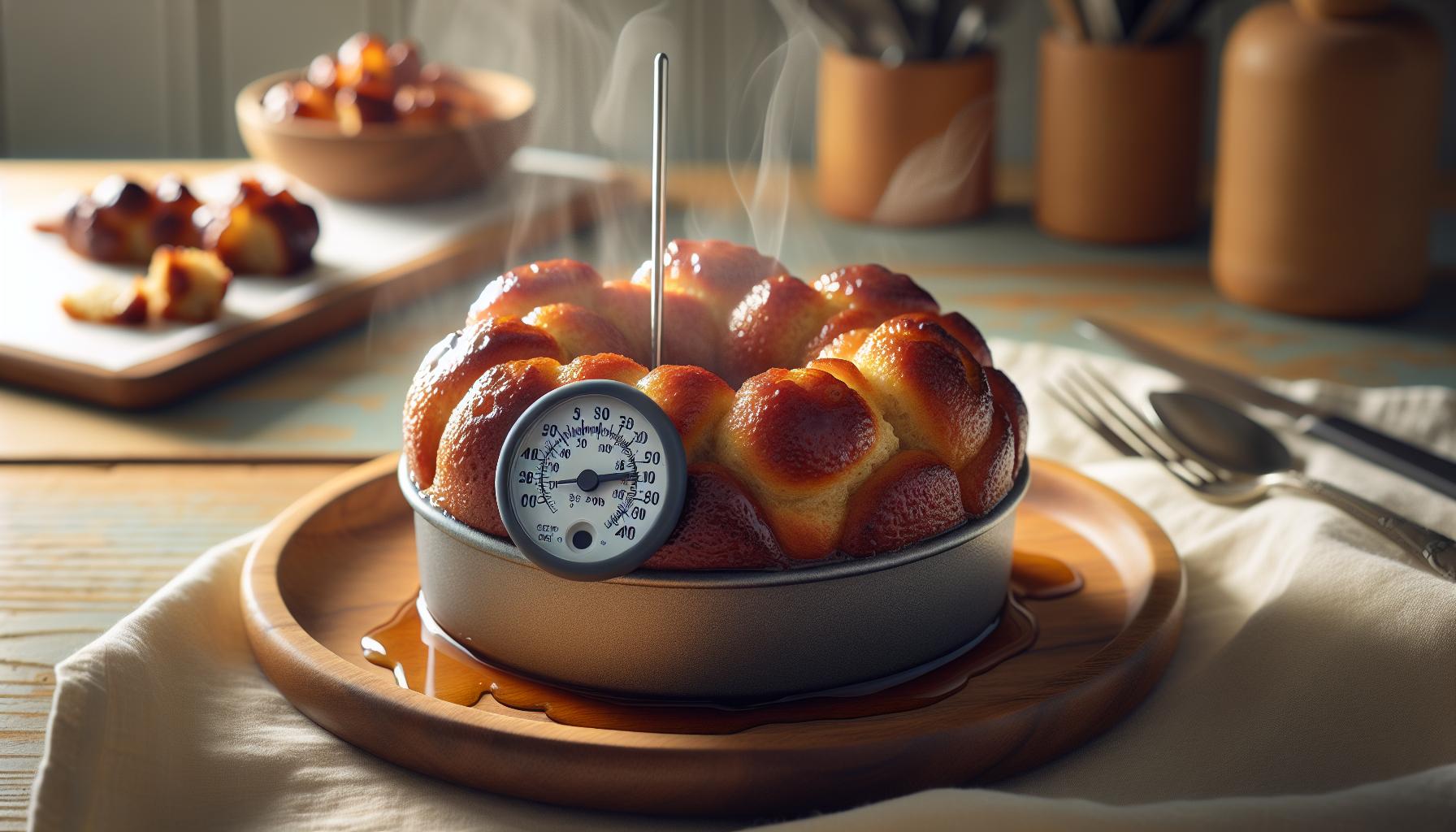
The Best Internal Temperature for Monkey Bread
To achieve the perfect monkey bread, understanding the ideal internal temperature is key. While the golden-brown exterior is visually appealing, the true test of doneness lies within. For monkey bread, the optimal internal temperature is around 190°F to 200°F (88°C to 93°C). This temperature ensures that the dough is fully baked, achieving that delightful fluffy and tender texture without being doughy in the center.
Using a reliable food thermometer is the best way to check this. Insert it into the thickest part of the bread or in the center of one of the larger pieces. If the temperature reads below 190°F, give your monkey bread a few more minutes in the oven, and check again. Remember, every oven is a little different, so your baking time may vary. It’s better to check early and often, rather than risk overbaking.
Many bakers often overlook the importance of internal temperature, focusing solely on time and visual indicators. However, for a treat as indulgent as monkey bread, precision is crucial. A perfectly baked loaf will not only taste fantastic but will also hold its shape and not collapse upon slicing. Ensure your baking success by monitoring this important temperature, making your monkey bread a crowd-pleasing favorite!
Tips for Checking Doneness Without Cutting
Baking monkey bread is a delightful experience, but knowing when it’s perfect can be tricky, especially without cutting into it. One of the most effective methods for checking doneness is by observing its appearance. As the bread bakes, look for a rich, golden-brown crust that suggests the sugars have caramelized beautifully. If the top appears too light, it likely needs more time in the oven. Additionally, the outer edges should pull slightly away from the pan, indicating that the bread has baked thoroughly and is ready to be taken out.
Another helpful technique is the “tap test.” Gently tap the top of the bread; if it sounds hollow, that’s a great indicator that it’s done. This sound signifies that steam has escaped properly, leading to a light, airy interior. While this method isn’t foolproof, when combined with visual cues, it can help enhance your confidence in pulling the monkey bread out at just the right moment.
Furthermore, allow your nose to guide you; the aroma of freshly baked bread is unmistakable. If your kitchen is filled with a sweet, warm scent, it’s a good sign that your monkey bread is nearing completion. Being mindful of these subtle signs can help ensure that your monkey bread comes out perfectly baked, making for a delightful treat that is sure to impress friends and family.
Lastly, don’t forget to adjust your method based on the recipe specifics. If you’re incorporating ingredients like fruits or dense fillings, they may extend the baking time slightly, so it’s wise to keep a close eye during those last moments in the oven. Using these techniques will not only refine your baking skills but will also turn your monkey bread into a masterpiece on the table!
Common Mistakes That Affect Baking Time
Baking monkey bread is an art, and even the most seasoned bakers can encounter pitfalls that lead to poor results. One common mistake is not properly preheating the oven. This crucial step ensures that your dough rises and bakes evenly. If the oven is too cool, the bread may become dense and gooey rather than fluffy and golden. Always take the time to allow your oven to reach the desired temperature before placing your masterpiece inside.
Another frequent issue arises from mismeasuring ingredients. Too much flour can dry out your monkey bread, while excess liquid may lead to a soggy texture. Using a kitchen scale for precision or following the recipe closely can help you avoid these mishaps. Additionally, be cautious when adding other flavorful components like fruit or nut toppings; these can significantly affect baking time and moisture levels, necessitating adjustments to your original recipe.
Baking time itself is another area ripe for errors. Setting a timer and walking away can lead to overbaking, especially if you’re distracted by the delightful scent wafting from the kitchen. Instead, check your bread periodically in the later stages of baking, using your senses to guide you. Pay attention to its color and texture, and remember the handy “tap test.” Lack of attention during this critical period could result in a less-than-ideal loaf.
Lastly, it’s essential to consider the size and shape of your baking dish. Using a pan that’s too small or too large can alter how your bread cooks. A smaller pan might create a taller loaf that takes longer to bake through, while a larger one could lead to a flatter bread that cooks too quickly. Always use the recommended bakeware for your recipe to achieve the best results. By avoiding these common mistakes, you can elevate your monkey bread from good to spectacular, ensuring a delightful treat every time.
Adjusting Baking Time for Different Recipes
Baking is a delightful balancing act, especially when it comes to monkey bread, which can vary significantly depending on your recipe and ingredients. Each variation of this gooey treat-whether you’re using different doughs, flavorings, or adding fruits-can necessitate adjustments to the baking time. For example, if your monkey bread recipe includes heavy additions like cream cheese or fruit, these ingredients can change how the dough rises and cooks through. Adding moisture makes the bread denser, which often requires a longer baking time.
Another aspect to consider is the size of your dough pieces. If you break the dough into larger chunks, expect to extend your bake time-often by 5 to 10 minutes-compared to smaller pieces that cook through more quickly. Keep in mind that recipes calling for specialty pans, like bundt or tube pans, can also influence how heat circulates. The unique shape might retain heat differently, so check for doneness with a toothpick inserted near the center; it should come out clean with a few crumbs clinging to it.
Before diving into your baking adventure, it’s wise to gather information on adjustments based on altitude as well. High-altitude baking often requires modifications in both temperature and time to ensure your monkey bread rises properly and bakes evenly. If you find yourself at a higher elevation, consider reducing the sugar slightly and extending the baking time, as the flour may dry out quicker under those conditions.
Finally, remember that experimenting is part of the fun in baking! If a recipe suggests a specific time, use that as a guideline but rely on your observations and taste preferences as indicators of when your monkey bread is just right. Tuning into your oven’s unique quirks-like hot spots or variations in temperature-can help you craft the perfect loaf every time. Happy baking!
Using Visual Cues: Color and Texture Checks
When it comes to baking monkey bread, visual indicators can be your best allies in determining whether your creation is perfectly done. One particularly reliable sign is the color of the bread. As your monkey bread bakes, keep an eye out for a lovely golden brown hue, which often signals that your dough has cooked through and developed a delicious crust. If your bread still appears pale or doughy, it likely needs a bit more time in the oven.
Texture also plays a crucial role in assessing doneness. Give your monkey bread a gentle poke or two-if it springs back slightly, that’s a good indication it’s reaching that perfectly fluffy stage. Another test is to observe the surface: it should be firm and slightly crisp but not dry or overly hard. The doughy pieces inside should have a soft, pillowy texture that contrasts beautifully with the crust. If you can see melted butter and sugary goodness glistening on the outside, you’re on the right track.
For those who love precise measurements, consider using a toothpick. Insert it into the center at the end of the suggested baking time; if it comes out clean or with a few moist crumbs (rather than wet batter), you can feel confident your monkey bread is ready to come out of the oven. Remember, however, that visual checks can vary based on your oven’s calibration and the specific recipe you are following, so don’t hesitate to trust your instincts and experience as you develop your skills in the kitchen.
Baking is as much about observation as it is about following recipes, so leverage these visual cues to help you master the art of monkey bread!
How to Prevent Overbaking or Undercooking
When baking monkey bread, achieving that perfect balance between golden-brown crust and soft, fluffy insides can sometimes feel tricky. Many bakers experience the disappointment of overbaking or undercooking their creations, which can lead to dry bites or doughy centers. To help avoid these pitfalls, consider a few essential strategies that ensure your monkey bread emerges from the oven just right.
One effective method for preventing overbaking is to closely monitor the baking time specified in your recipe. Oven temperatures can vary, so it’s wise to start checking for doneness a few minutes earlier than suggested. Utilize visual cues like the color and texture of the bread. A well-baked monkey bread should have a rich golden hue and a slightly crisp surface that yields just a bit when touched. If it looks perfect on the outside but feels soft or gooey within, you may need a few additional minutes in the oven. Conversely, if you notice a darker color than desired, it might be a signal to remove it sooner than the recipe states.
Incorporating a toothpick test can also be a reliable method to avoid both overbaking and undercooking. Gently insert a toothpick into the center of the bread, and pull it out. If the toothpick comes out with only a few moist crumbs clinging to it, you can be confident that your monkey bread is fully baked. However, if the toothpick is coated with wet, sticky batter, give it more time. Additionally, if your monkey bread has a tendency to bake unevenly, rotate the pan halfway through the cooking time for more consistent heat distribution.
Overall, becoming attuned to the specific needs of your oven and your recipe will help you achieve the perfect monkey bread every time. Each baking experience offers valuable lessons about timing, texture, and flavor development, making the process not only enjoyable but also a journey toward mastery. Remember to adjust based on personal or seasonal variations, such as humidity or altitude, which can also impact baking times. With practice and careful observation, you’ll be well on your way to creating delicious, perfectly baked monkey bread that’s sure to impress.
The Role of Oven Temperature in Baking
The right oven temperature can make all the difference when it comes to baking monkey bread. At the heart of achieving that golden-brown crust and fluffy interior is understanding how heat works in your kitchen. For monkey bread, most recipes call for an oven temperature of around 350°F (175°C). This moderate heat allows the dough to rise nicely while gradually cooking through, ensuring that it doesn’t bake too quickly on the outside while remaining raw on the inside.
When the oven is too hot, the exterior of your monkey bread may brown too quickly, leading to a delicious-looking crust that hides an undercooked center. Conversely, a cooler oven means the baking time will significantly increase, potentially resulting in a dense and chewy texture rather than the soft, pull-apart goodness we aim for. To illustrate, think of how heating a marshmallow over a campfire can either lead to a perfectly toasted treat or a gooey mess if left too long. The same principle applies with monkey bread: balance is key.
It’s also vital to remember that every oven behaves differently. Factors such as fan convection, age of the appliance, and even the cookware used can influence the final results. For example, glass or dark metal pans absorb heat and cook faster than shiny aluminum pans. If you’re using a different type of baking vessel, you may need to adjust the temperature by lowering it by about 25°F or baking time to prevent burning or uneven baking.
Lastly, always preheat your oven. This step is crucial because placing your monkey bread in a cold oven can lead to a prolonged baking time, compromising its texture and flavor. A well-preheated oven ensures that the dough starts cooking as soon as it hits the heat, contributing to that desired rise and creating a delightful texture throughout. So, next time you’re ready to bake, remember: the right temperature is not just a number but a vital piece of your baking puzzle.
Enhancing Flavor: Add-Ons That Modify Timing
Baking monkey bread offers an endless canvas for creativity, and the right add-ons can transform this classic dish into a uniquely flavorful experience. Imagine pulling apart each piece to reveal a treasure trove of tastes and textures! Incorporating ingredients like spices, fruits, and nuts can enhance the overall flavor profile, but these additions can also affect the baking time and final doneness, so it’s essential to know how to adjust accordingly.
Start with spices. Adding spices such as cinnamon or nutmeg not only infuses the dough with warmth and depth but can also impact the baking time. Generally, these aromatic ingredients complement the sugar and buttery elements, but too much might cause the exterior to brown faster than the insides can cook. Keep an eye on the color of your bread and conduct the toothpick test a few minutes early to ensure you don’t overbake your creation.
Incorporating fruits like diced apples or berries can offer bursts of flavor in every bite. However, added moisture from these fruits can also change the dynamics of baking. More moisture means potentially longer baking time. When you’re mixing in wet ingredients, consider reducing the amount of liquid called for in the recipe to balance it out. Pay close attention to visual indicators; the overall structure should appear solid and slightly golden, even if the interior is laden with juicy additions.
Don’t overlook the savory side of monkey bread! Cheese, herbs, and even veggies can be delightful surprises in this dish. These savory add-ons may require slight adjustments in baking time, as cheese can melt and create a delicious crust faster than a donut-like sweetness would. For instance, if using a sharper cheese, monitor the bread closely; its fat content could accelerate browning, requiring you to lower the temperature slightly to avoid burning while ensuring the bread cooks through properly.
Ultimately, the goal is to strike the perfect balance-not just enhancing flavor but also maintaining the original charm of a classic monkey bread. By being mindful of how your add-ons can alter baking characteristics, you’ll have a deliciously unique dish that delights everyone at the table. Happy baking!
Storing Leftover Monkey Bread: Best Practices
After a delightful baking session, there’s always the question of what to do with leftover monkey bread. This sweet, pull-apart treat can become even more enjoyable when stored correctly, ensuring it remains fresh and delicious for your next snacking session. To keep your monkey bread in top shape, it’s essential to follow best practices for storage.
First, allow the monkey bread to cool completely at room temperature before you store it. This step is crucial; if you place warm bread in a container, the steam will create moisture, leading to sogginess. Once it’s cooled, wrap it securely in plastic wrap or aluminum foil to keep the air out, or you can place it in an airtight container. If you’ve used a lot of sticky toppings or glazes, a container may be preferable to minimize mess.
For longer storage, consider freezing your leftovers. Cut the monkey bread into slices or pull apart sections before wrapping them tightly. This way, you can take out only what you need without defrosting the entire batch. To reheat, simply bake the pieces at 350°F (175°C) for about 10 minutes or until warmed through, ensuring a soft texture reminiscent of its fresh state.
Lastly, enjoy the versatility of your leftover monkey bread! It can be transformed into a delightful breakfast treat by toasting slices and serving them with butter or syrup. Alternatively, consider crumbling leftovers into a bread pudding, mixing with custard and your favorite fruits to create a new dessert altogether. By embracing these storage tips and creative ideas, you can savor the sweetness of monkey bread long after your initial baking adventure.
Frequently Asked Questions
markdown
Q: How can I tell if my monkey bread is undercooked?
A: If your monkey bread is undercooked, it will appear doughy in the center, and a toothpick inserted may come out with wet batter. Additionally, the bread will have a pale color and lack a firm texture. To ensure doneness, you can refer to the Best Internal Temperature for Monkey Bread section of the article.

Q: What temperature should monkey bread be cooked to?
A: Monkey bread should reach an internal temperature of 190°F to 200°F (88°C to 93°C) for perfect doneness. Use an instant-read thermometer to check. Beyond flavor and texture, this is key to ensuring it is fully cooked throughout. See The Best Internal Temperature for Monkey Bread for more details.

Q: Can I base the doneness of monkey bread on its color?
A: Yes, color can be a good indicator. Properly baked monkey bread should be a golden brown on the outside. If it looks too light, it likely needs more baking time. For more tips on visual checks, check the Using Visual Cues: Color and Texture Checks section of the article.

Q: How do I know if my monkey bread is overbaked?
A: Overbaked monkey bread will have a dark, almost burnt color and a dry, crumbly texture. If you find it tough to pull apart or if it tastes overly dry, you may have overbaked it. Learn more about avoiding common mistakes in the article's Common Mistakes That Affect Baking Time section.

Q: Is there a specific smell to indicate monkey bread is done?
A: Yes, when monkey bread is nearly done, it emits a sweet, baked smell that fills the kitchen. This aroma often signals that it's time to check for doneness. More tips on this can be found in the Signs to Look For: Visual Indicators of Doneness section.

Q: How long should monkey bread cool before serving?
A: Allow monkey bread to cool for about 10-15 minutes after baking. This resting time helps it set and makes it easier to pull apart without falling apart. For tips on serving and enjoyability, see the Storing Leftover Monkey Bread: Best Practices section.

Q: Can I check monkey bread doneness without cutting it?
A: Yes, you can check doneness by inserting a toothpick, skewer, or cake tester into the center. If it comes out clean, the bread is done. This method avoids cutting but still ensures the center is fully cooked. More tips are covered in Tips for Checking Doneness Without Cutting.

Q: What's the role of oven temperature in baking monkey bread?
A: Maintaining the right oven temperature, typically 350°F (175°C), is crucial for even baking. An inaccurate temperature can lead to undercooked or overbaked bread. For how temperature affects baking time, refer to The Role of Oven Temperature in Baking in the main article.
The Conclusion
Now that you know how to determine if your monkey bread is perfectly done, why not put your newfound skills into action? Remember, a perfectly baked monkey bread is a game-changer for any gathering or family dinner. For more baking tips, check out our articles on “Perfecting Your Yeast Dough” and “The Best Sweet Dough Recipes.”
Don’t hesitate to leave your comments below – we love hearing your success stories and any tips you may have! If you enjoyed this guide, consider signing up for our newsletter to get more delicious recipes and cooking advice delivered straight to your inbox. Let’s keep the baking momentum going! Remember, the more you practice, the better your results will be, so get that monkey bread in the oven today!
Get our latest guides, news, and insights highlighted in your Google Search & AI Overviews.