
Have you ever wondered how many fingers monkeys have? While most people might think of monkeys as cute, playful creatures, their anatomy reveals fascinating adaptations that aid in their survival. Generally, monkeys possess five fingers on each hand, just like humans, allowing them to grasp branches and navigate their arboreal habitats skillfully. This similarity invites deeper curiosity about their evolutionary traits and ecological significance.
As we explore this topic, you’ll discover not only how many fingers these amazing primates have but also what this means for their behavior and lifestyle. By understanding the anatomy of monkeys, we can appreciate their role in the ecosystem and the importance of conserving their habitats. So, let’s delve into the world of monkey anatomy and uncover the unique features that make these incredible animals so well adapted to life in the trees!
Types of Monkeys and Their Unique Finger Structures

Monkeys are truly remarkable creatures, and one of the most fascinating aspects of their anatomy is their unique finger structures, which adapt to their various lifestyles. Most monkeys possess a total of five digits on each hand, similar to humans. However, the specific configuration and functionality of these fingers vary widely among different species, reflecting their ecological niches and behavioral patterns. For instance, capuchin monkeys have nimble, highly dexterous fingers that aid in their ability to manipulate objects and forage for food. Their fingers are particularly suited for grasping small items, which is essential for their survival in the wild.
Distinct Finger Features Across Species
Not all monkey species use their fingers in the same ways. For example, howler monkeys possess long fingers that help them grip tree branches securely as they navigate their arboreal habitat. This adaptation allows them to hang from branches and travel through the treetops while maintaining their balance. On the other hand, spider monkeys have prehensile tails and longer limbs, with fingers that are less nimble but powerful enough to support their weight while swinging through the canopy. Their fingers are more elongated and less opposable, emphasizing their reliance on their tails for holding onto branches.
- Capuchins: Highly dexterous with a strong grip for manipulation.
- Howlers: Long fingers suited for secure gripping of branches.
- Spider Monkeys: Elongated fingers and less opposable, optimized for swinging.
These adaptations highlight the evolutionary significance of finger structure in monkeys, where each species develops specialized traits to thrive in its environment. Whether it’s climbing, foraging, or swinging, the capabilities afforded by their unique fingers are instrumental to their lifestyles. Understanding these differences not only enhances our appreciation for these primates but also underscores the importance of conservation efforts aimed at preserving their natural habitats.
Understanding Monkey Anatomy: Fingers and Limbs
Monkeys are fascinating creatures, and their anatomy offers incredible insights into how they’ve adapted to thrive in diverse environments. One of the most crucial aspects of their anatomy is their fingers and limbs, which vary significantly across species. Most monkeys possess five digits on each hand, just like humans. However, the shape, size, and functionality of these fingers reflect their unique ecological roles and behaviors.
Take capuchin monkeys, for example. These small primates showcase impressive dexterity with their highly mobile fingers, allowing them to manipulate objects skillfully as they forage for food. Their ability to grasp small items-like fruits and insects-is vital for their survival in the wild. In contrast, howler monkeys feature long fingers that facilitate a secure grip on tree branches. This is essential as they navigate through the treetops, allowing them to maintain balance and move fluidly among the foliage.
Spider monkeys present another intriguing case. They possess elongated fingers that are less opposable than those of capuchins. This adaptation works in tandem with their prehensile tails, allowing them to swing from branch to branch while relying on their fingers primarily for support rather than manipulation. Each species demonstrates a remarkable example of how fingers and limbs have evolved to meet the demands of their specific habitats.
Understanding these anatomical nuances not only enriches our appreciation of these primates but also highlights the importance of conservation efforts. Protecting their habitats ensures that these unique adaptations continue to develop and thrive, maintaining the balance of their ecosystems.
The Evolution of Monkey Digits Explained
Monkeys are extraordinary examples of evolutionary adaptation, and one of the most intriguing features of their anatomy is their fingers. These primates typically have five digits per hand, but the form and function of these fingers are highly specialized according to their environmental needs. Over millions of years, monkey species have undergone significant evolutionary changes that shape their fingers for specific tasks, from foraging to navigating complex arboreal habitats.
As we explore the evolution of monkey digits, it is important to note that adaptations vary widely among different species. For instance, the fingers of capuchin monkeys are not only nimble but also exhibit a high degree of opposability, granting them the dexterity required to handle various objects and process food efficiently. In contrast, howler monkeys showcase longer, more robust fingers that provide a stable grip as they swing between branches. This adaptation is essential for their arboreal lifestyle, allowing them to traverse treetops with ease while maintaining balance.
Another fascinating example is the spider monkey, whose finger structure has evolved to support their unique form of locomotion. They have elongated fingers that are less versatile than their capuchin cousins, but this design works harmoniously with their prehensile tails. This combination allows spider monkeys to grasp branches securely during their acrobatic swings, illustrating a remarkable example of how specific evolutionary pressures shape anatomical features to enhance survival. Each species of monkey provides a vivid representation of the diverse pathways evolution can take in shaping the anatomy for specialized roles within their ecosystems, emphasizing the importance of preserving their natural habitats to sustain these fascinating adaptations.
How Many Fingers Do Different Monkeys Have?
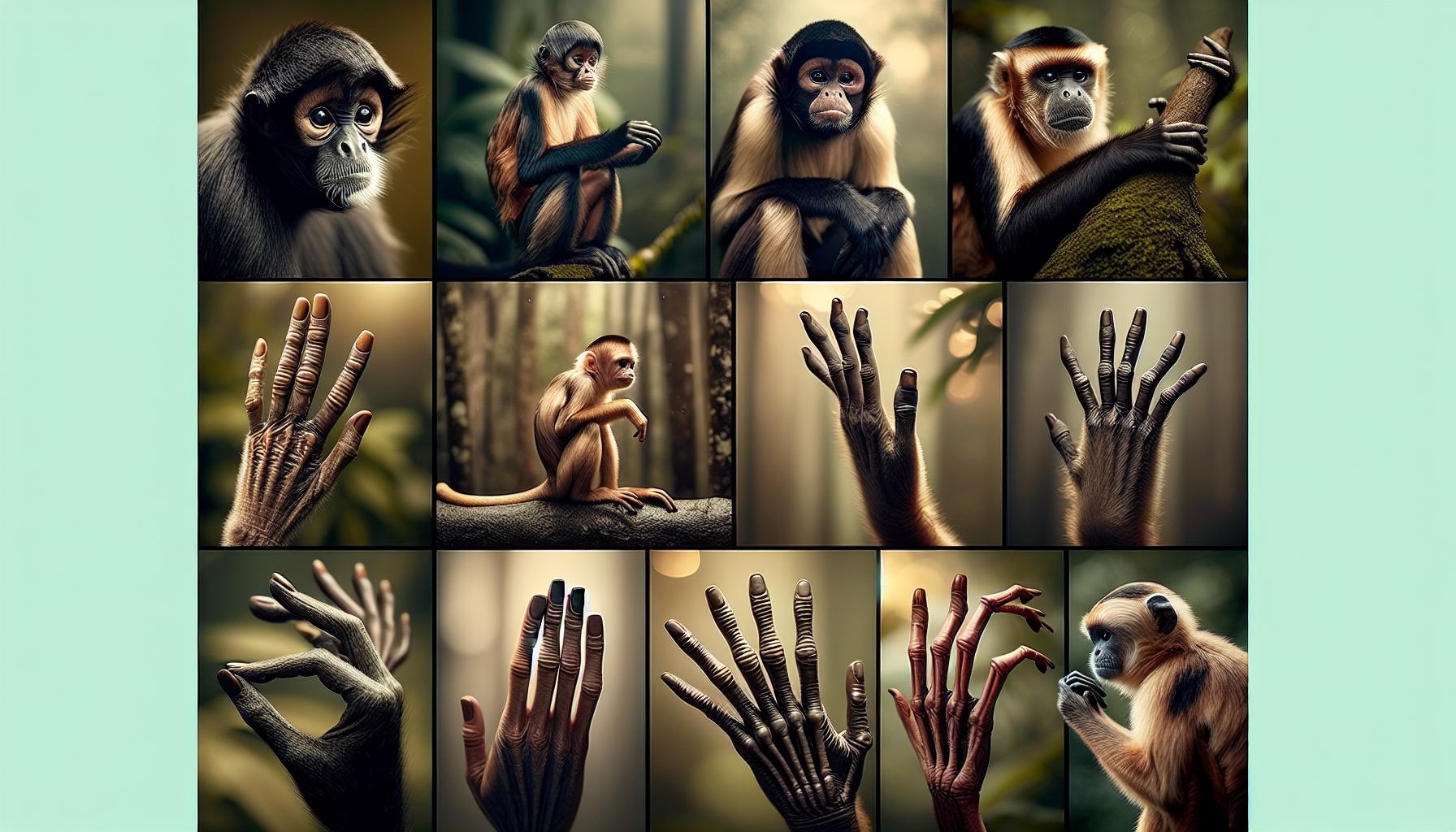
Monkeys are fascinating creatures, and one striking aspect of their anatomy is their fingers. While most monkeys have five fingers per hand, the size, shape, and functionality of these digits vary greatly among species, reflecting their diverse habitats and lifestyles. This unique adaptation allows them to perform a wide range of tasks, from foraging for food to navigating the treetops with remarkable agility.
For instance, capuchin monkeys are known for their highly dexterous fingers, which allow them to grasp small objects and manipulate tools. Their fingers are quite nimble, making them excellent at foraging for fruit, insects, and even using stones to crack nuts. In contrast, howler monkeys exhibit longer and more robust fingers that are specially designed for swinging from branch to branch. Their strong grip is essential for maintaining balance in the lush canopies where they live, allowing them to traverse their environments seamlessly.
Another interesting example can be seen in spider monkeys, whose fingers have evolved to support their unique style of locomotion. They possess elongated fingers, which, while they may lack the same level of versatility as those of capuchins, work effectively with their prehensile tails. This adaptation enables spider monkeys to grasp branches securely, facilitating their acrobatic swings through the forest. Each species’ unique finger structure illustrates how evolutionary pressures shape their anatomy for survival in specific ecological niches.
Understanding how many fingers different monkeys have not only satisfies a curiosity but also highlights the remarkable adaptations that have occurred throughout evolution. These adaptations underscore the importance of preserving the diverse habitats that support the rich variety of monkey species and their fascinating adaptations. Balancing the scientific perspective with an appreciation for their playful nature makes learning about monkeys both informative and enjoyable.
Comparative Anatomy: Monkeys vs. Humans
Monkeys and humans share a common primate ancestry, but when it comes to finger anatomy, the differences are quite fascinating. Both groups have five fingers, yet their adaptations reflect distinct evolutionary pressures shaped by their environments and lifestyles. For instance, humans have evolved versatile fingers that are adept at fine motor skills, allowing us to perform intricate tasks such as writing, painting, and using tools with precise control. This dexterity is largely due to our opposable thumbs, a feature that enables an effective grip and manipulation of various objects.
In contrast, monkeys display a variety of finger adaptations that correspond to their specific needs in the wild. Take the sifaka for example. Its fingers are elongated and powerful, ideal for their unique mode of locomotion, which involves leaping between trees. In a similar vein, gibbon species boast long, slender fingers suited for brachiation – swinging from branch to branch with remarkable agility. These adaptations underscore their necessity for survival in arboreal habitats where agility and grip strength are crucial for accessing food and escaping predators.
Unique Finger Structures
- Capuchin Monkeys: Known for their exceptional finger dexterity, capuchins can skillfully manipulate small objects and even use tools. Their fingers are relatively short and flexible, making them effective foraging specialists.
- Howler Monkeys: With robust fingers, howler monkeys are built for strength. Their fingers help them maintain the grip necessary for swinging through the dense forests of Central and South America.
- Spider Monkeys: These monkeys lack a thumb, which allows their fingers to be elongated and prehensile, partnering with their tails to create a powerful grasping ability as they navigate through treetops.
This remarkable array of adaptations illustrates how finger structure fundamentally influences behavior and habitat utilization in monkeys. Their fingers are not just tools; they are critical to their survival, playing a vital role in how they interact with their environment. Recognizing these differences not only highlights the diverse evolutionary paths of primates but also enhances our understanding of what it means to be part of the primate family. Overall, the study of monkey anatomy reveals much about the intricate balance of adaptation and survival in the natural world.
What Do Monkeys Use Their Fingers For?
Monkeys rely heavily on their fingers for a wide range of activities, playing a crucial role in their daily survival and interactions with the environment. Their adept fingers allow them to climb, grasp, manipulate objects, and forage effectively. For instance, capuchin monkeys are known for their incredible dexterity; they can use their fingers to handle tools, such as rocks for cracking open nuts, showcasing both intelligence and fine motor skills.
Additionally, the unique finger structures of different species highlight their specialized roles. Spider monkeys have adapted their long, prehensile fingers to swing between branches, allowing them to navigate the treetops efficiently without a thumb. This adaptation emphasizes their reliance on a strong grip to travel in their arboreal habitat. Similarly, howler monkeys use their robust fingers to maintain their grip while brachiating through the dense foliage, demonstrating the importance of finger strength in their survival.
Moreover, fingers are essential for social interactions among monkeys. Grooming is a vital behavior for bonding and hygiene, and monkeys skillfully use their fingers to pick through each other’s fur, helping to remove parasites and dirt. This behavior not only fosters social bonds but also plays a role in maintaining the health of their community.
In summary, fingers in monkeys are not just limbs for locomotion; they are critical tools for survival, social interaction, and problem-solving. Understanding how these fascinating creatures utilize their finger adaptations enhances our appreciation for their complexity and intelligence in the wild.
Fingers and Grasping: Key to Monkey Survival
Monkeys’ fingers are not just a marvel of evolution; they are indispensable tools for survival in their complex environments. These agile primates rely heavily on their sophisticated finger structures to navigate their habitats, seek out food, and interact socially. Did you know that some species, like the spider monkey, have exceptionally elongated fingers that enable them to swing gracefully from branch to branch in the treetops? This gripping ability is crucial as it allows them to maintain stability and control while moving in their forest homes.
The adaptiveness of monkey fingers plays a vital role in their foraging techniques and social behaviors. For example, capuchin monkeys are renowned for their dexterous fingers that allow them to manipulate objects with remarkable precision. They can use tools, such as rocks, to crack open hard shells-a behavior that showcases their intelligence and problem-solving skills. Not only does this ability enhance their access to nutritious food sources, but it also reflects a deeper cognitive complexity that many animals strive for.
Moreover, fingers are essential for the intricate social lives of monkeys. Grooming is a key activity among these social creatures, and their nimble fingers are perfectly designed for meticulously picking through the fur of their companions. This act of grooming serves multiple purposes: it strengthens social bonds, reduces tension, and helps maintain cleanliness by removing parasites. Such interactions are crucial for the well-being and cohesion of monkey groups, illustrating how their finger dexterity contributes to both individual survival and community health.
In essence, the finger structure of monkeys is a fine example of form meeting function. These adaptations not only support their physical activities-like climbing and foraging-but also underpin their social behaviors and problem-solving capabilities. Understanding the significance of these amazing adaptations enriches our appreciation of the complexity and intelligence found within the monkey world.
The Role of Fingers in Monkey Behavior
Monkeys’ fingers are essential tools for their daily activities, influencing their behavior and interactions in profound ways. With remarkable dexterity, they navigate their complex environments, showcasing incredible adaptations that support their survival. For instance, the long, flexible fingers of a spider monkey are perfect for grasping branches high in the treetops, allowing them to swing effortlessly between trees. This agility not only aids in locomotion but also plays a critical role in foraging for food, such as fruits and leaves, which are vital for their diet.
In addition to their physical capabilities, monkeys use their fingers in intricate social behaviors. Grooming is a prevalent activity among many species, where individuals meticulously clean each other’s fur using their nimble fingers. This behavior serves multiple functions: it strengthens social bonds, establishes hierarchies, and helps maintain hygiene by removing parasites. Grooming can also be a soothing activity, reducing stress among group members and fostering a sense of community. Capuchin monkeys, for example, are known for their intelligence and problem-solving skills, using their dexterous fingers not only to groom but also to manipulate objects and use tools, further emphasizing the cognitive complexity within their social structures.
Moreover, the way fingers are utilized during play is equally fascinating. Young monkeys engage in playful behaviors that help develop their motor skills and social interactions. Their ability to grasp, hold, and throw objects is crucial for engaging with peers and forming lasting social relationships. Such playful interactions lay the groundwork for adulthood, where those same skills will be invaluable for foraging and navigating social dynamics within their troop.
Ultimately, the multifaceted role of fingers in monkey behavior extends beyond mere survival; it intricately weaves into the fabric of their social lives. Through grooming, play, and foraging, monkeys demonstrate how vital their finger structures are in shaping their day-to-day interactions, offering us a window into their complex lives. Understanding these behaviors not only highlights the evolutionary advantages of their anatomy but also enhances our appreciation for the intelligence and adaptability of these remarkable primates.
Fun Facts About Monkey Fingers You Didn’t Know
Did you know that the anatomy of monkey fingers can vary significantly between species, ultimately influencing their behaviors and survival strategies? Most monkeys have five fingers on each hand, just like humans, but it’s the structure and functionality of these digits that truly set them apart. For instance, certain monkeys, like the howler monkey, have long, curved fingers ideal for gripping branches tightly, which is essential for their arboreal lifestyle. Meanwhile, capuchins are notable for their opposable thumbs, enabling them to perform detailed tasks, such as manipulating tools-a skill we often associate with higher intelligence.
One fascinating aspect of monkey fingers is their adaptability. For example, spider monkeys possess long, lanky fingers that aid in suspensory locomotion. These elongated digits allow them to swing gracefully from branch to branch without relying on a thumb. This unique adaptation is crucial for their survival in dense rainforests where agility is key. In contrast, macaques have shorter, sturdier fingers that are better suited for an omnivorous diet, giving them the ability to grasp a variety of foods and even engage with their environment in more terrestrial habitats.
In addition to functionality, the dexterity of monkey fingers contributes to complex social behaviors. Grooming, an essential activity for many monkey species, showcases this. Monkeys meticulously clean each other’s fur using their nimble fingers, which not only promotes hygiene by removing parasites but also strengthens social bonds within their groups. Moreover, young monkeys often engage in playful activities that enhance their motor skills. Throwing small objects or grasping branches during play prepares them for future challenges in foraging and social interactions, underscoring the importance of their finger structure.
Lastly, while we think of fingers largely for their practical roles, they also play a part in communication. Some species exhibit intricate gestures using their fingers as part of their social interactions. For example, the celebes crested macaque has been observed using complex hand movements during social play, enhancing their ability to convey intentions and emotions. This all demonstrates that monkey fingers are not just simple adaptations for survival; they are vital tools that enrich the complexity of monkey lives in the wild.
How Finger Structure Affects Monkey Species
The structure of a monkey’s fingers significantly impacts its daily life, survival strategies, and social interactions. While most monkeys share a common trait of having five fingers on each hand, the unique adaptations of these digits vary drastically across species, highlighting evolution’s intricate designs tailored to specific environments and lifestyles.
For example, the howler monkey possesses long and curved fingers, perfectly suited for grasping branches as they navigate the treetops of dense forests. Their finger structure allows them to stay securely anchored while they vocalize their characteristic loud howls, a crucial part of their social communication. In sharp contrast, spider monkeys have evolved to have prehensile tails in addition to long, slender fingers, which aid in their remarkable ability to swing between branches. This remarkable adaptation makes them agile climbers, minimizing the need for a thumb while showcasing their unique way of life in high canopies.
Furthermore, the dexterity of a monkey’s fingers plays a crucial role in its feeding habits. Species like the capuchin monkey are known for their highly developed opposable thumbs, which allow them to grasp and manipulate objects effectively. This capability gives capuchins an edge in foraging as they can use tools, such as rocks, to crack open nuts or extract insects from tight spots. In contrast, macaques have sturdier fingers that are well adapted for a more omnivorous diet, enabling them to handle various food types, from fruits to terrestrial prey. This adaptation supports their versatile foraging in mixed habitats, showcasing how finger structure can dictate feeding strategies and habitat use across different species.
These variations in finger structure not only contribute to survival but also enrich social interactions among monkeys. The grooming behavior observed in many species highlights the importance of dexterity in building social bonds. Using their nimble fingers, monkeys engage in grooming sessions that remove dirt and parasites, reinforcing friendships and hierarchies within their groups. Such intricate social behaviors underscore the significance of finger adaptations in fostering community and cooperation among monkeys, demonstrating that their anatomical features are central to both survival and social dynamics.
Conservation and Finger Adaptations in Monkeys
The unique adaptations of monkey fingers are not just fascinating from a biological standpoint; they also play a significant role in the conservation of these remarkable animals. The structure of their fingers influences their behavior, feeding habits, and, ultimately, their survival in the wild. Understanding these adaptations can provide valuable insights into conservation efforts aimed at protecting various monkey species.
For instance, many primate species, such as the howler monkeys and capuchins, rely heavily on their dexterous fingers for climbing and foraging. These adaptations allow them to navigate complex habitats and access food resources that are essential for their survival. As forests face threats from deforestation and habitat fragmentation, the ability of these species to climb high into the canopy becomes increasingly important. Conservation strategies that focus on protecting these habitats help to ensure that monkeys can continue to use their specialized finger adaptations effectively.
Moreover, the evolution of finger structure is closely linked to the behavioral patterns of different monkey species. Creating wildlife corridors can mitigate the impact of habitat loss by providing safe passages that allow monkeys to move and access diverse environments. Such measures not only support their physical needs but also promote social structures necessary for their populations to thrive.
In addition to habitat preservation, understanding how finger adaptations affect species’ interactions can influence rehabilitation and captive care protocols. For pet monkeys or those housed in facilities, recognizing the significance of finger dexterity in their daily activities helps caregivers provide enriching environments that mimic natural behavior. This understanding fosters better health outcomes and enhances the monkeys’ overall well-being, making it essential for conservationists and pet owners alike to consider these anatomical aspects in their practices.
As we marvel at the intricacies of monkey anatomy, we are reminded that every detail-down to their fingers-plays a vital role in their survival and conservation. By supporting initiatives that protect their habitats and promote responsible care, we can contribute to preserving these incredible creatures for future generations to cherish.
Caring for Pet Monkeys: Finger Considerations
Caring for pet monkeys involves understanding their unique anatomy, particularly the role of their fingers in everyday behavior and survival. Monkeys typically have five fingers on each hand, similar to humans, but their fingers are structured for gripping and climbing, which is crucial for their activities in the wild. This dexterity allows them to navigate their environments with ease, making it important for caregivers to replicate these natural behaviors as much as possible.
Providing a safe and stimulating environment for a pet monkey is essential, and considering their finger dexterity is a key part of this. Activities that encourage climbing, foraging, and the use of tools can greatly enhance their well-being. For instance, setting up climbing structures that mimic tree branches can give them the physical exercise they need while allowing them to use their fingers in a natural way. Providing various textured surfaces and objects to grasp can stimulate their fingers, keeping their muscles toned and joints healthy.
Another crucial aspect is to be aware of the potential for injury. Monkeys are highly active and inquisitive, which can lead to accidents involving their fingers. It’s important to regularly check their environment for hazards that could lead to cuts or bruises. Safe toys and enrichment items that challenge them to use their fingers can prevent boredom and the associated destructive behaviors that can arise from it.
Understanding the importance of finger function in pet monkeys also extends to their social interactions. Monkeys use their fingers not just for feeding and climbing, but also for social grooming and communication with one another. Encouraging these social behaviors, both with humans and other monkeys, contributes to their emotional health, as they thrive on interaction and engagement. By recognizing the significance of their dexterous fingers, caregivers can enhance the overall quality of life for their pet monkeys, ensuring they remain healthy and happy companions.
Frequently asked questions
Q: Do all monkeys have the same number of fingers?
A: No, not all monkeys have the same number of fingers. While most monkeys have four fingers and a thumb on each hand, some species exhibit variations. Understanding these differences is crucial for appreciating monkey anatomy and behavior. For detailed insights, explore the section on How Many Fingers Do Different Monkeys Have?.
Q: Why do monkeys have opposable thumbs?
A: Monkeys have opposable thumbs, which allow them to grasp objects more effectively. This adaptation is essential for climbing, foraging, and manipulating tools. It enhances their ability to interact with their environment, making survival easier in their habitats.
Q: How do monkey finger structures impact their behavior?
A: The structure of monkey fingers directly influences their behavior, particularly in gripping and climbing. For instance, species with longer fingers tend to be better climbers, while those with shorter fingers excel in other tasks. Understanding these adaptations is explored in the section on The Role of Fingers in Monkey Behavior.
Q: What adaptations do monkeys have for finger use?
A: Monkeys possess various adaptations for finger use, including curved digits for grasping branches and a flexible wrist joint. These adaptations help them navigate through trees efficiently and handle food, ensuring they thrive in their environments.
Q: How does the evolution of monkey fingers affect their survival?
A: The evolution of monkey fingers has played a significant role in their survival. Variations in finger structure have allowed different species to adapt to their specific habitats, such as living in trees or on the ground. This adaptability is crucial for finding food and avoiding predators.
Q: What role does finger strength play in a monkey’s daily life?
A: Finger strength is vital for a monkey’s daily activities, from climbing and swinging in trees to grooming and feeding. Strong fingers allow them to hold onto branches securely and manipulate objects, which is essential for their survival in the wild.
Q: How do monkey fingers compare to human fingers?
A: Monkey fingers are structurally similar to human fingers in having multiple digits, but they differ in proportions and function. Monkeys typically have longer phalanges adapted for grasping, while humans have shorter, stronger fingers tailored for precision gripping. More comparisons can be found in the section Comparative Anatomy: Monkeys vs. Humans.
Q: Can finger injuries affect a monkey’s ability to survive?
A: Yes, finger injuries can significantly impact a monkey’s survival. Injuries can hinder their ability to climb, forage, or defend themselves. Adequate care and rehabilitation are crucial for injured monkeys to recover and regain their natural behaviors. Learn more in the section about Caring for Pet Monkeys: Finger Considerations.
The Way Forward
Now that you’ve uncovered the fascinating anatomy of monkeys, including how many fingers they have, you might be curious about their unique behaviors, habitats, and what it takes to care for these incredible creatures. For deeper insights, check out our articles on primate behavior and the essentials of responsible exotic pet ownership.
Don’t miss out on future discoveries! Subscribe to our newsletter for the latest updates and exclusive content that will enhance your understanding of wildlife. If you have any questions or thoughts, we’d love to hear from you in the comments below-join the conversation! Remember, knowledge is key to conservation, and being informed helps us appreciate and protect these amazing animals. Explore more, learn more, and let your passion for wildlife thrive!
Get our latest guides, news, and insights highlighted in your Google Search & AI Overviews.