
Did you know that flying squirrels, while not truly capable of flight like birds, can glide astonishing distances? These remarkable creatures have evolved to navigate their arboreal habitats with grace and agility, often covering over 150 feet in a single leap! Understanding how far these furry gliders can soar not only satisfies our curiosity about their unique adaptations but also sheds light on their role in maintaining ecological balance. As we explore the amazing records of flying squirrels’ gliding abilities, you’ll discover the fascinating mechanics behind their gliding and the factors that influence their stunning aerial performances. Join us on this exciting journey to uncover the secrets of these enchanting mammals and learn why their incredible gliding feats deserve our attention.
How Far Can a Flying Squirrel Glide?
Flying squirrels are remarkable creatures, known for their exceptional gliding abilities. These animals can cover impressive distances in the air thanks to their specially adapted skin flaps that stretch from their wrists to their ankles. For the northern flying squirrel, average gliding distances range from 5 to 25 meters (approximately 16 to 82 feet), although instances of glides reaching up to 45 meters (about 148 feet) have been documented. The southern flying squirrel holds the record for the longest gliding distance, reaching an astonishing 150 feet (approximately 46 meters) in a single glide[1][2].
The ability to glide not only aids in escaping predators but also helps flying squirrels travel efficiently between trees in their forested habitats. This form of locomotion is critical for foraging and finding mates, showcasing how these animals are perfectly adapted to their environments. Their gliding capabilities are enhanced by their lightweight bodies and the unique structure of their limbs, which allows them to steer and control their descent with impressive precision.
Whether in the dappled light of the canopy or soaring gracefully through the twilight, flying squirrels are living examples of nature’s ingenuity. Observing them in the wild as they take flight is not only a captivating sight but also a reminder of the intricate relationships between wildlife and their ecosystems.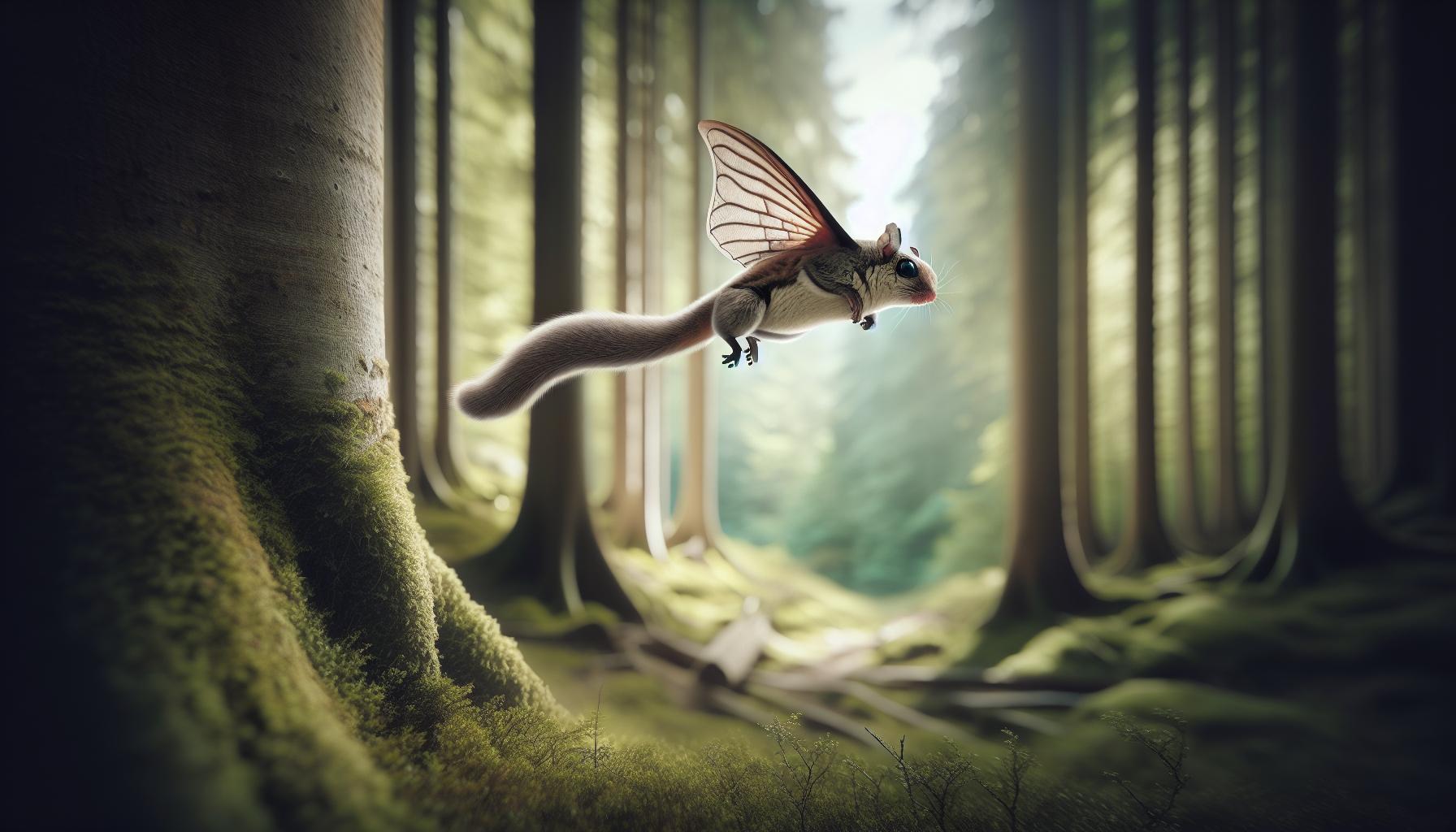
The Science Behind Gliding Flight
Flying squirrels are truly fascinating creatures that captivate wildlife enthusiasts with their remarkable ability to glide through forest canopies. With specially adapted skin flaps known as patagia, these creatures can effortlessly soar from tree to tree, resembling miniature gliders in flight. This adaptation allows them to cover impressive distances-anywhere from 5 to 25 meters (approximately 16 to 82 feet) under normal conditions, with exceptional records reaching up to 45 meters (about 148 feet) and the southern flying squirrel boasting a record glide of around 150 feet (approximately 46 meters) [1].
The physics of gliding is rooted in their lightweight bodies, which help minimize drag. As they launch themselves from a height, they spread their limbs and use their flexible patagia to catch air, creating lift. This technique not only facilitates travel but also serves as a vital escape mechanism from predators. When they glide, they exhibit precise control over their direction and descent, adjusting their limbs to navigate obstacles in their path. This nuanced control is akin to how a parachutist maneuvers during descent, showcasing the elegant precision of these nocturnal creatures.
Several factors affect their gliding distance, including height of launch, body mass, and environmental conditions like wind and humidity. The choice of launching point is crucial; the higher the start point, the longer the potential glide. Additionally, flying squirrels are known to be quite strategic, often choosing locations with ample tree cover to enhance their gliding performances. Understanding these dynamics not only highlights the ingenuity of these agile mammals but also reminds us of the delicate balance within their forest habitats, where gliding assists not just in escape but in their daily foraging and social interactions.
Amazing Records of Flying Squirrel Glides
Flying squirrels are nature’s little acrobats, gliding gracefully through the forest canopy. Their impressive ability to soar over great distances has caught the attention of many wildlife enthusiasts and researchers alike. The average glide distance for these remarkable creatures typically ranges from 5 to 25 meters (about 16 to 82 feet), but they can achieve astonishing feats under the right conditions. One notable record for the southern flying squirrel is around 150 feet (approximately 46 meters) in a single glide, showcasing their incredible aerodynamic capabilities.
What is fascinating is not just how far they can glide, but the performance variations among different species and individual circumstances. For instance, studies document that various flying squirrels, like the northern species, can glide distances of up to 45 meters (approximately 148 feet) under optimal conditions. This variability is influenced by factors such as body mass, initial height, and even environmental elements like wind and humidity. The strategic choice of launch points plays a crucial role; higher elevations offer longer glide distances, allowing these creatures to maximize their flight potential.
To truly appreciate the mastery of gliding in flying squirrels, consider their unique adaptations. Equipped with patagia-the skin flaps extending from their wrists to their ankles-they have transformed their gliding abilities into an effective means of locomotion and escape. Their technique reflects a blend of physics and instinct, enabling them to make quick adjustments mid-air as they navigate through trees, much like a skydiver adjusting their descent.
Such capabilities not only aid in fleeing predators but also enhance their foraging efficiency, facilitating movement between food sources without needing to descend to the ground where dangers may lurk. As we celebrate their impressive gliding records, it reminds us of the delicate balance in their habitats and the importance of conservation efforts to ensure these enchanting mammals continue to thrive in the wild.
Factors That Influence Gliding Distance
Flying squirrels are impressive gliders, but their soaring feats aren’t random; a variety of factors influence how far they can glide. Understanding these elements can deepen our appreciation of these remarkable creatures and their abilities in the wild.
First, the height from which a flying squirrel launches is critical. The general rule of thumb is that the higher the starting point, the further the glide. For instance, with optimal conditions, northern flying squirrels can cover distances of up to 45 meters (about 148 feet) in a single glide, primarily when they launch from taller trees or elevated areas. This strategic choice allows them to utilize gravity and aerodynamics effectively. In contrast, gliding from lower heights naturally results in shorter distances.
Body mass also plays a significant role. Larger squirrels may have more surface area, which can assist in gliding, but they require more lift due to their weight. Therefore, a balance between size and glide efficiency comes into play. Environmental factors cannot be ignored either; elements like wind direction and speed can either aid or hinder their gliding distance. Positive air currents can help them travel further, while adverse conditions might necessitate more precise maneuvering.
Additionally, the squirrel’s technique is crucial. Their patagium, the membrane that stretches from their limbs, allows them to control their glide effectively. The ability to tilt their body mid-air aids in steering and making adjustments for a safe landing, much like an experienced paraglider. All these factors combine to create a dance of physics and biology, showcasing the elegance of nature’s design in flying squirrels’ gliding mastery.
In summary, the interplay of launch height, body mass, environmental conditions, and gliding technique ultimately shapes how far a flying squirrel can soar, revealing both the complexity and wonder of these agile gliders.
Comparing Gliding Abilities of Other Species
Flying squirrels are not alone in the aerial ballet of gliding. While they can cover impressive distances, there are other species that have taken the art of soaring through the treetops to remarkable heights. Take the sugar glider, for instance. This small marsupial, native to Australia and New Guinea, can glide up to 50 meters (about 164 feet) thanks to its lightweight body and expansive patagium, which allows it to spread its limbs wide and maximize lift. Their gliding technique is highly evolved, much like that of their flying squirrel cousins, but they also rely on the thermals rising from the ground that can enhance their gliding abilities.
Another fascinating comparison can be made with the Colugo, commonly known as the flying lemur, though it’s neither a lemur nor capable of true flight. Colugos can glide an astonishing 100 meters (around 328 feet) – a record that puts them at the top of the gliding game. Their unique anatomical adaptations, which include a very large membrane that extends from their limbs down to their tails, facilitate their long-distance gliding. They utilize their glide not only for travel but also to escape predators amidst the dense jungles in which they live.
Interestingly, these glide distances vary not just by species but also by the particular environmental conditions they encounter. For example, while flying squirrels are adept at navigating through their forest habitats, the sugar glider’s ability to take advantage of wind currents can significantly extend its gliding distance, especially in open spaces where it can catch rising air.
In terms of their impact on conservation, understanding the gliding capabilities of these species enhances our view of their ecological roles. All these animals play critical parts in their habitats, from dispersing seeds to controlling insect populations. Recognizing how these unique adaptations contribute to their survival can help in crafting effective conservation strategies that ensure they thrive alongside the ongoing challenges posed by habitat loss and climate change.
The Role of Habitat in Glide Performance
Flying squirrels are fascinating creatures, and their gliding prowess is closely linked to the habitats they inhabit. These nocturnal animals are designed by nature to thrive in wooded environments, particularly forests that provide ample vertical space and structural complexity. While their special adaptations allow them to glide significant distances-up to 150 feet (about 46 meters) in some cases-the quality and characteristics of their habitat play crucial roles in how efficiently they can perform these remarkable aerial feats.
In healthy forest ecosystems, flying squirrels benefit from an abundance of trees that provide launching points for gliding. The presence of large, mature trees is essential, as these not only offer suitable heights from which to take off but also safety in numbers, creating a network of potential landing spots. Squirrels are highly maneuverable, but the availability of nearby trees is vital for facilitating their glides. Dense foliage helps slow their descent and provides cover from predators, while varied tree heights contribute to a dynamic gliding experience, allowing them to exploit different paths through the trees.
Factors like wind patterns and thermal currents can also significantly influence performance. In areas where breezes rise or funnel through trees, flying squirrels can harness these upward drafts to extend their glide distances further. This is particularly notable in more open environments where their lightweight bodies and adaptations allow them to catch and glide on these natural currents. Conversely, dense, congested areas can limit their ability to glide effectively, as the close-set trees might not provide clear paths and sufficient lift.
Moreover, habitat quality has direct implications for conservation as well. Degraded environments, due to logging, urban development, or climate change, can inhibit flying squirrels’ access to necessary resources. Protecting and restoring forest habitats is essential for maintaining their gliding capabilities and ensuring their survival. Encouraging well-managed green spaces, reforestation efforts, and the establishment of wildlife corridors can all serve to enhance habitat conditions for flying squirrels, helping them continue their unique and captivating gliding journeys through the night sky.
How to Encourage Safe Gliding in Captivity
Creating a safe environment for flying squirrels in captivity is crucial for their well-being and ability to exhibit natural behaviors, including gliding. These charming creatures, known for their remarkable aerial acrobatics, thrive best when their habitat mimics the rich, diverse environments they are adapted to in the wild. To ensure that your flying squirrels can safely glide while under your care, consider several essential tips.
First and foremost, provide a spacious enclosure that allows for vertical movement. Flying squirrels are not just climbers; they are gliders that need room to launch themselves into the air. Aim for an enclosure that is tall and wide, incorporating features such as branches or shelves that emulate the trees of their natural habitat. Ideally, these structures should be at various heights to encourage climbing and gliding. Use sturdy, smooth materials to prevent injuries during their swift movements.
Environmental Enrichment is another key aspect of encouraging safe gliding. Incorporate items like tunnels, ropes, and platforms that allow for exploration and play. These engaging structures can help break the monotony of a static environment and promote physical activity, essential for maintaining their health and agility. Additionally, consider providing soft landing surfaces, such as fleece or rugs, to cushion their falls and reduce the risk of injury if they miscalculate a landing.
Diet and healthcare are also vital for captive flying squirrels. Ensure they receive a balanced diet rich in fruits, vegetables, nuts, and specially formulated pellets. Regular veterinary checkups will help monitor their health and prevent issues that could impair their ability to glide. Providing them with proper nutrition and care will not only keep them healthy but also support their active lifestyle.
In sum, creating an enriching, spacious, and safe environment can bring out the best in your flying squirrels, allowing them to glide as they would in the wild. By observing their behaviors and adjusting their habitat to meet their needs, you can ensure they thrive while enjoying their unique gliding capabilities.
Conservation Efforts for Flying Squirrels
Flying squirrels are not just fascinating creatures; they play a crucial role in the health of our ecosystems. Conservation efforts aimed at protecting these amazing gliders are essential, especially as many species face threats from habitat loss and climate change. The good news is that various initiatives are underway to safeguard their populations and habitats, ensuring that future generations can witness their incredible glides.
One prominent example of conservation work is the focus on creating protected areas where flying squirrels can thrive without the pressures of human encroachment. Wildlife sanctuaries and reserves provide safe havens, allowing these spirited animals to glide gracefully from tree to tree, just as they would in the wild. In Pennsylvania, for instance, initiatives aimed at protecting the endangered Northern Flying Squirrel emphasize habitat conservation and the restoration of forest ecosystems that these animals rely on for survival [[1]].
Additionally, awareness and education play a vital part in conservation efforts. Informing the public about the unique needs of flying squirrels and the challenges they face can lead to greater public support for conservation initiatives. Programs that focus on community involvement can foster a sense of stewardship towards local wildlife. For example, conservation organizations are encouraging people to plant native trees and create lush environments that mimic the natural habitats of flying squirrels, promoting biodiversity and ecological wellness.
Moreover, collaborations between scientists, wildlife experts, and communities are crucial in developing effective conservation strategies. By studying flying squirrel behavior and gliding patterns, researchers can identify specific habitat requirements and threats. This data becomes invaluable for formulating action plans that enhance habitat conditions and protect these remarkable animals from extinction [[2]].
In summary, while flying squirrels exhibit extraordinary gliding capabilities, their future is intertwined with the efforts we make today. By fostering environments where they can thrive and engaging in community-driven conservation initiatives, we not only protect flying squirrels but also enrich the ecosystems they help to sustain. Supporting these efforts is a beautiful way to appreciate the magic of wildlife and ensure that these charming gliders continue to enchant us for years to come.
Myths and Facts About Flying Squirrels
Flying squirrels are often shrouded in myths that can obscure their fascinating realities. For example, many people believe that these creatures can truly fly. However, the truth is that they don’t actually fly in the way birds do; instead, they glide! Equipped with a special membrane called the patagium, which stretches from their wrists to their ankles, flying squirrels can glide gracefully through the air. This adaptation allows them not only to travel impressive distances but also to navigate through their forested habitats in search of food, mates, and safe havens.
When discussing the distance flying squirrels can glide, it’s often quoted that they can soar between 100 and 150 feet in a single leap, though some claims suggest they might cover even more ground under ideal conditions. This feat is impressive considering their size; for instance, the Northern Flying Squirrel averages about 10 to 14 inches in length. Their unique anatomy aids in this performance-using their limbs to steer and the patagium to catch air, they achieve remarkable control as they glide.
Every species of flying squirrel has its quirks, and this adds to the myth that they are all the same. For example, the Southern Flying Squirrel tends to be more social and is often seen gliding in pairs or small groups, while the more elusive Northern Flying Squirrel prefers solitary habits. Their different lifestyles impact how they utilize their gliding abilities, showcasing varying strategies for survival in the wild.
Lastly, let’s bust the myth that these gentle gliders are pests or nuisances. While they may wander into attic spaces in search of warmth and shelter, they are primarily nocturnal herbivores, playing vital roles in dispersing seeds and maintaining forest ecosystems. Understanding their behaviors and habitat needs can foster respect and promote conservation efforts, ensuring future generations get to admire their airborne antics. Engaging in responsible wildlife observation and education can help dispel misconceptions and highlight the importance of preserving these unique creatures.
Amazing Anecdotes and Personal Stories
Nothing captures the imagination quite like the sight of a flying squirrel gracefully gliding through the air, their little bodies suspended in mid-flight as they leap from tree to tree. For those fortunate enough to witness these incredible creatures, the experience is nothing short of magical. One avid wildlife enthusiast recalls a late autumn evening spent in a quiet forest, where the gentle hush of the surroundings was broken by the sound of rustling leaves. Suddenly, a Southern Flying Squirrel emerged, launching itself from a branch and soaring effortlessly, covering an astonishing distance of nearly 150 feet-an unforgettable moment that highlighted their amazing gliding capabilities.
Such anecdotal experiences are not uncommon among those who spend time in the woodlands. Many people share stories about how they strategically placed bird feeders to attract these nocturnal wonders. One family reported joyfully observing a pair of Southern Flying Squirrels performing synchronized glides, showcasing not only their gliding skills but also their social behavior. These gliders often communicate with soft chirps and beeps, adding a unique soundtrack to their aerial displays, making for one of those special family bonding moments where nature’s beauty captivates both young and old alike.
In urban settings, flying squirrels can also find refuge, leading to delightful encounters. A homeowner in suburban North Carolina found themselves with a new, furry tenant in their attic: a Northern Flying Squirrel. Over time, they decided to learn about their little housemate rather than evict it, leading to evenings spent quietly observing the squirrel’s antics. They were amazed to discover that with the right conditions-a good leap and an open space-the squirrel could glide over 30 feet. These encounters highlight how our understanding and appreciation for wildlife can turn into treasured stories to share for years to come.
Flying squirrels, with their incredible gliding capabilities and enchanting behaviors, remind us of the beauty of nature. Each tale enriches our understanding of these remarkable animals, emphasizing the importance of conservation and respect for their habitats. Encouraging safe gliding in their natural environments not only ensures their survival but also provides us with opportunities to witness and share in their extraordinary lives.
What Makes Flying Squirrels Unique?
Flying squirrels are truly remarkable creatures, not just because of their ability to glide but due to a fascinating array of traits that set them apart from other wildlife. With a membrane stretching between their fore and hind limbs-known as the patagium-these remarkable rodents can soar gracefully through the air, covering impressive distances, often up to 150 feet or more. This adaptation not only allows them to evade predators but also aids in moving between trees in their forest habitats, showcasing their evolved prowess for survival.
One of the unique aspects of flying squirrels is their nocturnal behavior. Unlike many tree-dwelling species, they are adapted to life in the dark. Equipped with large, expressive eyes, they have excellent night vision, allowing them to navigate through their wooded environments during twilight hours. Their sensitive whiskers help them maneuver in low-light conditions, while their sharp sense of hearing lets them detect both potential threats and the calls of other flying squirrels, contributing to their social dynamics.
Moreover, flying squirrels exhibit intriguing social behaviors. They are known to be gregarious, often living in small groups or familial units. They communicate through a variety of vocalizations-like soft chirps and beeps-which not only facilitate coordination during glides but also strengthen social bonds. Observations have shown that they sometimes engage in synchronized gliding, an enchanting spectacle that highlights their playful interactions and cooperative behavior.
To encourage safe gliding habits in captivity, it’s essential to mimic their natural environment as closely as possible. Providing ample vertical space and safe climbing structures will allow these squirrels to exercise their gliding skills. Enrichment is vital too-consider including items for climbing, hiding, and exploring to stimulate their instincts.
In summary, flying squirrels captivate us not only with their gliding ability but also with their unique adaptations and social behaviors that make them extraordinary additions to the woodland landscapes. Their captivating nature serves as a reminder of the delicate balance of ecosystems, offering opportunities for conservation initiatives that highlight the importance of preserving their habitats and promoting coexistence with these delightful creatures.
Tips for Observing Flying Squirrels in the Wild
To encounter flying squirrels in their natural habitat, you’ll need to embrace their nocturnal lifestyle and be prepared for some exciting nighttime adventures. These intriguing creatures, often elusive and shy, can be best observed during dusk or dawn when they become more active. Bring along a pair of binoculars and find a suitable spot in a wooded area where oaks, maples, or other hardwood trees dominate-perfect conditions for spotting their graceful glides.
Timing and Environment
Key to a successful observation is timing. At twilight, flying squirrels begin to emerge from their nests, searching for food and socializing with fellow squirrels. Look for them in areas where trees are abundant. When the environment is right, you might witness their gliding abilities, as they can cover distances of over 150 feet, using their patagium to soar from one tree to another. Being patient and staying quiet will enhance your chances of seeing these charming creatures.
Tips for Spotting Flying Squirrels
- Use Appropriate Gear: A flashlight with a red filter is ideal for illuminating the area without disturbing the squirrels.
- Be Silent: Flying squirrels are skittish; keeping noise to a minimum will help keep them from retreating.
- Look Up! They often glide from higher branches, so pay attention to the tree canopy.
- Listen for Sounds: Their chirps and soft calls may give away their presence before you see them.
You may also want to consider joining local wildlife enthusiasts or nature walks specialized in spotting flying squirrels. These groups can provide valuable insights and tips from experienced observers. Remember, these are wild animals deserving of respect; maintaining a safe distance ensures both your safety and their well-being.
With these tips, you’re equipped to enjoy the spectacle of flying squirrels, marveling at their extraordinary gliding feats while contributing to their conservation through responsible observation practices. Happy squirrel watching!
Q&A
Q: How far can a typical flying squirrel glide?
A: A typical flying squirrel can glide distances of up to 150 feet (46 meters). Their unique adaptations, such as a membrane that stretches from their wrists to their ankles, allow them to glide efficiently through the trees.
Q: What factors affect a flying squirrel’s gliding distance?
A: Several factors influence a flying squirrel’s gliding distance, including wind conditions, body weight, age, and the terrain’s slope. Favorable winds can enhance their gliding distance, while heavier squirrels may glide shorter distances.
Q: How does the gliding ability of flying squirrels compare to other species?
A: Flying squirrels have impressive gliding abilities when compared to other gliders. For instance, the sugar glider can cover similar distances, but flying squirrels generally glide further due to their larger size and aerodynamics.
Q: Why do flying squirrels glide instead of just climbing?
A: Flying squirrels glide primarily to avoid predators and access food sources. Gliding allows them to travel between trees quickly and efficiently, minimizing the time spent on the ground where they are more vulnerable.
Q: When is the best time to observe flying squirrels gliding?
A: The best time to observe flying squirrels gliding is during dusk or dawn when they are most active. Observing them along wooded areas or near known nesting sites can increase your chances of witnessing their gliding.
Q: How do flying squirrels navigate while gliding?
A: Flying squirrels navigate during glides using their keen vision and by adjusting their limbs. They can control their glide paths by shifting their body position to steer towards trees or structures.
Q: Can flying squirrels glide in rain?
A: While flying squirrels can glide in light rain, heavy rains can hinder their ability to glide effectively due to the added weight from water. This can affect both distance and control during their glides.
Q: Are flying squirrels at risk due to their gliding habits?
A: Yes, flying squirrels face risks from predation and habitat loss due to their gliding habits. Their need for trees to glide between makes deforestation a significant threat. Conservation efforts are essential to protecting their habitats.
Wrapping Up
As we wrap up our exploration of how far a flying squirrel can glide, it’s clear that these fascinating creatures have adapted remarkably for life in the trees. With incredible abilities that amaze wildlife enthusiasts and casual observers alike, flying squirrels exemplify nature’s ingenuity. If you’re intrigued by their unique habitats or want to learn more about their care needs, check out our articles on Caring for Exotic Pets and Understanding Tree Dwelling Animals.
Don’t miss out-subscribe to our newsletter for the latest insights into animal behavior and conservation efforts. Your curiosity fuels our mission, and sharing your thoughts in the comments helps us continue our journey together. Curious about other incredible animals? Explore related topics to see what else nature has in store! Keep the adventure going and engage with us today; discover more amazing wildlife wonders that await your visit!
Get our latest guides, news, and insights highlighted in your Google Search & AI Overviews.